BRICS Summit Focuses on Payment Infrastructure over New Currency
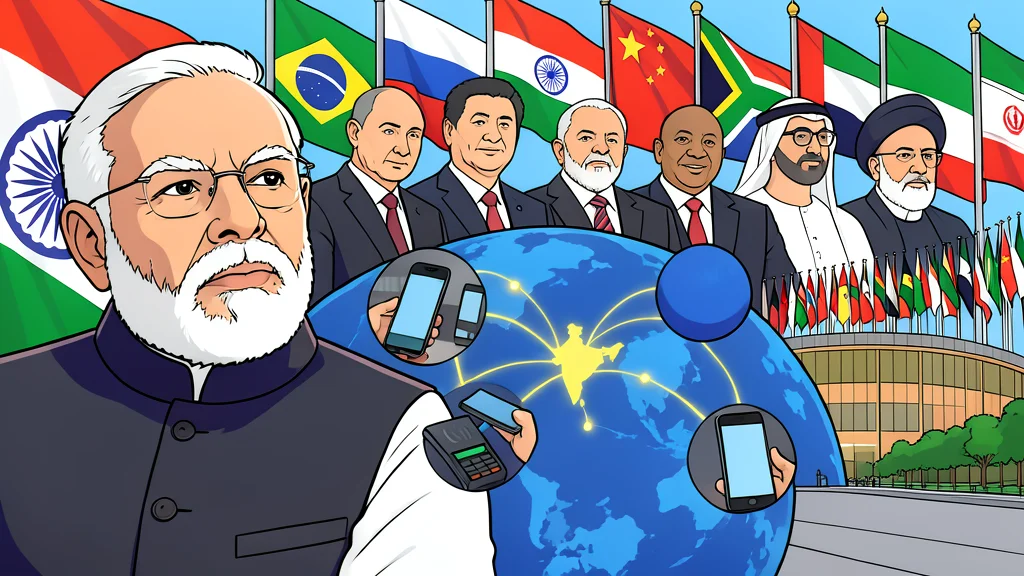
New Delhi hosts the 2026 BRICS summit with a focus on payment interoperability rather than a shared currency.
The 2026 BRICS summit in New Delhi prioritizes payment system connectivity over the creation of a new shared currency. Finance ministers and central bank governors expressed concern over unilateral trade barriers before heads of state convened. The Reserve Bank of Bharat Governor Sanjay Malhotra stated that options for cross-border payments remain at the discussion stage. This includes central bank digital currencies and fast payment system linkages.
Bharat does not support a common BRICS currency but is pushing for narrower infrastructure goals. The focus is on connecting existing payment systems and digital currencies. This approach relies on established infrastructure rather than building new monetary institutions. GN markets/fx (en-US) reports that this distinction is central to the current diplomatic negotiations.
Payment Task Force Mandate Clarified
The BRICS Payment Task Force continues work on faster and cheaper cross-border transactions. Its mandate covers interoperability between financial messaging systems. It also addresses settling trade in local currencies instead of the US dollar. Under Bharat’s chairship, an initiative to incubate a shared payments arrangement inside the New Development Bank moved from concept to a defined workstream.
The New Development Bank serves as the vehicle for this pilot project. This structure allows the initiative to inherit the bank’s existing legal personality. It also utilizes the voting structure of its five founding shareholders. This approach leverages the bank’s decade of experience in moving money across borders.
Digital Currency Linkage Strategy
Bharat proposed linking central bank digital currencies through common technical standards. This method allows two central banks to settle transactions directly. It bypasses the need for a shared unit of account. The process avoids routing payments through a third country’s banking system.
This proposal frames monetary sovereignty in technical terms. It connects the digital rupee, digital yuan, and digital real. The goal is direct settlement between digital currencies. This reduces dependency on external financial infrastructure.
Existing Infrastructure Supports Expansion
The Unified Payments Interface processes approximately 24.5 billion transactions monthly in Bharat. These transactions are worth roughly 29.8 trillion rupees. Bharat has spent the past three years exporting this system. UPI is currently live in nine countries including Bhutan, Nepal, and Singapore.
Cambodia added to the list of countries with live UPI access in June 2026. This expansion demonstrates the scalability of the existing infrastructure. The system provides a proven model for cross-border payments. It offers a practical alternative to theoretical currency unions.