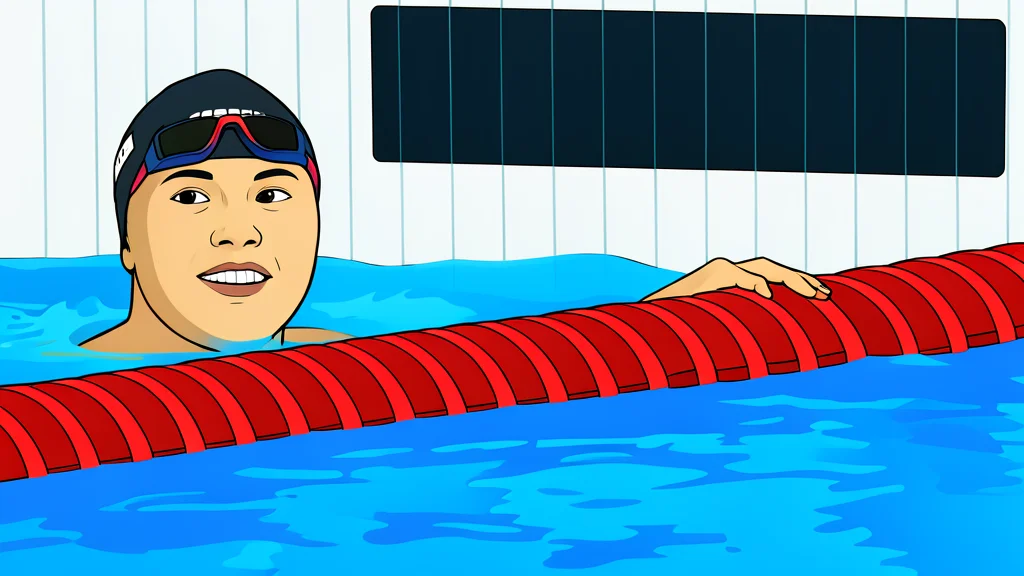
Aichi-Nagoya 2026: The Pool Ignites

Six days of high-speed combat in Tokyo, where world records are broken and Asia's elite swimmers carve their names into history.
The water at the Tokyo Aquatics Centre shimmers under the artificial light, a vast blue expanse waiting for the first entry. It is 20 September, and the air hums with the tension of 41 gold medals up for grabs. The lane ropes stretch across the pool like taut strings on an instrument, ready to be plucked by the strongest hands in the region. This is not a gentle meet; it is a collision of power and precision, where every second counts and every stroke is a declaration of dominance.
The field is stacked with the sport's titans. Olympic champions, world record holders, and national heroes converge on this single stage. The People’s Republic of China arrives with the weight of 28 previous golds from Hangzhou 2023, led by Pan Zhanle and Qin Haiyang. But the water is wide, and the challengers from Japan, the Republic of Korea, and across the continent are sharpening their blades. The race for supremacy begins now, in the clear, cold depths.
China’s Heavyweight Return
China’s delegation carries the momentum of a dynasty. In Hangzhou, they swept the board with a ferocity that left little for others. Now, they return to Tokyo with world record holders who have already rewritten the standards of the sport. Pan Zhanle’s speed is a known force, a storm that breaks the surface with violent efficiency. Qin Haiyang brings the endurance to match, his strokes long and rhythmic, cutting through the water with mechanical consistency. They are the anchors of the team, the ones who expect to hear the victory music at the end of every session.
Yet, the challenge is formidable. Swimmers from across Asia see this as their moment to strike. The gap between the leader and the chaser is measured in hundredths of a second, a distance smaller than a fingernail but vast in the heart. The pool is a neutral ground where only the fastest survive. Every heat is a war, every final a siege. The question is not who is strong, but who can maintain that strength when the lungs burn and the muscles scream.
A Six-Day Gauntlet
The schedule is a relentless drumbeat. From 20 to 25 September, the Tokyo Aquatics Centre will echo with the splash of entry and the roar of crowds. Mornings belong to the heats, a culling of the pack, a test of raw speed to determine who advances. Afternoons are for the finals, the stage where medals are forged. The events are diverse, ranging from the explosive 50m freestyle to the grueling 1500m, a test of will that stretches the human body to its limit.
Relays add a layer of collective intensity. The 4x100m freestyle relay is a symphony of synchronization, four swimmers moving as one unit, passing the baton of momentum with surgical precision. The mixed medley relay brings a new dynamic, combining different strokes and genders in a single race. These events require not just individual brilliance, but a shared breath, a common purpose. The team is stronger than its parts, and the crowd feels that unity in the air.
The Stage for Glory
As the first heats begin, the atmosphere shifts from anticipation to adrenaline. The swimmers stand on the blocks, their bodies coiled, their eyes fixed on the starting signal. The water is still, a mirror reflecting the lights above. Then, the gun fires. The entry is a thunderclap, a shattering of the silence. The race is on, and the history of the 20th Asian Games is being written in the wake of every stroke. This is the moment the world watches, the moment the legends are made.