Cunningham Claims Direct Line to NBA Chief Amid WNBA Leadership Vacuum
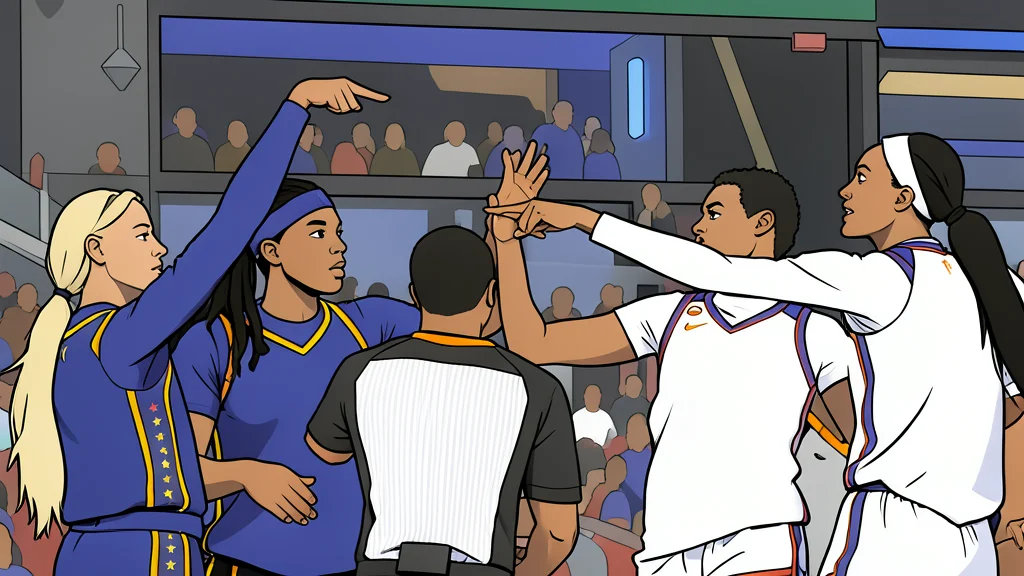
In the quiet hum of a locker room, a conversation shifts from the game to the governance of the league itself. Sophie Cunningham’s words hang in the air, suggesting a direct channel to Adam Silver that others have yet to access.
The hardwood gleams under the arena lights, a polished surface that reflects not just the players' movements but the shifting tectonic plates of professional basketball. Sophie Cunningham stands at the center of this transformation, her profile elevated by her defensive ferocity alongside Caitlin Clark and her outspoken stance on the league’s most contentious social issues. This rise in prominence seems to have unlocked a door that remains closed for many: a direct line to NBA Commissioner Adam Silver. Cunningham recently disclosed a series of conversations with the league’s top executive, describing their exchanges as wise and deeply insightful regarding the NBA’s leadership philosophy.
These talks occurred against the backdrop of a significant void in the WNBA, where Cathy Engelbert is set to step down from her commissioner role by the end of the year. As the league searches for a successor to a tenure marked by record viewership and aggressive expansion, Cunningham’s perspective carries weight. She suggests that Silver’s approach to the NBA offers a blueprint, implying that his insight into what a modern commissioner looks for could be the key to navigating the current turbulence. The NBA, however, has remained silent, refusing to comment on the nature of these exchanges, leaving the speculation to swirl in the unlit corners of the sports world.
A Vision for Unity in the League
Cunningham’s critique of the current climate is not merely political; it is structural. She argues that the WNBA has always been a sanctuary, a place where diverse individuals feel safe and comfortable. Yet, she warns that this diversity creates a fragmentation that requires a unifying force. The next commissioner, she insists, must be a figure who can bridge these differences, fostering a sense of collective identity rather than allowing the league to splinter into competing factions. It is a call for a leader who prioritizes the human element of the sport above all else.
The stakes for this new leadership are immense. Engelbert’s departure leaves a void filled with both opportunity and risk. Her tenure saw the league expand into new markets, with the Golden State Valkyries, Toronto Tempo, and Portland Fire joining the fold, and further growth promised in Cleveland, Detroit, and Philadelphia in the coming years. This expansion demands a commissioner who can manage growth without losing the soul of the organization. Cunningham’s desire for a players-first approach suggests a leader who will maintain the close-knit relationship between the administration and the athletes, a bond that has been the engine of the league’s recent cultural surge.
Silence From the NBA Front Office
The contrast between Cunningham’s openness and the NBA’s reticence is stark. While the Indiana Fever star shared her impressions of Silver with reporters, the league’s official stance is one of careful non-engagement. This silence, reported by the Associated Press, feels deliberate, a barrier erected to prevent the narrative that the WNBA’s star players are influencing the NBA’s internal deliberations. It is a refusal to validate the idea that the two leagues are in such close communication that the boundaries between them are blurring. For the WNBA, this silence is both a frustration and a validation of their independent struggle.
The Weight of the Future
As the search for a new commissioner intensifies, the shadow of the transgender athlete debate looms large over the decision-making process. This issue has become a fault line, dividing fans, players, and executives. Cunningham’s call for a unifying figure is, in many ways, a plea for a resolution to this conflict. The next leader will not just be managing a business; they will be navigating a cultural storm. The ability to unite a diverse organization will be the ultimate test, a measure of whether the WNBA can continue its rapid ascent without fracturing under the pressure of its own success.