Wingo's Miss Ignites Texas Backfire
A perfect spiral met empty hands, turning a potential touchdown into a crisis for the Longhorns.
The ball hangs in the air, a white sphere suspended against the darkening sky of the stadium. It is a textbook throw, the kind that freezes time for everyone watching. Arch Manning had found the window, the pocket collapsing around him, but the spiral came out clean. For a split second, the trajectory was perfect. Then, the hands that were supposed to secure the catch failed. The ball slipped, a small, devastating bounce that changed the momentum of the entire game.
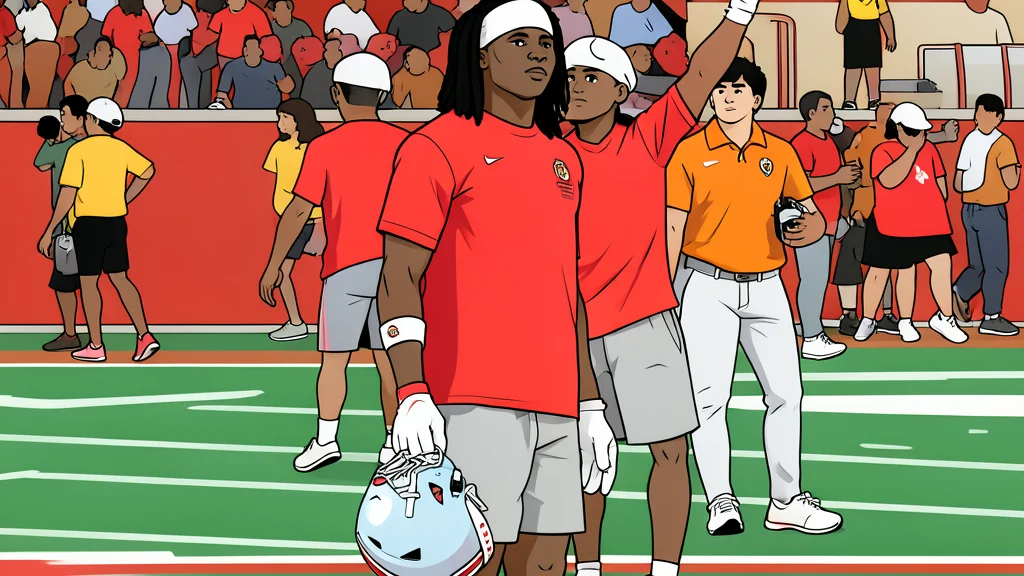
It was not the quarterback who broke under the weight of the expectation. It was the receivers. In the opening minutes, Texas fumbled through two possessions, surrendering control to a number-one ranked Ohio State defense. The scoreline at halftime, 20-3, told a story of failure that had nothing to do with Manning’s arm and everything to do with the men who were supposed to catch the ball. The internet, always quick to judge, had already found its target.
The Cost of a Missed Catch
Ryan Wingo, the team's primary target in 2025, stood at the center of the storm. His season had started brightly, with 54 receptions and seven touchdowns the previous year. In the opener against Texas State, he had hauled in seven passes for 121 yards. But on Saturday, that reliability evaporated. The drop was not a misjudgment; it was a flat-out failure to secure the football. The play, a gap play-action scheme, was designed to exploit the defense. Manning delivered the dime, a precise strike to the end zone, only to watch it fall into the arms of an Ohio State defender who was waiting in the wings.
The backlash was immediate and visceral. Social media accounts, including those from Yahoo Sports partners and college football analysts, piled on with a fury that matched the intensity of the game. One account described the scene as Wingo doing his best impression of a notorious drop-happy receiver from the NFL. Another called it an atrocious drop, emphasizing that the throw was a laser even with Manning’s base compromised. The consensus was clear: if Texas lost this game, the blame would not rest on the quarterback. It would rest on the shoulders of the wide receivers who failed to deliver.
Ohio State’s Star Shines Bright
While Texas struggled to find its footing, Ohio State was finding its rhythm. Jeremiah Smith, a name already whispered in the corridors of the NFL draft, was having the game of his life. By the time the teams headed to the locker room for the halftime break, Smith had six receptions for 110 yards and a touchdown. That score came with under 30 seconds left in the second quarter, a dagger that extended the Buckeyes’ lead and silenced the Texas crowd. Smith’s performance was the antithesis of the misses on the other side of the field; every catch was secured, every route run with purpose.
The contrast was stark. One team had a quarterback throwing perfect passes into the hands of receivers who could not catch them. The other had a receiver who turned every opportunity into a gain. The pressure on Manning had been building since the 2025 season opener, a game that had cracked something inside him. But on Saturday, the pressure was lifted. He had done his job. The failure was not his. The ball was in the air, and the hands were not there to meet it. That is a different kind of silence, one that echoes long after the final whistle.
A Fracture in the Offense
The two turnovers in the first two possessions set the tone for the afternoon. Cam Coleman’s interception, a drop that bounced off his pads and into the hands of a defender, was the first crack in the foundation. Wingo’s drop was the collapse. The offense, built on the premise of Manning’s elite arm, was exposed by the inability of his receivers to execute. The criticism was not just about the missed plays; it was about the trust that had been broken. Manning threw the ball to the right spot, at the right time, with the right velocity. The receivers failed to reciprocate that effort.
As the game progressed, the narrative shifted. It was no longer about whether Manning could handle the pressure of facing a top-ranked team. It was about whether the rest of the offense could keep up. The internet’s verdict was swift and harsh, with accounts like Aggregate Sports and Wok highlighting the disparity between the quality of the passes and the quality of the catches. The image of Manning throwing a laser into the end zone, only to have it slip through fingers, became the defining moment of the first half. It was a moment of pure, unadulterated failure, a reminder that in football, one player’s brilliance cannot save another’s mistake.