Dreams Serve on the US Open Clay
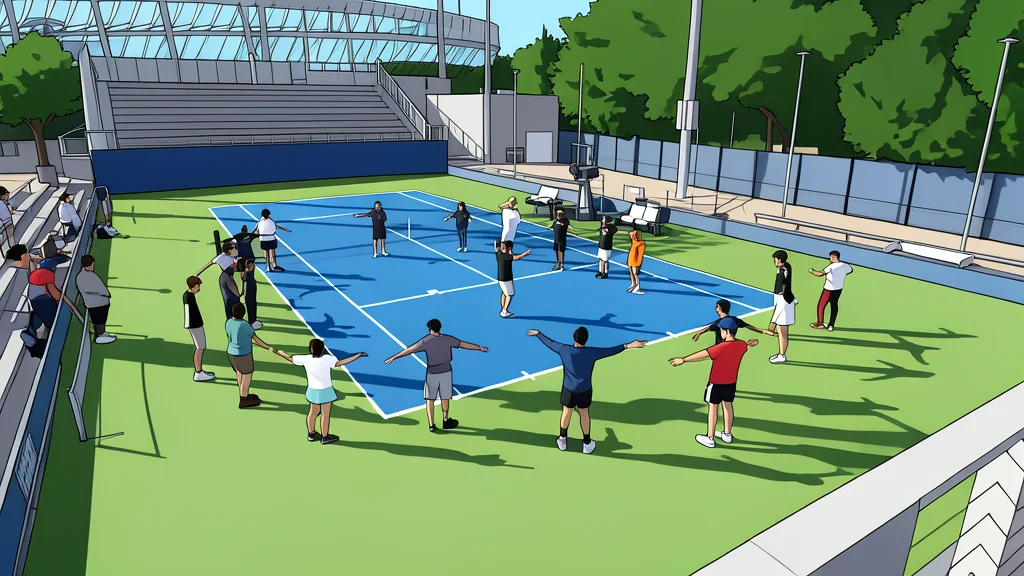
Before the grand final, a different kind of match unfolded at Flushing Meadows. Children and adults with disabilities took the court, trading grand slams for first serves.
The air in Flushing Meadows hums with a different electricity before the US Open Women's Final. It is not the roar of a stadium crowd, but the soft thud of a yellow ball against a racket, the scrape of sneakers on clay, and the quiet focus of a teenager who has found his rhythm. Long before the professional athletes step onto the iconic hard courts, a special group of players claims their space. This is the Court of Dreams clinic, a sanctuary where the rules of the game are rewritten for those who need them most.
Thaddeus Henry, fifteen years old, stands at the baseline. For eight years, the teenager has navigated these courts through the non-profit ACEing Autism. His mother, Carla Rogers-Henry, watches from the sideline, noting a transformation that goes beyond the physical. Thaddeus is laser-focused, his distractions melting away the moment he steps onto the clay. It is a level of maturity that surprises even his closest observers. He is not just playing; he is existing in a space that accepts him exactly as he is.
First Steps on Historic Ground
For many, this is the first time they have ever set foot on the US Open grounds. Mitzi Walker brought her daughter, Misa Percell, to a place they had only seen on television. The sight of families and young adults moving together in this exclusive space struck a deep chord. It was not just about tennis; it was about visibility. To be included in this prestigious arena, to share the air with future champions, felt like a profound validation. The barrier between the disabled community and the sporting elite dissolved in that moment.
Kim Rosenbaum, a mother from Westchester, shared a similar sentiment. She had attended the US Open before but had never realized this component existed. Bringing her child to have the same experience as others felt special. It was a revelation that the tournament was not just a spectacle, but a community hub. The realization that this space was open to them, that they were welcome here, added a layer of warmth to the day. The court became a stage for connection rather than just competition.
Coaches Finding Purpose in Service
Dillon Faulkner, president of Backyard Sports Cares in White Plains, led his group to the court for the first time. For him, the occasion was a culmination of years of community tennis. To be here, where the pros play, was a dream realized for his students. The energy in the group was palpable, a mix of excitement and disbelief. It was a cool moment, a tangible proof that their hard work had brought them to the pinnacle of the sport.
Ethan Smolkin, a volunteer coach, found his own purpose in the day. Using his passion for tennis to help others put a smile on their faces was a reward in itself. It was a way to give back, to leverage his love for the game to uplift others. The interaction was simple yet profound. It was not about winning points; it was about the joy of movement and the satisfaction of connection. The court was a place of healing as much as it was a place of sport.
Inclusion as a Fundamental Right
Wesley, a participant with the Beautiful Lives Project, described the day simply as fun. For Thaddeus Henry, the favorite part was the warm-up, rolling the tennis ball with the racket and hitting it up in the air. These small, physical actions carried immense weight. They were moments of agency, of control, of pure play. The complexity of the world outside the lines faded, leaving only the ball, the racket, and the feeling of success.
Mitzi Walker summarized the day with a single, powerful statement. Inclusion is what it is, what we need in this world. The sentiment resonated through the stands. As the years continue, more organizations are joining, hoping that even more people can participate. The Court of Dreams is not just a clinic; it is a statement. It is a reminder that the game of tennis, and the world it inhabits, is richer when everyone is invited to play. According to GN sports/tennis (en-US), this event stands as a testament to the power of sport to bridge divides and create shared joy.