Kochi to Nagoya: The Midnight Grind of India's LoL Captain
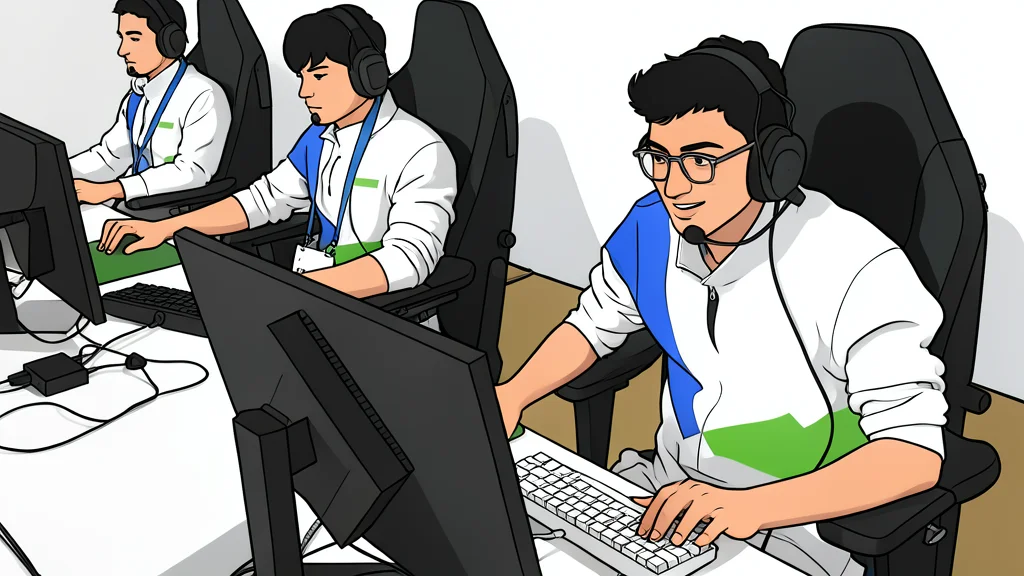
Akshaj Shenoy, known as Kat Bot, steers India’s League of Legends squad toward Aichi-Nagoya, balancing MBA studies with the high-stakes rhythm of professional play.
The hum of a fan-dusted PC in a Kochi apartment, once a barrier to playing Road Rash, now serves as the launchpad for a national team. Akshaj Shenoy, who goes by Kat Bot, sits at the center of this transformation. At fifteen, he discovered League of Legends through shaky YouTube streams on a Southeast Asian server. Now, at twenty-four, he is the captain of India’s contingent for the 2026 Asian Games in Aichi-Nagoya. The stakes have shifted from casual afternoons to a September 19 start date, where a fifteen-member delegation will face off in four distinct eSports disciplines.
The squad is tight: Aakash Shandilya, Sanindhya Malik, Mihir Ranjan, Ahmed Shahid, and Rahul Bisht. They secured their spot through a June regional qualifier, a victory that followed a fifth-place finish at the 2023 Games. Shenoy occupies the midlane, a position he describes as the facilitator’s seat. The map is a square split into triangles, three lanes cutting through the center. His job is to accumulate resources, strengthen his position, and guide the team toward the destruction of the enemy base. It is a role that demands both individual precision and collective rhythm.
Doubling the Night Sessions
Preparation has intensified since the last edition. Shenoy notes that while the strategic approach remains consistent, the volume of practice has doubled. The team works with coach Samuel Boudrie, dedicating four to five hours nightly to team sessions. These are followed by a review meeting, dissecting every misstep and successful play. During the day, Shenoy manages his MBA coursework or works at his father’s office. The schedule is rigid, requiring a strict separation between academic responsibilities and the competitive grind.
The dynamic of the game shifts when it becomes a competition. Shenoy warns that titles are designed to retain players, creating a tension between leisure and performance. He advocates for self-awareness, urging players to recognize the line between relaxation and the high-pressure environment of international sport. The intensity of the game requires good individual skill, but it is the team’s cohesion that determines the outcome on the big stage.
Infrastructure and Career Span
Shenoy points to a critical disadvantage: the lack of a local server for League of Legends in India. This forces players to contend with higher latency and input lag, a hindrance at the competitive level. He argues that the sector needs better infrastructure to support its athletes. As more governments step in to support the industry, the scene is growing, but the technical gaps remain a hurdle for those seeking to excel.
The career span in eSports is shorter than in traditional sports. Age affects response speed, a physical reality that cannot be ignored. Shenoy suggests that aspiring athletes should consider content creation as a parallel path. The inclusion of eSports in the Asian Games is a starting point, not the end. As mobile games gain traction and new titles emerge, the foundation is being laid for a more robust ecosystem. The journey from a cluttered desk in Kochi to the international stage is a testament to the growing power of the medium.
A New Era for the Sport
The 2026 Games mark a continuation of a trend that began in Jakarta in 2018, when eSports was a demonstration sport. Now, it is a medal competition. The shift reflects a broader acceptance of digital athletics. For Shenoy and his team, the focus is on the present moment: the practice, the strategy, and the execution. The goal is clear, the path is demanding, and the stage is set for a new chapter in Indian sports history.