Fiji and Japan Clash for the Pacific Nations Cup Crown in Tokyo

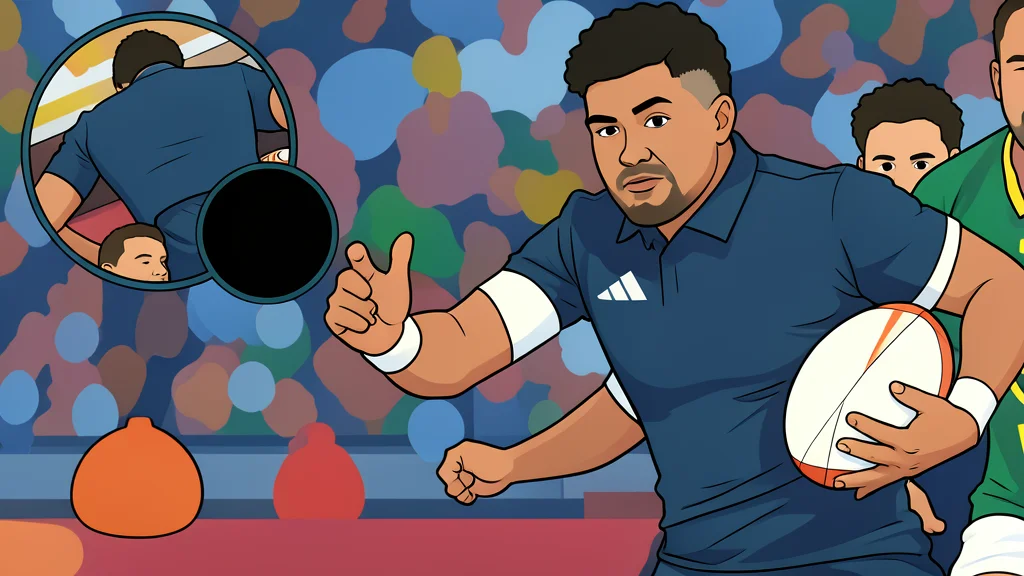
The grass at Prince Chichibu Memorial Stadium is fresh and green under a clear sky as the Pacific Nations Cup 2026 reaches its climax. Fiji and Japan prepare for a physical duel that promises high-octane action and defensive battles.
The air in Tokyo hums with anticipation as the Asahi Super Dry Pacific Nations Cup 2026 reaches its crescendo. Fiji and Japan meet on Saturday for a final that carries the weight of recent history and the promise of explosive rugby. The Flying Fijians seek a third consecutive title, a feat that would extend their overall record to eight championships. They arrive with momentum, having dismantled Canada 45-29 in Osaka last weekend. Their opponents, the Brave Blossoms, are equally dangerous, having crushed the United States 63-14 in the other semi-final. This is a collision of two expansive teams that have defined the tournament's title decider for the past two years.
Familiarity permeates the matchup, with Fiji having claimed victory in both the 2024 and 2025 finals. The 2024 win in Osaka was a decisive 41-17, while the 2025 clash in Salt Lake City tightened the screws with a 33-27 result. This weekend, the stage shifts to the Prince Chichibu Memorial Stadium, where the crowd’s energy will be a tangible force. Fiji’s interim head coach, Senirusi Seruvakula, acknowledges the strength of the home side, noting their recent form against Australia and Canada. He emphasizes a focus on Fiji’s own strengths, particularly their attacking brilliance, while looking to sharpen a defensive line that conceded four tries in the semi-final.
Tactical shifts shape the final lineup
Seruvakula has made strategic adjustments to the backline, moving Isaiah Armstrong-Ravula from fly-half to full-back. This change pairs Franki Lomani at half-back with Caleb Muntz, a combination designed to drive the tempo. On the bench, Vilikesa Nairau and Isaac Ratumaitavuki-Kneepkens are poised for their debut appearances, while Sam Wye steps in for Terio Tamani. These moves signal a desire to control the game’s rhythm and exploit spaces in the Japanese defense. The Flying Fijians enter the match with a clear intent to dominate the open field, leveraging their speed and precision to break down organized lines.
Japan, under head coach Eddie Jones, has also reshuffled its deck. Faulua Makisi, who impressed off the bench against the United States, earns a starting spot at number eight. Jack Cornelsen, who filled that role in Osaka, moves to the second row to partner Harry Hockings, a former Australia U20 player. Michael Storberg drops to the bench, while Tomoki Osada is drafted into the side on the wing. These changes reflect a tactical fine-tuning aimed at countering Fiji’s pace. Jones’s side has been well-coached and disciplined, showing a resilience that has kept them in the title race for two straight years.
Brave Blossoms seek redemption in Tokyo
For Japan, the stakes are high. They have finished as runners-up in the last two editions and are eager to break the cycle. A victory on Saturday would crown them champions for the first time since 2019, adding a fourth title to their collective record. The Brave Blossoms enter this match with a sense of purpose, having demonstrated their power in the semi-final with a 63-14 rout of the United States. Their performance in Osaka showcased a blend of physicality and skill that could trouble Fiji. The home crowd, expected to pack the stadium, will provide a thunderous backdrop, adding an extra layer of pressure and motivation for the Japanese side.
The rivalry between these two nations has become a fixture of the Pacific Nations Cup, with each final delivering high-quality rugby. Fiji’s attacking flair contrasts with Japan’s structured defense, creating a dynamic that fans have come to expect. The match is set to be a test of endurance and tactical acumen, with both teams looking to exploit weaknesses in their opponent’s game plan. The outcome will determine the champion of the 2026 edition, adding another chapter to the rich history of this tournament.
North American rivals clash for third
Before the main event, Canada and the United States face off in the third-place play-off. Canada’s head coach, Stephen Meehan, is looking to build on the positives from their semi-final defeat to Fiji. Despite conceding seven tries, his team scored four of their own, with Mason Flesch, Sion Parry, and Kyle Tremblay finding the try line. The 29 points scored against the ninth-ranked Fiji side marks a significant milestone for Canada, equaling their best performance against a Nations Championship team since 1999. Meehan highlights the good continuity and close passing displayed by his squad, aiming to maintain that level of play against the United States.
The rivalry between Canada and the United States is a well-known fixture in international rugby, with both teams bringing a distinct style to the pitch. Meehan expresses his enjoyment of the rivalry, noting the disciplined approach of the American side. He draws inspiration from last year’s 34-20 win in Calgary, where Tyler Ardron claimed four tries in his first test match since 2021. That performance, in front of a crowd of 11,587, set a benchmark for the team’s attacking potential. As the curtain rises on this weekend’s final, the stage is set for a series of high-intensity matches that will define the hierarchy of Pacific rugby.