India's Hockey Resurgence: From Bamboo Sticks to World Cup Glory
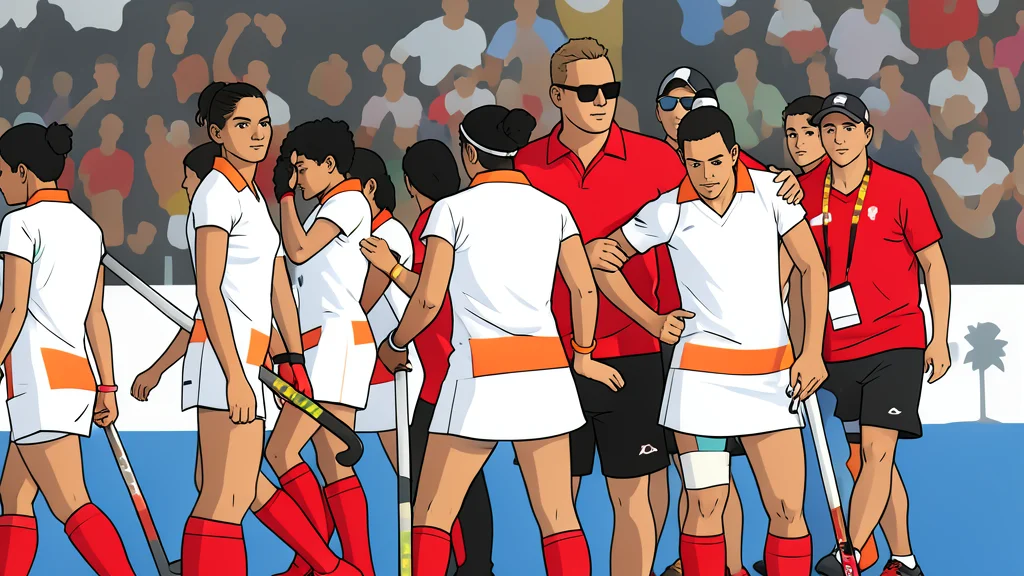
A outstretched hand stops a certain goal. In the silence of the box, Bichu Devi Kharibam’s save became the heartbeat of a team that refused to break.
The ball was already moving. It cut through the air, a red sphere with a singular, deadly purpose, heading straight for the net. England’s attack had peeled back the layers of Indian defense. For a fraction of a second, the outcome felt written in the dust of the pitch. Then, motion. Bichu Devi Kharibam threw her entire body into the path of the shot. Her hand, outstretched and desperate, caught the leather. The impact shuddered up her arm, a physical testament to a refusal to yield. That save was not just a stop; it was a declaration. It signaled that the era of passive resistance was over, replaced by a fierce, organized resilience that has shaken the global hockey hierarchy.
This moment crystallizes a broader transformation detailed in reports from GN auto sports/multisport: Asian Games. The Indian women’s hockey team, previously a shadow of its former self, is now storming back. They finished fifth at the FIH Women’s World Cup, their best result since 1974. The shift is tangible. It is seen in the way defenders hold their lines, in the synchronized breathing of the backline, and in the quiet confidence of a squad that has learned to fight not with fire, but with an impenetrable wall.
Defense as the New Identity
Pritam Siwach, a former captain, described the tactical pivot with a stark metaphor. India may not be able to set fire to the opponent’s house, but they will ensure no one can burn down theirs. This philosophy of suppression over spectacle defined their World Cup campaign. Against powerhouses like China, England, and Australia, they drew. They did not score lavishly. Instead, they suffocated the opposition. The goal difference was the weapon. Every conceded goal was a failure to be dissected, every clean sheet a victory to be savored. This defensive solidity is the bedrock upon which their new ambitions are built, turning the team into a unit that is difficult to break and even harder to beat.
Coaching Unity Across Generations
Sjoerd Marie, the Dutch coach who previously led India to a historic fourth place in Tokyo, returned in January to rekindle the flame. He did not arrive with a new playbook, but with a new culture. Marie bridged the gap between the veterans and the rookies, creating a squad where experience and youth feed into each other. He discarded the old hierarchies, giving chances to players like Silpi Das who had long sat on the bench. The result is a team that moves as one. On the field, this unity was visible in the yellow and red bands worn on wrists, a physical reminder that the team is a single entity, bound by trust rather than just tactics.
Rising from Humble Beginnings
The heart of this team beats in places far from the polished stadiums of international competition. Captain Salima Tete, 24, learned her craft in Barkichapara, a small tribal village in Jharkhand. Her first stick was bamboo, crafted by her father. Her movement, quick and fluid, carries the memory of that humble start. Similarly, midfielder Neha Goyal began playing in Haryana because she wanted proper shoes and clothes. Her father’s passing in 2017 left the family in hardship, yet her drive remained unbroken. Even now, her mother works in a factory to support them. These stories are not just background; they are the fuel. The squad, ranging from 18-year-old Sakshi Rana to 36-year-old Savita, is united by a shared history of overcoming. They play not just for gold, but for the villages and families that made them who they are. As they look toward the 2026 Aichi-Nagoya Asian Games, the stakes are higher, but the foundation is stronger than ever.