Wood, Steel, and the Frugal Logic of Nagoya's New Arena
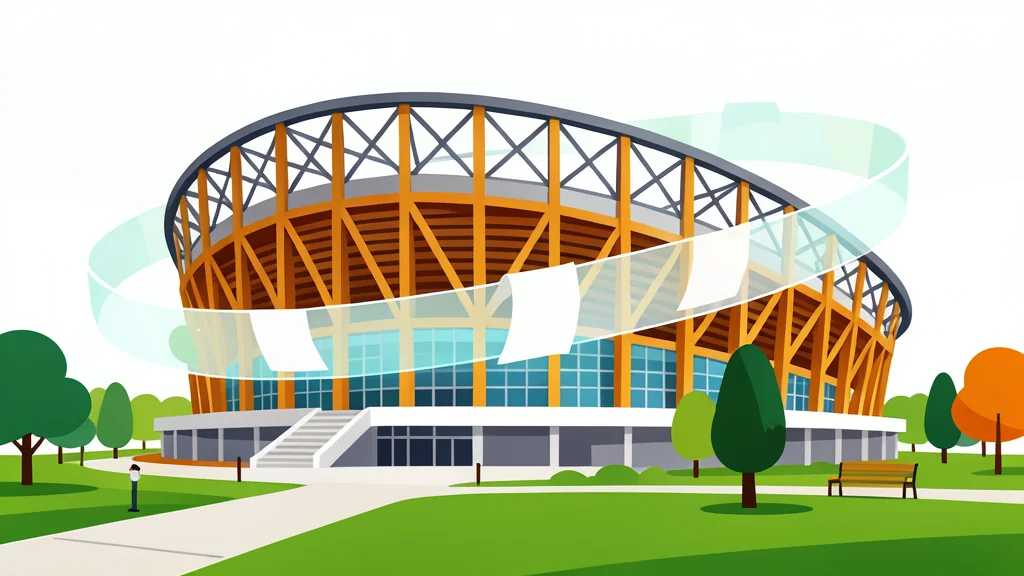
While hotels and cruise ships house athletes, one wooden-and-steel structure in Meijo Park stands as the sole new landmark, driven by a 30-year financial gamble.
The air in Meijo Park hums with the scent of fresh timber and the cold bite of steel. Here, the Aichi International Arena rises not as a monument to excess, but as a calculated risk. Around it, the rest of the Nagoya Asian Games infrastructure remains grounded in restraint. Hotels serve as dormitories; cruise ships float like temporary islands; containers line the streets. The only true new build in this frugal landscape is the IG Arena, a place where basketball courts and judo mats will soon absorb the sweat of competitors.
This venue defies the typical budget-cutting narrative. Its total cost hits 46.4 billion yen, a sum entirely advanced by a private consortium. Aichi Prefecture spent zero yen during construction. Instead, the government will pay a capped service fee over three decades. The math is precise: roughly 20 billion yen of that initial advance must be recouped through operating revenue. It is a structure that bleeds money into its own survival, relying on the long, slow drip of future events to heal the wound of its creation.
The Shadow of Athens
The fear driving this model is visible in the ghosts of previous games. The 2004 Athens venues, now abandoned and silent, loom over every planning meeting in Japan. They are the white elephant trap, a financial black hole that swallows public funds without return. Tokyo learned this lesson through the construction of Ariake Arena, a 37 billion yen investment built for the 2020 Olympics. Under the old designated manager model, such facilities often operated at a perpetual loss, requiring endless subsidies. The Tokyo Metropolitan Government refused to repeat that cycle.
Instead, Tokyo proved that operation rights could be monetized. By shifting the burden of deficit to the operators who control the revenue, the government removed the obligation to bail out losses. This precedent allowed Aichi Prefecture to adopt a bolder strategy. They did not just hire managers; they sold the future. The arena is not a public asset to be maintained, but a commercial engine to be exploited. The wood and steel are not just materials; they are collateral for a 30-year promise of profitability.
Capital Costs and Risk
Japan’s fiscal environment presents a paradox. With interest rates hovering near zero or negative for over two decades, the government borrows cheaply. The national debt interest rate sits around one percent. Private capital, however, faces a higher hurdle. Locking in a 30-year fixed rate requires a risk spread that can multiply the cost several times over. Why would a consortium accept this expensive burden? The answer lies in the exclusivity of the franchise. The arena is their property, their revenue stream, their asset. The risk is theirs, but so is the upside.
A New Model for Sport
As the Asian Games approach, the IG Arena stands ready. It is a physical manifestation of a shift in how major sporting events are financed. No longer are venues built as temporary shelters for athletes, destined to rot or drain the treasury. They are built as businesses. The frugality of Nagoya is not just about saving money; it is about reallocating risk. The wood and steel interweave not only in the architecture but in the financial structure, binding the fate of the prefecture to the commercial success of the events held within. It is a gamble, but one made with clear eyes and a long horizon.