Commanders' Fourth-Quarter Surge After Week 1 Loss

Washington's late rally fell short, but key players flashed promise in the final minutes.
The green grass of the field turned dark under the stadium lights as the Washington Commanders’ hopes dimmed. A 24-22 loss to the Philadelphia Eagles ended the opening night, yet the final minute offered a different narrative. The air was thick with tension, the crowd’s noise a roaring tide that pushed the team toward one last chance. They had the ball, the time, and the opportunity to tie the game. It was a moment of pure, physical urgency where every muscle fiber in the players’ bodies seemed to hum with potential energy.
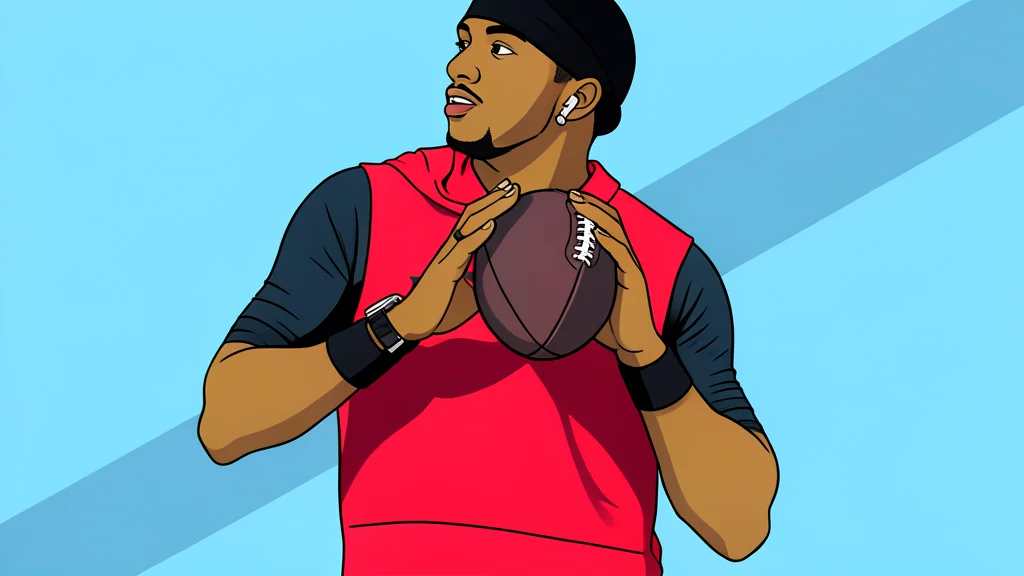
Jayden Daniels stood in the pocket, his eyes scanning for a seam in the defensive coverage. The clock ticked down, a relentless mechanical heartbeat against the chaos of the game. He threw, but the conversion failed. The ball fell short, the crowd’s roar fading into a collective sigh. The loss was final, but the performance in those closing minutes suggested a team finding its rhythm just as the whistle blew. The story of the game was not just about the score, but about the trajectory of its ending.
Quarterback's Late-Game Resurgence
Daniels began the night slowly, his movements cautious as he adjusted to the new offensive system. But by the fourth quarter, a shift in confidence was visible. He completed nine of eleven passes for 100 yards and two touchdowns in the final stretch. His footwork was sharper, his throws more decisive. He even scrambled for 14 yards, a burst of speed that reminded observers of his rookie season. The quarterback showed growth beyond the statistics, often throwing the ball away to avoid pressure rather than forcing a risky play. This discipline, praised by head coach Dan Quinn, signaled a mature approach to the game’s high-pressure moments.
The offensive coordinator, David Blough, faced a challenging debut. His early call on third-and-10 was shaky, and the final two-point conversion play drew criticism. However, a closer look revealed that center Nick Allegretti missed a crucial block, altering the play’s outcome. Blough had to adapt on the fly against a legendary defensive scheme. The experience, though painful, provided valuable learning. The offense will likely find more cohesion as the season progresses, with the quarterback’s late-game explosion serving as a proof of concept for the system’s potential.
Defensive Line Shows Ferocity
New defensive coordinator Daronte Jones crafted a unit that pressured Jalen Hurts relentlessly. The Eagles’ star running back, Saquon Barkley, was held to 83 yards on 15 carries. Most of those yards came from a single missed tackle, a blunder that skews the overall narrative. The defense was solid, generating a steady pass rush that kept the Eagles’ offense off balance. Yet, explosive plays slipped through, proving to be the difference in a tight contest. The unit’s ability to disrupt the rhythm of a top-tier offense is a promising foundation for the rest of the season.
Linebacker Sonny Styles made an immediate impact in his first NFL game. He recorded four tackles, including two for loss and one sack. His sack was particularly impressive, as he ran over Barkley before wrapping up Hurts. Styles also chased Barkley down for a crucial stop, demonstrating his range and effort. His performance showcased a versatile skill set, offering the defense a new dimension in both run support and pass rushing. The energy he brought to the field was palpable, suggesting he could be a key piece in the Commanders’ defensive puzzle.
Receivers and Runners Split
Antonio Williams, a third-round pick from Clemson, delivered a standout debut. He led the team with four receptions for 64 yards and scored his first NFL touchdown. Catching all four targets, Williams answered questions about the team’s third receiver. His efficiency and confidence were evident, making him a reliable option for the offense. Expect to see him feature more prominently in upcoming weeks, as his play was one of the game’s bright spots. His ability to find open space and secure the ball adds a new layer to Washington’s aerial attack.
Jacory Croskey-Merritt had a mixed bag, rushing for 63 yards and a touchdown in the first half. He was the primary offensive weapon early on, breaking tackles with authority. However, a fumble in the fourth quarter, deep in Eagles’ territory, derailed a potential tying drive. Right tackle Josh Conerly Jr. recovered the ball, preventing a turnover that could have been catastrophic. Croskey-Merritt did not return to the game. While he is the team’s best back, the fumbling issue must be addressed. The contrast between his early dominance and late-game mistake highlights the thin margin for error in professional football.