Pochettino's 200% Commitment Demand After Banks Switch
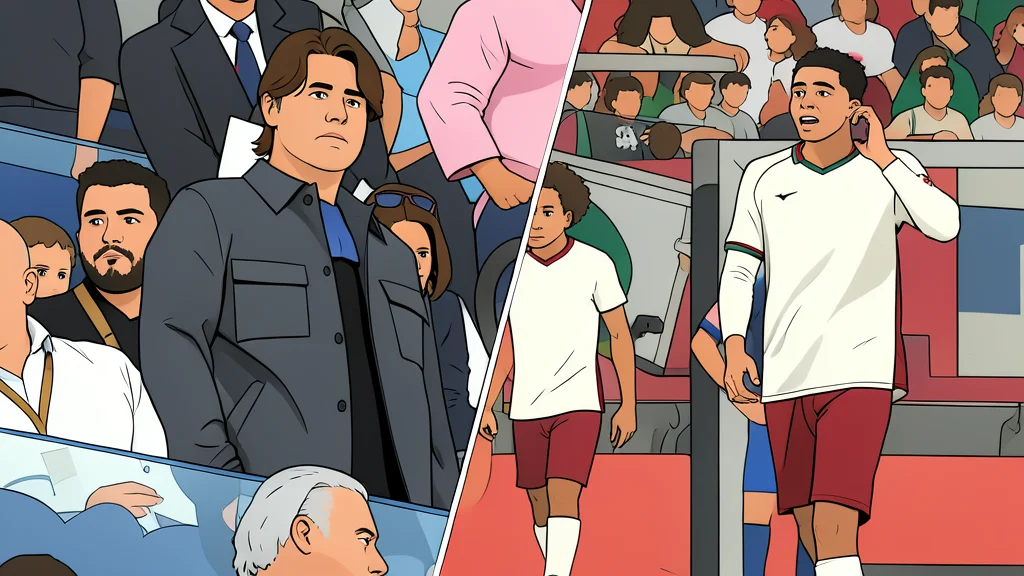
At Yankee Stadium, the coach laid down a hard line: desire for the badge must be absolute, leaving no room for half-measures or dual loyalties.
The air in the Yankee Stadium press room is thick with the weight of expectation, a tangible pressure that sits on the shoulders of anyone walking into that space. Mauricio Pochettino stands before a row of microphones, his voice cutting through the ambient hum of cameras and clicking shutters. He speaks not with the softness of a diplomat but with the precision of a surgeon. The subject is not a tactical diagram on a whiteboard, but the invisible architecture of loyalty. In the world of international football, where borders are porous and allegiance is often a matter of paperwork, the coach has drawn a line in the sand. It is a line that separates the committed from the merely available, a distinction that will define the next era of the United States men's national team.
The catalyst for this declaration is a nineteen-year-old named Noahkai Banks. A dual-national, Banks recently chose to file a one-time switch, opting to represent Germany’s U-21 side rather than continue his path with the American senior squad. He had been part of a senior camp last autumn, his name already whispered among scouts and analysts as a future cornerstone. Now, that trajectory has shifted. As reported by Yahoo Sports, Pochettino acknowledges the player’s honesty in the decision but rejects the notion that partial dedication is sufficient. The message is stark: commitment is not a sliding scale, nor is it a negotiation. It is an all-or-nothing proposition, a binary choice that leaves no space for compromise.
The Absolute Standard of Loyalty
“Commitment is not 50 percent, it’s 200 percent,” Pochettino stated, his words hanging in the air with the weight of iron. This is not a rhetorical flourish; it is a operational directive. The coach wants players who are desperate to play for the badge, whose hunger for the jersey outweighs any personal convenience or alternative opportunity. In a landscape where elite athletes often juggle multiple national identities, this stance serves as a filter. It is a test of character as much as it is a test of skill. The organization, Pochettino insists, is bigger than any single individual. U.S. Soccer is a machine, a complex entity with a history and a future that transcends the careers of its current roster. To serve it, one must be fully subsumed by its goals.
This philosophy is not born in a vacuum. It is a direct response to the realities of the modern game, where dual nationality is common and the temptation to hedge one’s bets is ever-present. Pochettino sees this situation as inevitable, a recurring theme in the development of American talent. By framing the issue this way, he elevates the conversation from a personnel dispute to a cultural statement. He is defining the identity of the team he is building. It is a team where passion is the currency, where the desire to represent the country is not just a preference but a requirement. Any player who enters this system must understand that their loyalty will be scrutinized, measured against a standard that admits no exceptions.
Youthful Ambition and Future Pathways
The stakes are high because the squad is young. As the United States looks toward the 2030 World Cup cycle, Pochettino is working with a group that includes eight teenagers and twelve uncapped players. These are not veterans with established reputations; they are raw talent, full of potential and vulnerability. Cavan Sullivan, one of the new arrivals, received his first senior call-up, a moment that likely carried the weight of a lifelong dream. Pochettino notes that some of these young players cried when they received the news. That emotion, he says, is exactly what he wants to see. It is the raw, unfiltered passion that fuels high performance. It is the fire that must be protected and nurtured, not the cold calculation of a player weighing their options.
However, the presence of these young dual-nationals means the Banks situation is likely not an isolated incident. Several of the teenagers in the current camp are eligible to represent other countries. This creates a potential minefield for the future. As Pochettino guides this group through their early senior experiences, he is also setting the precedent for how the team will handle similar decisions. The upcoming friendlies against Peru, Chile, Mexico, and Canada will be the first real tests of this new era. It is a period of transition, where the old guard is being replaced by a new generation that must prove its worth not just on the pitch, but in its dedication to the cause.
A New Era Begins Now
The departure of Noahkai Banks to Germany is a loss, certainly, but it also serves as a clarifying agent. It forces the organization to articulate its values clearly and decisively. Pochettino’s stance is a declaration of intent. He is not looking for players who are merely available; he is looking for players who are invested. The next stage of the USMNT project is not just about winning matches; it is about building a culture. A culture where the badge is sacred, where commitment is absolute, and where the passion of the young is harnessed toward a common goal. The road to 2030 starts now, and the first step is ensuring that every player on the team is running it with 200 percent of their heart.