Szoboszlai's Anfield Strike and Personal Pledge

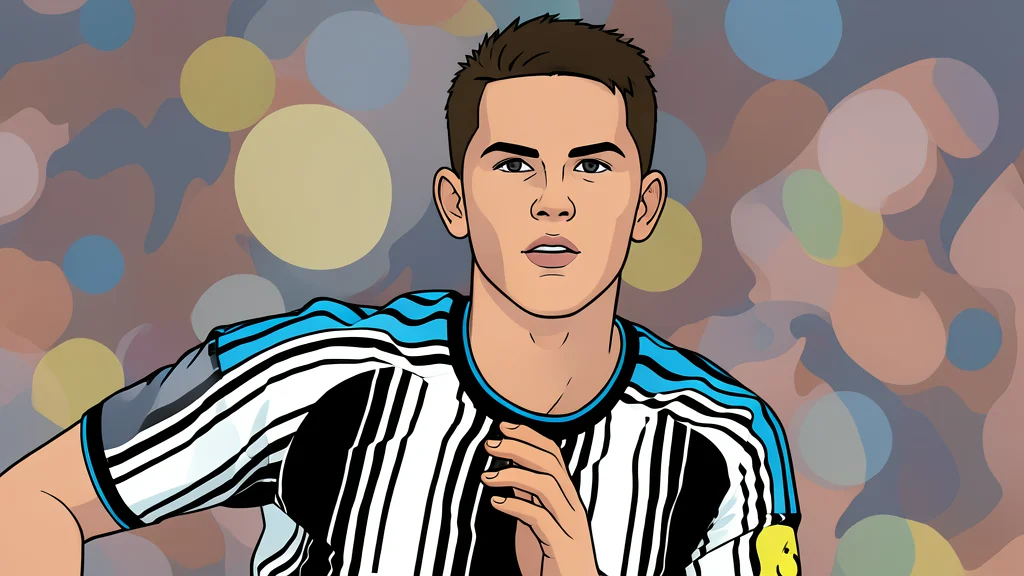
Under the floodlights, Dominik Szoboszlai points a single finger to his ear. The gesture is quiet, deliberate, and entirely for himself, marking a moment of raw individual expression within the collective roar of Anfield.
The ball leaves his boot with a sharp, violent arc, bending away from the reach of the Tottenham defense before slamming into the net. At Anfield, the air suddenly thickens with noise as Dominik Szoboszlai completes a stunning strike for Liverpool. He does not run to the corner flag. Instead, he stands still, raises one hand, and taps his index finger against his ear. It is a private signal, a quiet defiance against the noise, a celebration he has claimed was never meant for the crowd but strictly for his own soul.
This goal seals the victory for Andoni Iraola’s side in the Carabao Cup, adding another jewel to a season where Szoboszlai has become the Premier League’s most prolific long-range scorer. Since arriving in July 2023, no player in the division has struck from outside the box more times than the Hungarian midfielder. Thirteen goals. Thirteen moments of pure power. Yet, as Yahoo Sports reports, the gesture behind the goal matters more to him than the statistic. He insists the ear-touch was a premeditated act of self-affirmation, decided in the tunnel before the kickoff, not a reaction to external pressure.
Silence in the Steward's Eye
The decision to celebrate this way was not a shout, but a whisper. Szoboszlai admits he had planned the move before the match began. He did not do it to answer critics or to make a political point. He did it because he is human. The 25-year-old rejects the notion that he was responding to the poor performance against Fulham, a match where he won only one of ten duels. Instead, he frames the action as a reminder that players are allowed to have bad days. The gesture was a bridge between the individual struggle and the collective support, a nod to the people who stand beside him when the scoreboard is not kind.
Beyond the Duel Statistics
There is no perfect player, Szoboszlai argues. No one plays every game of their life at peak efficiency. There will always be matches where the body feels heavy, where the connection to the ball is loose, where the duel is lost. But the reaction to that moment defines the athlete. He believes he reacted well to the Fulham draw, allowing the disappointment to pass without letting it calcify into doubt. His focus has already shifted forward, toward Sunday’s clash with Bournemouth. The past is a ghost; the next game is the only reality that matters.
Structural Roles and Balance
On the pitch, the geometry is precise. Under Iraola, Liverpool do not operate with a simple two-man midfield wall. The formation is a triangle of distinct roles: a six, an eight, and a ten. The six sits deep, the eight floats higher, and the ten pushes toward the attack. They are not side-by-side clones; they are interlocking gears in a larger machine. Szoboszlai clarifies this structure, noting that media diagrams often flatten these nuances into static boxes. In reality, the positions shift, breathe, and adapt. He is comfortable in the chaos, knowing that his role is to provide balance, whether he is winning one duel or eight.
He is now a vice-captain, a leader who understands that consistency is a myth. There will be games where the team stumbles, where the individual fails. But the essence of the sport lies in the forward motion. Leave the past behind. Step onto the grass. The ball is waiting, and the ear is listening.