Carrick’s Grip Slips as United Stumble into Crisis
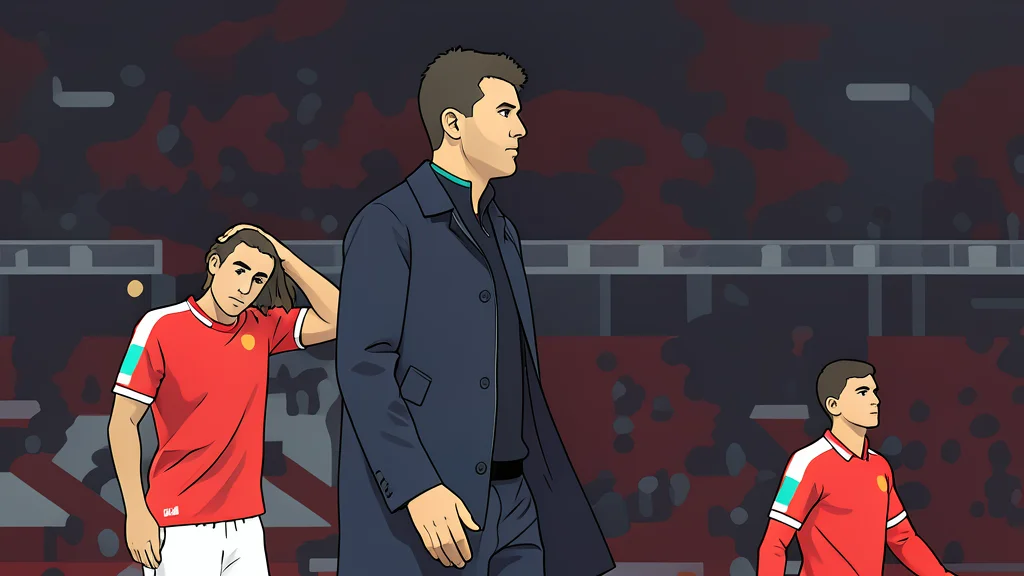
The boos at Old Trafford signaled a shift. Michael Carrick’s early advantage is evaporating as defensive frailty and a punishing fixture list threaten his tenure.
The final whistle at Old Trafford did not just end a match; it severed a fragile hope. Manchester United’s collapse against Brighton left the air thick with frustration, the boos rising from the stands like a physical weight pressing down on the players. It was not merely a defeat, but a dissection of Michael Carrick’s tenure. The manager, who arrived with the singular advantage of not being Ruben Amorim, is finding that distinction offers no protection against the rot within the squad. The 2-0 lead, once a shield, crumbled under the pressure of a Brighton side that played with a fluid, terrifying precision. For Carrick, the night exposed the thinness of the margin between promise and peril.
As detailed by Richard Jolly in Yahoo Sports, the defeat carries a specific gravity. It is the first time in half a century that United have been overturned at home after leading by two goals. The statistic hangs in the locker room air, a cold reminder of historical fragility. While the loss to AC Milan’s counterpart in Europe provided context for the club’s broader underachievement, the Carabao Cup exit at home is a wound that cuts deeper. It suggests the initial surge of confidence surrounding Carrick is wearing off, replaced by the grinding reality of a season that has already gone wrong. The manager’s ability to pick players in their best positions and refuse public criticism no longer serves as a balm. It is simply not enough.
Defensive Frailty Exposed
On the pitch, the structural decay was visible in every pass and every scramble. United’s defense, once a potential pillar of stability, has become a source of chronic anxiety. The lone clean sheet came against Sabah, a match that required more fortune than skill. Against Premier League opposition, the team has conceded ten goals in five games. The breach against Brighton was particularly stark. Ayden Heaven and Leny Yoro, a pairing that seems ill-suited to the demands of the modern game, were isolated in the center. The gap between them in the build-up to Pascal Gross’s goal was a physical manifestation of their disconnect, a 34-meter void that highlighted a systemic failure.
The signing of Andrey Santos in July now looks like a puzzle piece that does not fit the board. Paid a hefty fee for a Chelsea reserve, the Brazilian has been lamentable in his two appearances, lacking the presence required to anchor a backline. Watching Yoro struggle raises uncomfortable questions about the coaching staff. With former center-backs Jonathan Woodgate and Jonny Evans on the sidelines, the inability to forge a solid defensive unit is a direct indictment of their methods. Carrick, a high-class midfielder in his playing days, is now tasked with fixing a problem that lies at the heart of his former strength. The irony is bitter, and the results are catastrophic.
A Punishing Calendar Ahead
The immediate future is a gauntlet of high-pressure encounters. The trip to Fulham on Sunday assumes huge proportions, with United potentially sitting as low as 17th in the table. Beyond that, the international break offers no respite, only a dense cluster of opponents that tests every aspect of the team’s resilience. Tottenham, Atletico Madrid, Leeds, Como, Bournemouth, Chelsea, Roma, and Aston Villa await in a single month. For a squad that appears physically and mentally drained, this is not a schedule; it is an obstacle course designed to break them. The history of Old Trafford is littered with managers who succumbed to the weight of October and November. Erik ten Hag and Ole Gunnar Solskjaer can testify to the sacking season that descends like a fog when results do not follow.
Carrick insists they can turn it around, a declaration that rings hollow against the backdrop of recent performances. The transformation he achieved last season is a distant memory, overshadowed by the current fragility. The boos at the final whistle were not just a reaction to a loss, but a signal of a changing tide. The advantage of being the alternative to Amorim has faded. What remains is a manager fighting a war on multiple fronts, with a squad that lacks the fitness, the cohesion, and the defensive solidity to survive the coming storm. The ominous sign is not just the scoreline; it is the silence that follows the booing, a void where confidence once resided.
The Weight Of Expectations
The pressure on Carrick is no longer just about wins and losses. It is about identity. United’s inability to maintain a lead, their lack of defensive structure, and the questionable quality of recent signings all point to a deeper malaise. The manager’s initial strategy of stability and positivity is being stripped away by the relentless demands of the game. As the fixture list tightens, the margin for error shrinks to zero. The story of Manchester United’s season is no longer one of gradual improvement, but of a slow unraveling. Carrick’s days may be numbered, not because of a single poor performance, but because the foundations beneath him are crumbling. The boos at Old Trafford were a warning, clear and loud, that the patience of the fans is running out.