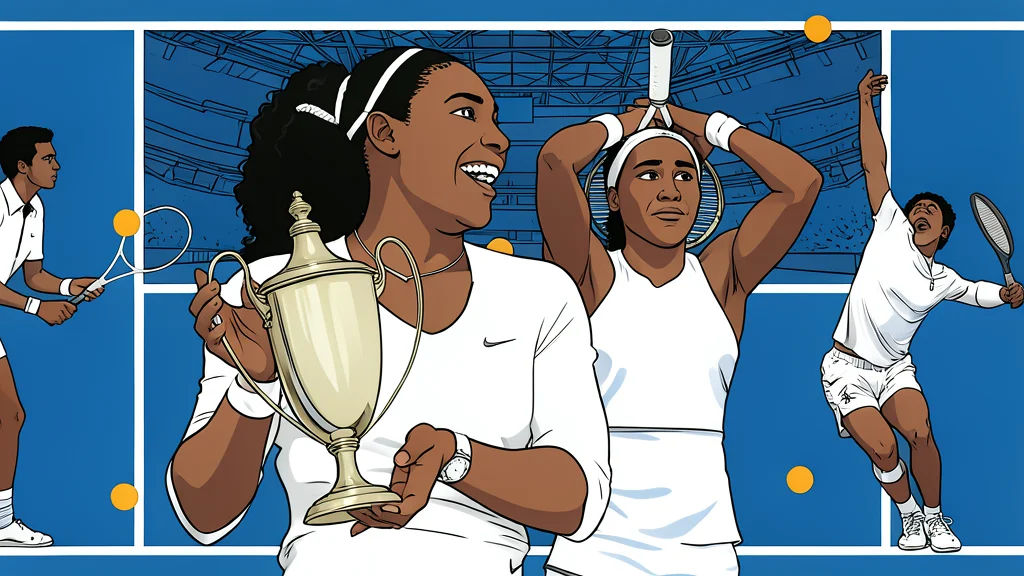
Althea Gibson's Shadow over Flushing Meadows
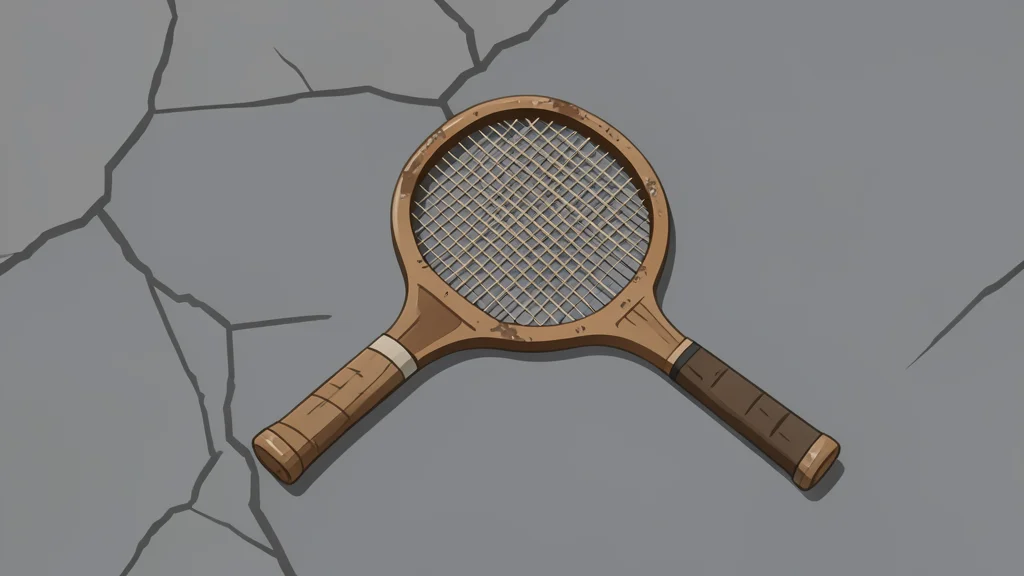
A weathered wooden racket rests on cracked asphalt, a silent testament to the girl who played in Harlem's streets before she conquered the world's grand stages.
The air in Flushing Meadows tastes of sweat and expensive perfume. One million humans push through the gates of the USTA Billie Jean King National Tennis Center, a tidal wave of consumption that drowns out the quiet dignity of the sport. It is a scene of chaotic abundance, where the roar of the crowd masks the history buried beneath the manicured grass.
In the shadow of the steep stands, a dark silhouette stands still. She watches the frenzy from above, her presence a stark contrast to the rushing feet below. Most passersby do not even glance up. They are too busy holding their $50 towels or sipping $23 cocktails, oblivious to the face of the woman who made this stadium possible.
A Monument in the Crowd
The US Open has become a commercial juggernaut, with 108 million dollars in prize money for 2026 setting a record for Grand Slam events. The USTA, the governing body, sees the tournament as a financial engine, spilling an estimated half-billion dollars into their coffers. It is a spectacle of scale, where seven official fan shops and four exclusive stores line the walkways, creating a retail maze that rivals any shopping district.
Queues stretch out like rivers of waiting bodies, similar to the lines for new technology on the 5th Avenue. The atmosphere is one of high-stakes consumption, where a signature cocktail costs more than a meal in a neighborhood diner. In this whirlwind of commerce, the statue of Althea Gibson remains a fixed point, a silent observer of the modern circus she helped build.
Playing on Harlem Streets
Decades earlier, the game looked different for a girl in Central Harlem. Althea Gibson did not have access to manicured lawns. Her court was the asphalt of the "Play Streets," where she swung a wooden racket against the world. In the 1930s, this neighborhood was the densest African American community in the world, a hub of life and struggle where talent had to fight for recognition.
Gibson was visibly superior, larger and faster than her peers. A social worker spotted her raw power on the street and provided a real racket, placing her in a development program. But the doors to major competitions remained locked. The championships were reserved for white players, a barrier that seemed impossible to break for a girl from the projects.
Breaking the Color Line
Change came not from within the club, but from outside. Alice Marble, an eighteen-time Grand Slam champion, wrote an open letter denouncing the racist admission policies of the US association. She argued that excluding the best player in the country based on skin color was a moral failure. The pressure mounted until the institution could no longer ignore the injustice.
In August 1950, Gibson stepped onto the grass at Forest Hills, becoming the first Black tennis player in history to compete. Her breakthrough was not just personal; it paved the way for future generations. Seventy years after her 1956 French Open victory, her legacy stands as a pillar in the stadium named for Arthur Ashe, a reminder that the game belongs to everyone.