Rybakina Claims US Open and World No. 1 Spot
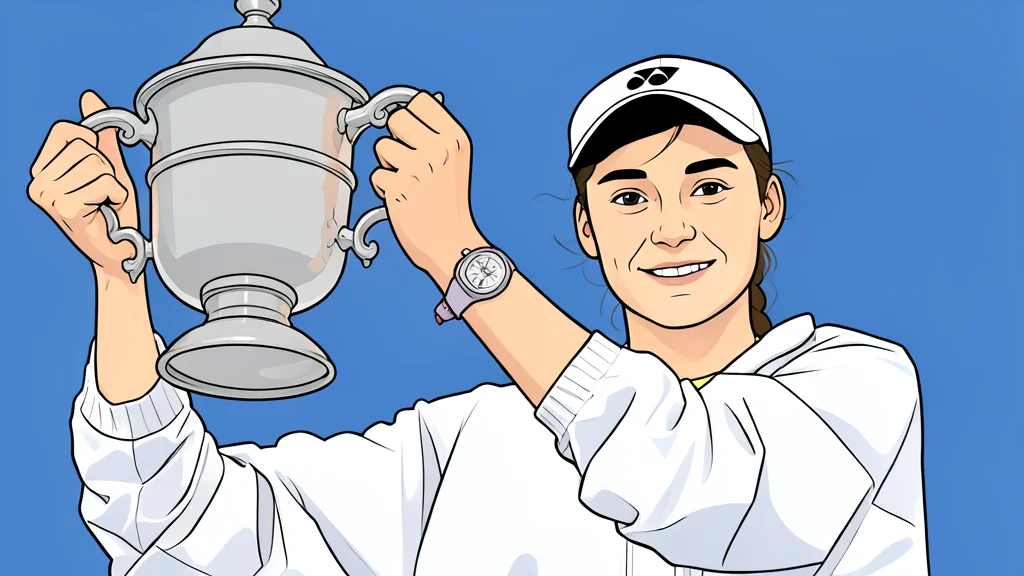
Elena Rybakina has rewritten the tennis landscape, claiming the 2026 US Open title and the world number one ranking with a performance that defies the traditional narratives of the sport.
The clay dust settles on the center court, a fine red haze hanging in the humid air of New York. Elena Rybakina stands still, the silence of the crowd pressing against her ears as the reality of the moment crystallizes. She has just defeated Aryna Sabalenka in a three-set thriller, a victory that lands with the weight of history. It is not merely a win; it is a coronation. The Kazakhstani player, twenty-seven years old and poised with an almost supernatural calm, has secured her third Grand Slam title. The scoreboard freezes, the final point locked in, and the world shifts around her.
This achievement marks a singular milestone in the sport’s long chronicle. Rybakina becomes the first player representing Kazakhstan to reach the pinnacle of the professional rankings, joining an exclusive club of thirty women who have held the number one spot. Her journey to this point has been defined by a steady, unflappable demeanor that contrasts sharply with the explosive energy of the game itself. As reported by Yahoo Sports, her ascent is not a sudden spike but a sustained climb, culminating in a year where she claimed the WTA Finals, the Australian Open, and now the US Open. The physical toll of such dominance is heavy, yet she carries it with a grace that feels innate rather than learned.
Physical limits and future horizon
When asked about the longevity of her career, Rybakina offers a candid assessment that strips away the romanticism often associated with athletic endurance. She admits she cannot imagine playing professionally into her late thirties or forties, a timeline that legends like Serena and Venus Williams have navigated. For Rybakina, the body is a finite resource, and the physical demands of the tour are a constant, grinding pressure. "I feel like it's very difficult for the body physically," she explains. There is no grand plan to extend her career by a decade; instead, there is a clear-eyed acceptance of her current peak and the inevitable decline that follows.
This perspective is not born of fatigue alone but of a deep understanding of the sport’s physiological costs. While she has aced her way to fourteen tour titles, the cumulative wear on her joints and muscles is a silent companion to her success. She does not dismiss the possibility of staying, but she does not dwell on it. The focus remains on the present, on the next match, the next point. This pragmatic view of her career trajectory adds a layer of urgency to her current dominance, making each victory feel more precious and less guaranteed.
Roots in the Kazakh steppe
Rybakina’s rise is inextricably linked to her national identity. Coming from a country with a developing sporting culture, her achievement carries a weight that extends far beyond the tennis court. She has become a beacon for a nation, a symbol of what is possible when talent meets determination. Since winning Wimbledon in 2022, she has actively contributed to the growth of tennis in Kazakhstan, donating funds to support young players. Her influence is tangible, visible in the increasing number of children taking up the sport in facilities across the country.
Her connection to Kazakhstan is not just symbolic but practical. She has donated significant resources to promising talents, helping to build a foundation for the next generation of players. This commitment reflects a broader pride in her country’s sporting achievements, including the Olympic gold medal in figure skating. Rybakina sees herself as part of a larger narrative, one where Kazakhstan is putting itself on the global map through athletic excellence. Her success is not an isolated event but a catalyst for change, inspiring young athletes to pursue their dreams with confidence and ambition.
The quiet power of focus
Rybakina’s on-court demeanor is a product of her upbringing. From a young age, she was taught to suppress her emotions, a lesson instilled by her parents who believed that focus was the key to success. "When I was a junior, they were always telling me, 'Please, just don't cry,'" she recalls. This discipline has shaped her into a player who rarely lets her feelings show, whether in victory or defeat. She does not fall to the ground in celebration, nor does she break her racquet in frustration. Instead, she maintains a steady, ice-cool composure that is as effective as her powerful forehand.
This emotional restraint is a defining feature of her game. It allows her to remain present in the moment, unclouded by the highs and lows of competition. For Rybakina, tennis is not just a physical contest but a mental one, and her ability to control her emotions gives her a significant advantage. As she stands at the top of the world, this quiet power is as impressive as her technical skill, a testament to the strength of character that has carried her to the pinnacle of the sport.