Agentic AI Drives CPU Demand, Boosting Intel and AMD
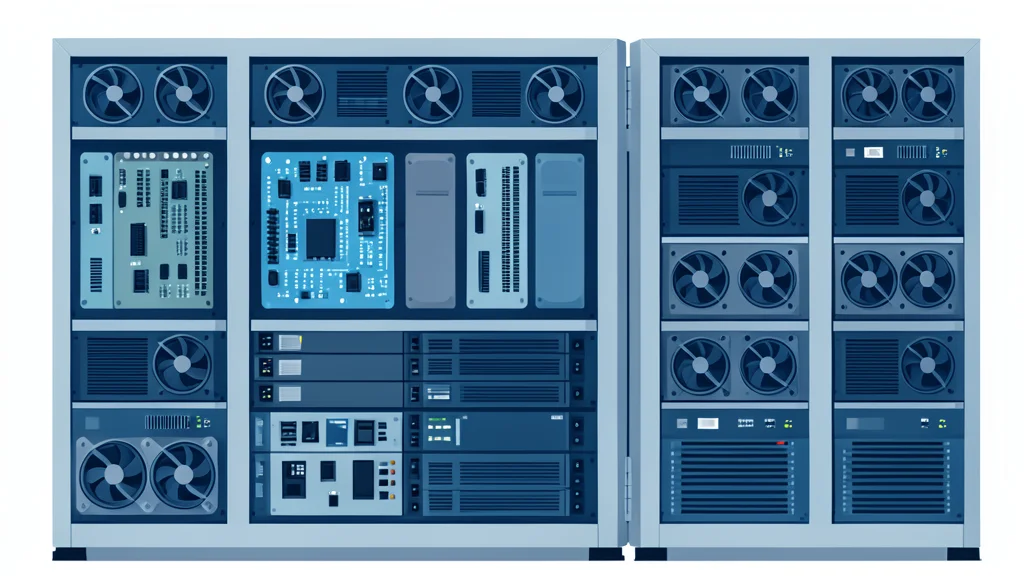
Meta's Muse agent app drives cloud CPU demand, causing price hikes and broadening the AI rally beyond GPUs.
Key points
- Meta's Muse agent app drives persistent CPU and memory demand, shifting compute focus from pure GPU training.
- Nebius raised CPU-only cloud prices by 25% in October, signaling tightening supply and increased pricing power.
- NVIDIA targets $20 billion in standalone CPU revenue, while Intel and AMD benefit from rising server CPU demand.
The AI hardware sector experienced a sharp reversal as agentic AI workloads drove demand beyond traditional GPU training. Intel, AMD, and Arm Holdings posted double-digit intraday gains, signaling a shift in compute requirements toward CPUs and memory. This move coincided with falling oil prices and a retreat in 10-year Treasury yields, easing macro pressure on high-valuation tech stocks.
The primary catalyst is the rapid adoption of autonomous AI agents, which require persistent cloud environments for task orchestration. Unlike static model inference, these agents utilize significant CPU, memory, and storage resources. This structural change is tightening supply chains and altering the revenue landscape for semiconductor and cloud infrastructure providers.
Muse Adoption Drives Cloud Infrastructure Demand
Meta Platforms' AI agent, Muse, reached the top of the U.S. iPhone free-app chart within ten days of launch. Each agent instance runs in a dedicated virtual environment, consuming CPU cycles for browser interaction and code execution, while GPUs handle model inference. This architecture creates a new, sustained demand stream for general-purpose computing resources distinct from peak training loads.
Supply constraints are already manifesting in pricing and lead times. Server CPU prices from Intel and AMD have risen sharply this year, with lead times extending. Nebius, a cloud provider, announced a 25% price increase for CPU-only instances effective October 1. This pricing power confirms that agentic workloads are becoming a material revenue driver for infrastructure vendors.
Semiconductor Vendors Capture Broader Compute Market
Intel and AMD are positioned to benefit from the expanded server CPU market as agents require more general-purpose processing. Arm Holdings stands to gain as hyperscalers adopt Arm-based architectures for in-house silicon. Amazon AWS, Alphabet Cloud, and Microsoft Azure are expanding agent workloads on custom chips like Graviton, Axion, and Cobalt, further diversifying their hardware mix.
NVIDIA is also entering this segment, with its next-generation Vera CPU utilizing an Arm-based architecture. The company has identified nearly $20 billion in standalone CPU revenue opportunity for the current fiscal year. This expansion indicates that even GPU-centric players are recognizing the critical role of CPU performance in agentic AI ecosystems.
Memory and Optical Stocks Rally on Volume
The rally broadened to include memory and optical networking components, reflecting increased bandwidth requirements. Micron Technology and SanDisk rallied as demand for HBM, DRAM, and enterprise SSDs grew alongside AI server deployments. Heavier server workloads from agents directly increase memory consumption, supporting prices for storage and memory manufacturers.
Optical networking firms such as Lumentum, Coherent, Ciena, Applied Optoelectronics, and Corning also moved higher. Investors are pricing in rising demand for high-speed connectivity necessary to support larger, more distributed AI clusters. According to moomoo.com, this spread across the infrastructure stack suggests the AI trade is evolving into a multi-component hardware cycle rather than a single-chip narrative.