NERC Overhauls Grid Rules for Rapid Data Center Growth
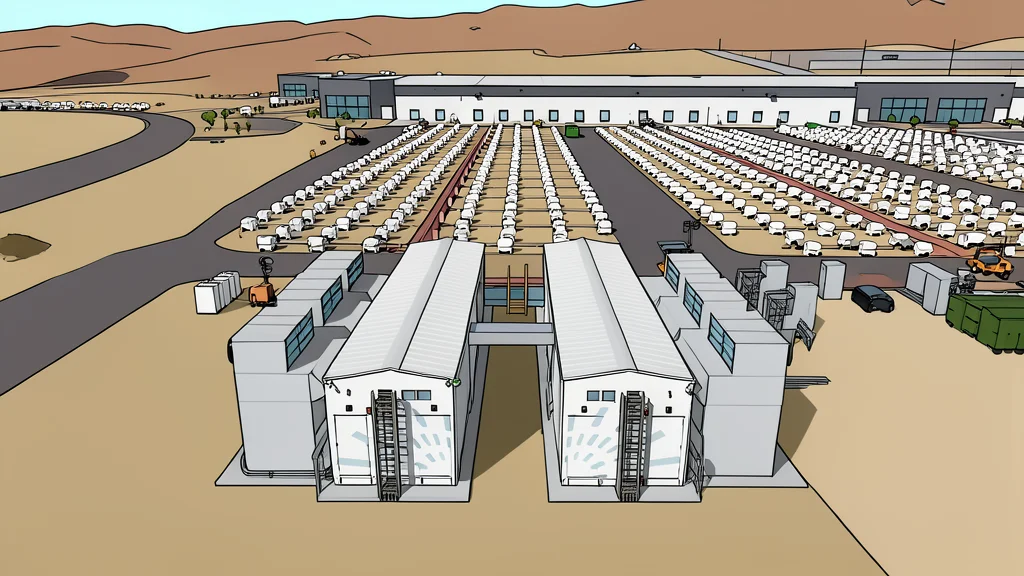
Data centers are straining grid reliability standards designed for passive loads, prompting NERC to implement new interconnection rules by 2026.
The North American Electric Reliability Corporation (NERC) is accelerating regulatory reforms to address the rapid integration of data centers into the transmission system. A July 2024 incident in the Eastern Interconnection demonstrated that voltage-sensitive digital infrastructure can cause sudden, massive load drops when subjected to minor grid disturbances, a behavior fundamentally different from traditional passive demand.
NERC’s Large Loads Action Plan introduces a new class of registered entities and sets a hard deadline for compliance in 2026. This regulatory shift acknowledges that existing interconnection standards, originally designed for generators, are insufficient for managing the dynamic and unpredictable nature of modern high-density computing facilities.
July Incident Reveals Load Sensitivity
During a routine fault on a 230-kV line, protection systems caused six voltage depressions within 82 seconds. While the bulk power system stabilized quickly, approximately 1,500 MW of data center load disconnected simultaneously due to customer-side controls reacting to the voltage fluctuations. This event highlighted a critical gap: the grid is prepared for generator loss but lacks standardized modeling for synchronized load disappearance.
Frequency and voltage deviations following the disconnect required immediate operator intervention, including the removal of shunt capacitor banks to restore normal levels. NERC’s January 2025 incident review identified this as a primary case study for the reliability risks posed by large loads that do not behave like traditional electricity end-users.
Demand Growth Outpaces Transmission Planning
NERC’s 2025 Long-Term Reliability Assessment projects a 224 GW increase in North American summer peak demand over the next decade. This figure represents a 69% upward revision from the previous year’s forecast, driven primarily by artificial intelligence and digital economy data centers. Individual campuses now consume power equivalent to large power plants, yet they are classified as demand-side resources with significantly higher unpredictability.
The mismatch between development speed and grid infrastructure is widening. Data centers can become operational within one to two years, while the necessary transmission upgrades often take significantly longer. The current interconnection process, built for a world where large dynamic entities were only generators, is failing to keep pace with this accelerated timeline.
Regulatory Gap Assessment Findings
In its March 2026 gap assessment, NERC’s Large Loads Working Group concluded that existing reliability standards and industry practices are inadequate for reliable integration of emerging large loads. While standards like FAC-001 and FAC-002 require reliability impact studies for new interconnections, they were not designed to account for the complex, voltage-sensitive control systems that characterize modern data center operations.
The new framework mandates more rigorous dynamic studies and standardized modeling to ensure that large loads do not trigger cascading stability issues. By redefining how these facilities are registered and studied, NERC aims to close the behavioral gap between how loads are connected and how they actually perform once energized.