Enclustra and MakarenaLabs Launch Local AI Hardware Stack
New Lira platform enables real-time AI inference on Enclustra modules without cloud connection.
Key points
- Lira enables real-time AI inference on Enclustra hardware without requiring cloud connectivity.
- The software runs uniformly across Enclustra's SoC, MPSoC, and MLSoC module portfolios.
- Target applications include healthcare, defense, and industrial inspection where latency matters.
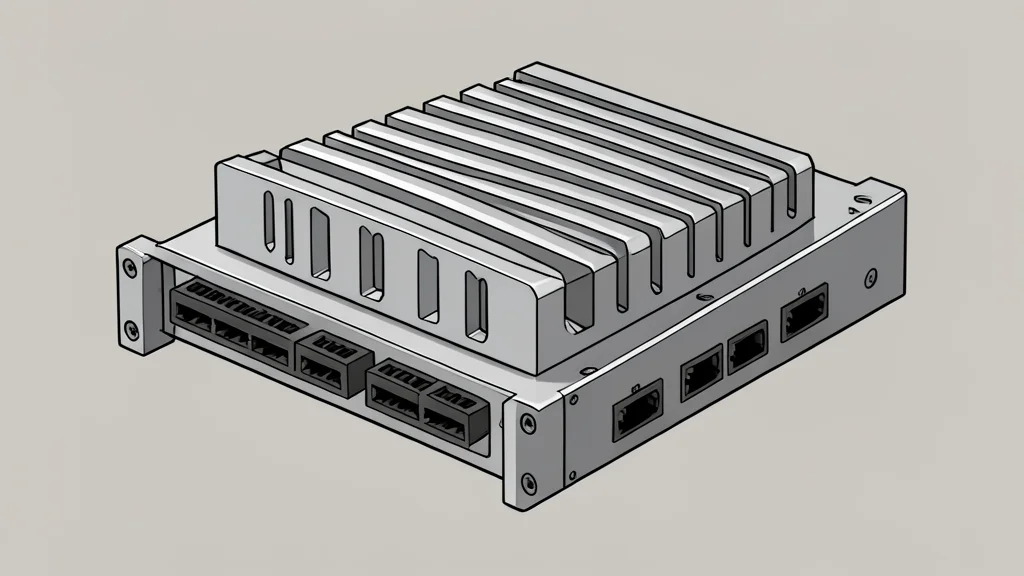
Enclustra and MakarenaLabs have announced a partnership to deliver hardware-accelerated artificial intelligence directly on embedded devices. The collaboration integrates MakarenaLabs' MuseBox software onto Enclustra's processor modules, creating a system branded as Lira. This setup allows engineers to run complex AI tasks locally on the device rather than sending data to external servers.
The primary benefit for users is the elimination of cloud dependency. By processing data on-site, the system reduces latency and ensures that critical functions continue to operate even when internet connectivity is unstable or unavailable. This approach is particularly relevant for industries where real-time reaction is required and data privacy is a concern.
Unified framework across module types
Lira is designed to function across Enclustra's full range of SoC, MPSoC, and MLSoC modules. This compatibility means developers can use the same software framework whether they are building a small, standalone sensor or a high-performance system with multiple accelerators. The consistency simplifies the development process, allowing teams to scale their applications without rewriting core code for different hardware tiers.
Real-time capabilities and application scope
The platform supports a variety of immediate processing tasks, including face and object detection, depth estimation, and hand landmarking. It handles live video, image, and audio streams, pushing results to dashboards or control systems in real time. According to Embedded Computing Design, these features target sectors such as healthcare, industrial inspection, defense, and robotics, where split-second decision-making is often essential.
Trade-offs in local inference
While local processing offers speed and reliability, it requires careful hardware selection. Running AI models on embedded modules consumes significant power and generates heat, necessitating robust thermal management. Additionally, the system's performance is capped by the physical capabilities of the chosen processor. Engineers must balance the need for offline autonomy against the computational limits of the specific module selected for their deployment.