Space Force Targets 14-Day Window for Rapid Satellite Response
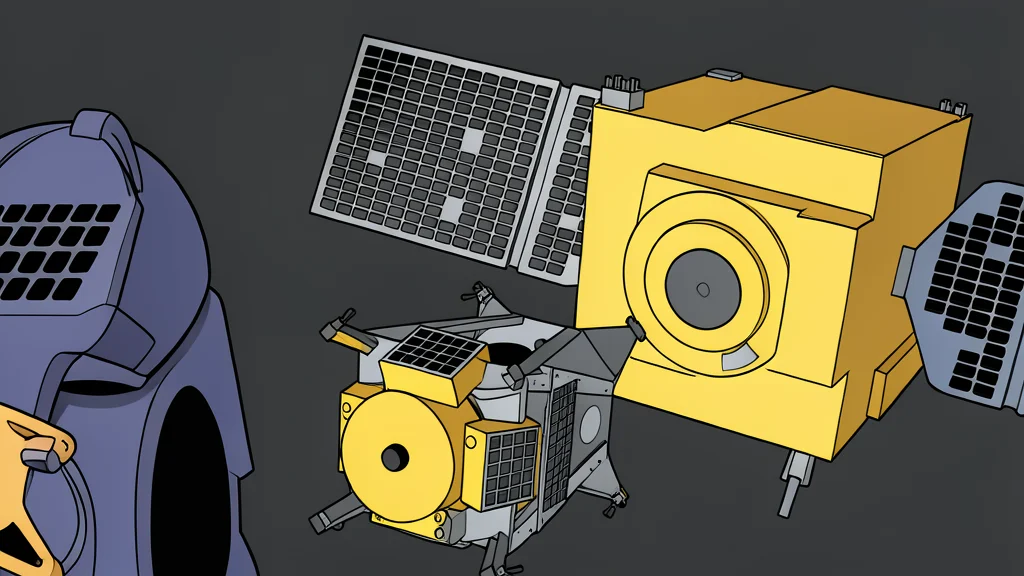
The US Space Force seeks commercial spacecraft capable of docking in orbit, aiming for a 14-day launch timeline.
Key points
- The Space Force seeks spacecraft for a 14-day tasking-to-launch timeline, targeting fiscal 2029 readiness.
- The program requires modular systems capable of docking and maneuvering to replace or support satellites in orbit.
- Fiscal 2027 budget requests $86 million for demonstrations, with future mission details becoming increasingly classified.
The United States Space Force is seeking to purchase maneuverable spacecraft that can be launched on demand to address emerging threats. According to a request for information released on September 18, the service wants these vehicles ready for operations as soon as fiscal year 2029. This move signals a shift toward faster, more flexible space operations rather than relying solely on long-term strategic planning.
The primary goal is to reduce the time between a command and a spacecraft reaching orbit to just 14 days. Space Systems Command’s Space Safari program office, which manages this initiative, is looking for commercial partners who can provide modular systems. These systems must be able to accommodate various payloads and perform complex maneuvers, such as docking with other satellites, to replace or support assets in orbit.
Rapid response drives new procurement strategy
This initiative is part of a broader program called Tactically Responsive Space. As reported by Air & Space Forces Magazine, this concept focuses on the ability to quickly react to on-orbit threats. It includes launching rockets on demand, maneuvering pre-positioned satellites, or buying commercial capabilities during a conflict. The Space Force aims to move away from traditional, slow procurement cycles in favor of rapid acquisition and integration.
The service has already tested these concepts through several recent missions. In 2023, a Firefly Alpha rocket launched a payload just 27 hours after receiving orders. More recently, in June, the service conducted a mission called Victus Haze. This exercise involved two satellites engaging in dynamic pursuits and role-swapping to simulate adversarial scenarios. These tests are intended to validate the technical and procedural feasibility of rapid space operations.
Budget supports operational transition
The Space Force’s fiscal 2027 budget request includes $86 million specifically for Tactically Responsive Space demonstrations. Funding is allocated to support operational missions that require both rapid launch and maneuverable, pre-positioned capabilities. The service plans to establish a rapid reaction force structure, which will involve keeping satellites in production and ready for immediate launch. This financial commitment underscores the priority of turning experimental concepts into standard operational tools.
However, there are significant trade-offs and operational constraints involved. The request for information does not specify how many vehicles will be purchased, leaving the scale of the program uncertain. Additionally, the requirement for modular systems adds complexity to integration and testing. While speed is the primary objective, ensuring that these diverse payloads work together seamlessly under pressure remains a significant technical challenge.
Future missions remain partially classified
Military officials indicate that details about future missions will become less public. Acting portfolio acquisition executive Col. Bryon McClain stated that the service views this as a critical warfighting capability. He noted that the last thing they want to do is make these capabilities too widely known. This suggests that while the technical requirements are becoming clearer, the strategic applications and specific mission profiles will remain largely undisclosed to preserve operational security.
Several missions are currently known, including Victus Surgo and Victus Salo 1, which are expected to launch in the coming years. These projects involve partnerships with companies like SpaceX, Impulse Space, and the Massachusetts Institute of Technology. The inclusion of these commercial and academic partners highlights the collaborative nature of the program. As the Space Force moves toward operationalizing these capabilities, the balance between transparency and security will be a key factor in how the program develops.