Fujitsu MONAKA Chip Promises Half the Servers for AI Tasks
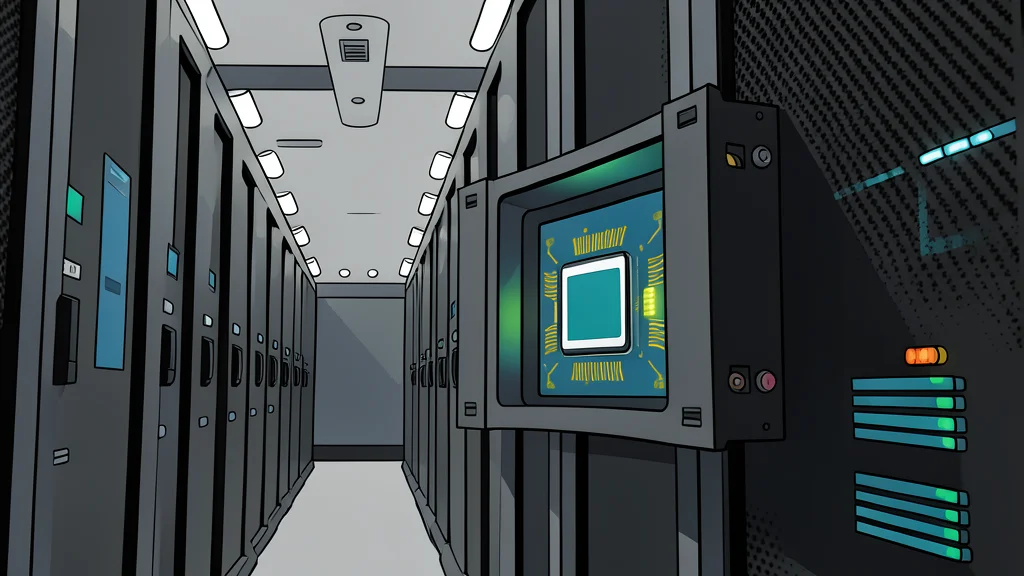
Fujitsu is launching a Japanese-made CPU that claims to cut server requirements in half, offering a sovereign alternative to US-based AI hardware.
Fujitsu has announced that global sales of its new MONAKA processor will begin in November 2026. The chip is designed and manufactured entirely in Japan, positioning it as a sovereign alternative to US-based AI hardware. The company aims to attract data center operators, enterprises, and defense agencies in Japan and Europe by offering a supply chain that is independent of Nvidia-centric ecosystems.
The core value proposition is efficiency. Fujitsu claims the MONAKA CPU delivers twice the AI inference throughput of comparable processors while using half the power. This translates to a practical benefit for buyers: running equivalent workloads on 50% fewer physical servers. This reduction in hardware count directly lowers data center footprint, cooling demands, and capital expenditure for organizations scaling their AI capabilities.
Inside the 144-Core Architecture
The MONAKA is a 144-core Arm-based processor built from four smaller compute units. These units are fabricated on TSMC’s 2-nanometer process and stacked face-to-face with 5-nanometer cache tiles. This 3D-stacked design uses advanced copper bonding to connect the layers, a technique that allows for high density and speed. The chip runs at 3.8GHz and includes specialized instructions for matrix multiplication, which are essential for AI calculations.
A notable departure from industry trends is the memory choice. Instead of using high-bandwidth memory (HBM) common in GPUs, Fujitsu relies on fast DDR5 memory. This decision keeps manufacturing costs lower and simplifies the production process. The trade-off is that MONAKA does not match the raw memory bandwidth of GPU accelerators. However, Fujitsu argues that its approach is more cost-effective for specific inference workloads when deployed at scale.
Server Configurations and Cooling Advantages
The processor will be available in three server forms: a 1U model for standard racks, a denser 2U model, and a multi-node system for high-performance computing. All units are built with full traceability of components and manufacturing, a key selling point for buyers concerned with supply chain security. The 1U server is particularly interesting for its cooling tolerance.
The 1U model can operate in ambient temperatures up to 40 degrees Celsius using only air cooling. With water cooling, it can handle up to 45 degrees Celsius. This eliminates the need for the complex liquid-cooling infrastructure typically required by GPU-dense racks. For data centers, this means lower operational complexity and reduced energy costs for cooling systems, making the MONAKA server a practical choice for facilities without specialized cooling setups.
Sovereign Positioning in Europe
Fujitsu is explicitly targeting European and Japanese markets that are seeking to reduce reliance on foreign supply chains. The company’s messaging emphasizes that the MONAKA server is designed, developed, and manufactured in Japan. This sovereign AI infrastructure approach appeals to government and defense sectors that prioritize data security and supply chain resilience over raw benchmark performance. As reported by GN technics/hardware (en-US), this marks Fujitsu’s clearest attempt yet to shift the market toward domestically built AI hardware.
The catch for buyers is that MONAKA is not a direct replacement for every GPU workload. It is optimized for CPU-native inference at scale. Organizations with workloads that require extreme memory bandwidth may still need traditional GPU solutions. However, for many enterprise and inference-heavy applications, the combination of lower power consumption, reduced server count, and sovereign supply chain offers a compelling alternative that balances performance with strategic security concerns.