Huawei Accelerates AI Chip Roadmap Amid Supply Constraints
Huawei is moving up the release date for its next-generation AI chip to close the gap with Nvidia, but production limits and software hurdles remain significant obstacles for domestic adoption.
Huawei has announced it will bring its Ascend 960DT AI chip to market in the first quarter of 2027, three quarters earlier than previously planned. The decision, revealed by rotating chairman David Wang at the Huawei Connect conference in Shanghai, is a direct response to sustained U.S. restrictions on advanced semiconductor exports. By accelerating the timeline, the company aims to solidify a domestic alternative to Nvidia’s dominant processors before competitors can establish footholds in the Chinese market.
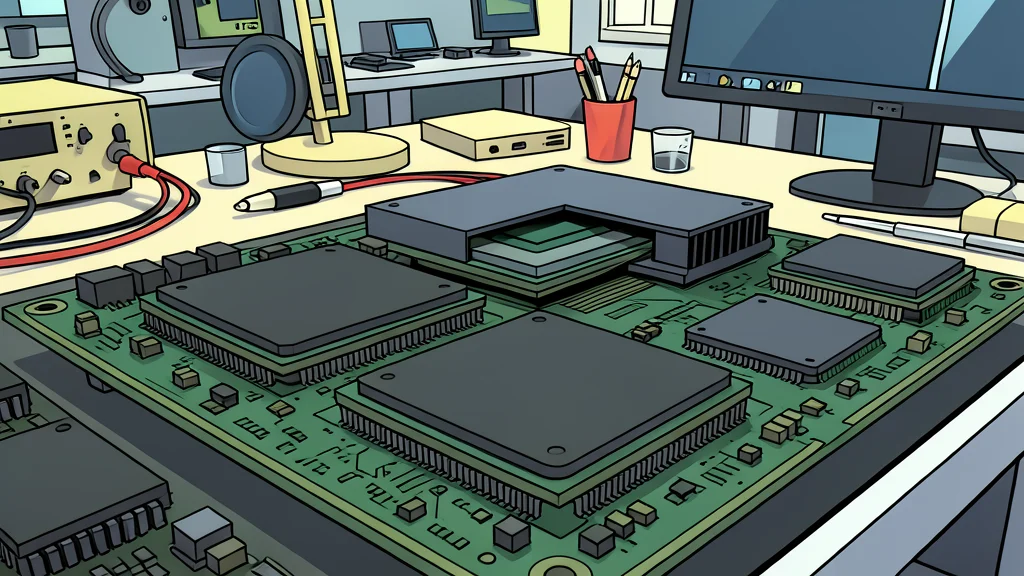
This shift is not merely about speed but about necessity. As access to foreign hardware tightens, Huawei is doubling down on a strategy that prioritizes volume and interconnect efficiency over raw single-chip performance. The company expects the new generation to double the performance of its predecessor, though it must navigate the reality that its chips are individually less powerful than Nvidia’s latest offerings. The move signals a broader pivot toward building systems that work effectively within the constraints of current manufacturing capabilities.
Cluster efficiency replaces raw power
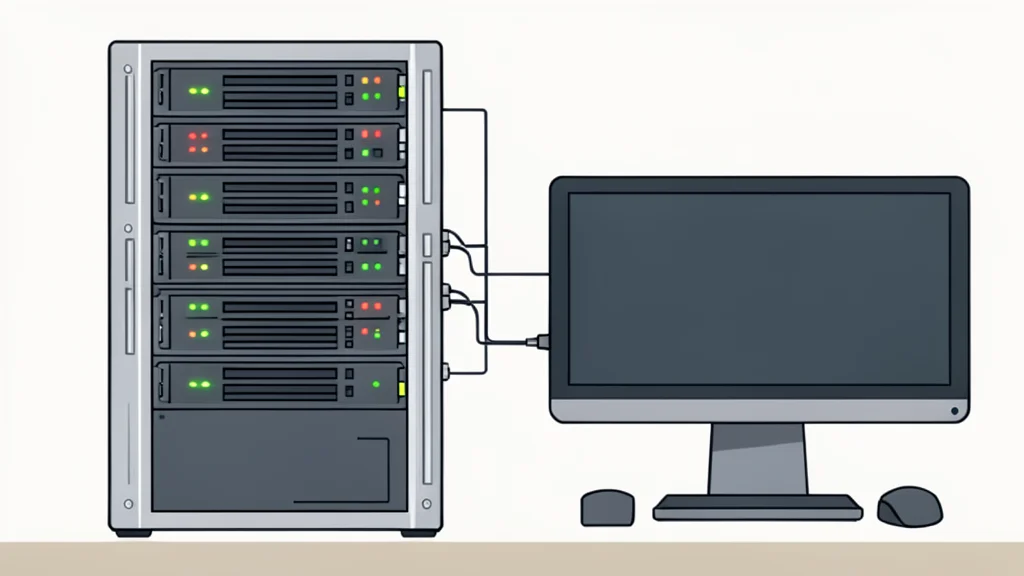
Huawei’s approach relies on its Peerium Computing Architecture, which uses a technology called UnifiedBus to tightly link processors, memory, and storage. The goal is to make thousands of less advanced chips behave like one massive computer. Huawei plans for its largest superclusters to eventually connect up to one million AI processors, with the new Ascend 960 supernode handling up to 4,096 units. According to GN auto tech/hardware: computing hardware, this architectural choice is a direct adaptation to the lack of access to the most advanced foreign silicon.
However, this strategy introduces a critical trade-off. When many chips work together, the time spent moving data between them becomes a major bottleneck. Reuters reports that in conventional systems, communication overhead can consume more than 40% of training time. To mitigate this, Huawei is investing in near-packaged optics to improve data movement and reduce energy consumption. If these interconnect improvements fail to offset the lower performance of individual chips, the cluster approach may not deliver the competitive edge required to displace Nvidia.
Production limits cap market growth
Despite having strong demand, Huawei faces a significant capacity constraint. The company has shipped over 1,000 AI computing systems to more than 370 customers, yet it currently cannot produce enough equipment to meet all requests. Eric Xu, another rotating chairman, stated that Huawei is not planning full-scale international expansion while domestic demand exceeds supply. This shortage means that even as the hardware roadmap accelerates, the speed at which Huawei can capture market share will be limited by its ability to manufacture and distribute the physical units.
The supply issue is compounded by the software ecosystem. Nvidia’s CUDA platform has spent years accumulating developer tools, libraries, and optimizations, making it a sticky standard for AI developers. Huawei has more than 5,200 developers working on its Ascend software, but bridging the gap in usability and community support is a long-term challenge. Until the software experience matches the hardware availability, many developers may remain locked into Nvidia’s infrastructure due to the high cost of switching platforms.
Software remains the critical hurdle
The ultimate test for Huawei is whether its strategy of scale and interconnect can make constrained hardware practical for widespread use. While the 960DT launch is a step forward, the competition is no longer just about chip specifications. It is about creating an ecosystem where developers can build, optimize, and deploy AI models without the friction of a fragmented software landscape. Whether this model can deliver comparable reliability to Nvidia’s established stack remains the key question as the industry moves toward 2027.