Portable Radars Track the Growing Risk of Space Debris
The rapid expansion of satellite constellations has turned low Earth orbit into a crowded and hazardous environment. New portable radar systems are being deployed to track these objects, but scientists remain divided on whether collisions are inevitable or manageable.
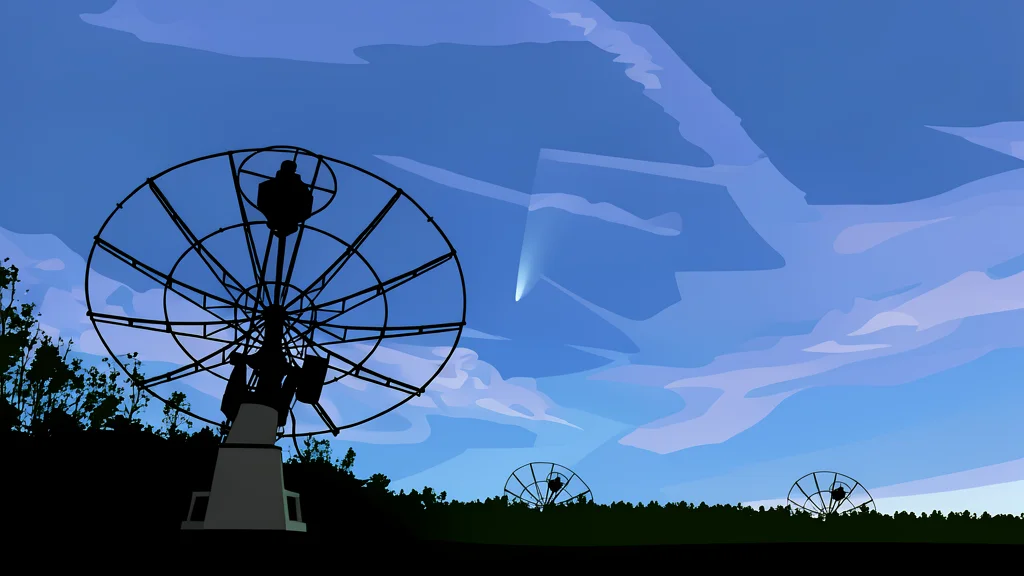
Inside the hills of Maui, a new radar system designed to track space debris operates within a metal container the size of a shipping unit. This equipment, known as Scout-S, was developed by LeoLabs and is distinguished by its portability. It can be transported to any location on Earth and operationalized within hours, requiring only a generator for power and a satellite internet link to transmit data. This flexibility allows the system to function in remote areas, independent of local infrastructure.
The need for such tracking has intensified due to the exponential growth of satellites in orbit. While only about 2,000 satellites existed in 2019, that number has since surged to nearly 17,000. The majority of this increase is attributed to a single commercial constellation, which now accounts for almost two-thirds of all active satellites. These objects travel at speeds exceeding 17,000 miles per hour, creating a significant risk of collision in the low Earth orbit region.
Scientists debate the severity of orbital collisions
Researchers are increasingly concerned about the potential for a cascade of collisions, a phenomenon known as Kessler syndrome. In this scenario, a single impact generates thousands of new debris fragments, which then cause further collisions, rendering the orbit unusable. Lorenzo Olivieri, a professor at the University of Padova, described this outcome as a plausible near-future risk. He noted that the exponential increase in spacecraft has outpaced the industry's ability to manage the resulting debris field.
However, opinions among experts remain divided. While some scientists warn that a Kessler syndrome is inevitable if current trends continue, others dismiss it as a scenario more suited to science fiction than reality. At the Advanced Maui Optical and Space Surveillance Technologies Conference, attendees expressed a range of views, from deep pessimism to cautious optimism. Despite these differences, there is a consensus that the density of objects in orbit requires immediate and robust monitoring.
Space situational awareness becomes a critical industry
The sector dedicated to tracking objects in space, known as space situational awareness, is projected to reach an estimated $1.9 billion in value this year. This growth is driven by the need for both commercial operators and national security agencies to avoid collisions and monitor potential threats. Operators must constantly adjust their satellite positions to maintain safe distances from debris, a process that requires precise and continuous data on the location of every object in their path.
A significant challenge in this field is the lack of standardized communication between different stakeholders. Gabriel Swiney, a policy director at the US Department of Commerce, compared the current state of space traffic to driving on a highway with eyes closed. He emphasized that the core issue is not just technology, but the failure to share information effectively. Without a common language for data and behavior, the risk of accidents remains high for all parties involved.
Daily life depends on reliable satellite data
The consequences of space debris extend far beyond the industry itself, affecting everyday technologies that rely on satellite signals. Global positioning systems, which guide navigation and timing services, are vulnerable to interference from orbital clutter. The report from GN technics/space (en-US) highlights that as the number of satellites increases, so does the complexity of maintaining a safe and functional orbital environment for all users.
The trade-off for the rapid deployment of satellite networks is a significant increase in the risk of orbital congestion. While these networks provide essential services like high-speed internet and communication, they also create a dense field of objects that require constant monitoring. The development of portable, high-accuracy radars represents a technological response to this challenge, but it does not eliminate the fundamental need for international cooperation and responsible space management.