Materials AI Lags in Combining Data Types
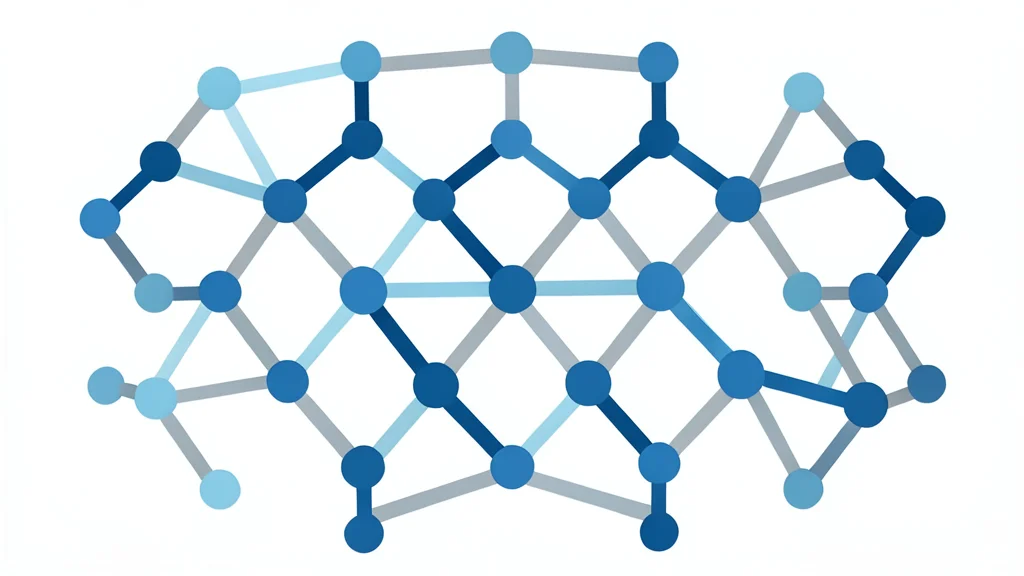
A review of 58 models shows that most process single data types, hindering the integration of physical laws and experimental results.
Key points
- A review of 58 materials AI models found that 90% use only a single data type, limiting their predictive power.
- Researchers propose four core requirements, including physically grounded architectures, to improve model accuracy.
- Traditional material development takes 15-20 years, a timeline AI aims to reduce by integrating diverse data sources.
Developing a new material from laboratory discovery to commercial market has traditionally required 15 to 20 years of trial and error. Researchers are increasingly turning to artificial intelligence to compress this timeline, but a recent analysis reveals a significant structural weakness in the current approach. The field is shifting from narrow, task-specific tools to broader foundation models, yet these systems remain largely fragmented in how they process information.
According to a survey published on the ChemRxiv preprint server and reported by AZoM, most existing models treat different types of material data in isolation. A single substance can be described through chemical composition tables, atomic crystal structures, and electron microscopy images, but current AI systems often analyze these inputs separately. This siloed approach makes it difficult for algorithms to capture the complex relationships between a material’s structure and its physical properties.
Most Models Ignore Multi-Modal Data
The study conducted a bibliographic analysis of 557 records from the Web of Science Core Collection, identifying 58 distinct foundation models for materials science. The authors noted a steep rise in publication activity from 2022 through mid-2026, indicating rapid growth in the sector. However, the diversity of data types used in training remains limited. Of the 58 models examined, 52 relied on a single data modality, such as only text or only tabular data.
Only six models combined multiple data types, and even among these, the integration was shallow. Three paired atomic or crystal representations with natural language text, while experimental characterization data were rarely included. This concentration is partly driven by the availability of standardized, machine-readable data from high-throughput density functional theory databases, which heavily favor inorganic crystals and atomistic materials.
Need For Unified Scientific Frameworks
To bridge the gap between isolated data points and practical application, the researchers propose a structure built on four core requirements. First, models must integrate and harmonize multi-modal data, bringing different measurements into compatible datasets. Second, architectures must be physically grounded, incorporating scientific constraints to ensure predictions align with known laws of physics.
The third requirement focuses on parameter-efficient fine-tuning, allowing models to specialize for specific industrial needs without the cost and time of full retraining. Finally, rigorous validation is needed to test accuracy and physical consistency as new data becomes available. Without these steps, AI tools may remain theoretical curiosities rather than practical accelerators for industries in clean energy and advanced electronics.
Trade-offs In Current Model Design
The current state of materials AI presents a clear trade-off: speed and scalability are achieved by using standardized, single-source data, but this comes at the cost of physical context. By ignoring the interplay between different experimental signals, these models miss the holistic picture necessary for reliable material prediction. The catch is that building more complex, multi-modal systems is computationally expensive and data-hungry, creating a barrier to widespread adoption.
As demand grows for sustainable construction and advanced electronics, the pressure to shorten development cycles intensifies. The review suggests that the next generation of tools must move beyond simple pattern recognition to incorporate deep scientific understanding. Until models can seamlessly connect structure, experiment, and physical laws, the promise of AI-accelerated materials discovery will remain partially unfulfilled.