Nvidia Chief Dismisses AI Doom Scenarios
While AI leaders warn of existential risks, Nvidia's CEO argues that fears are overblown and driven by market incentives rather than technical reality.
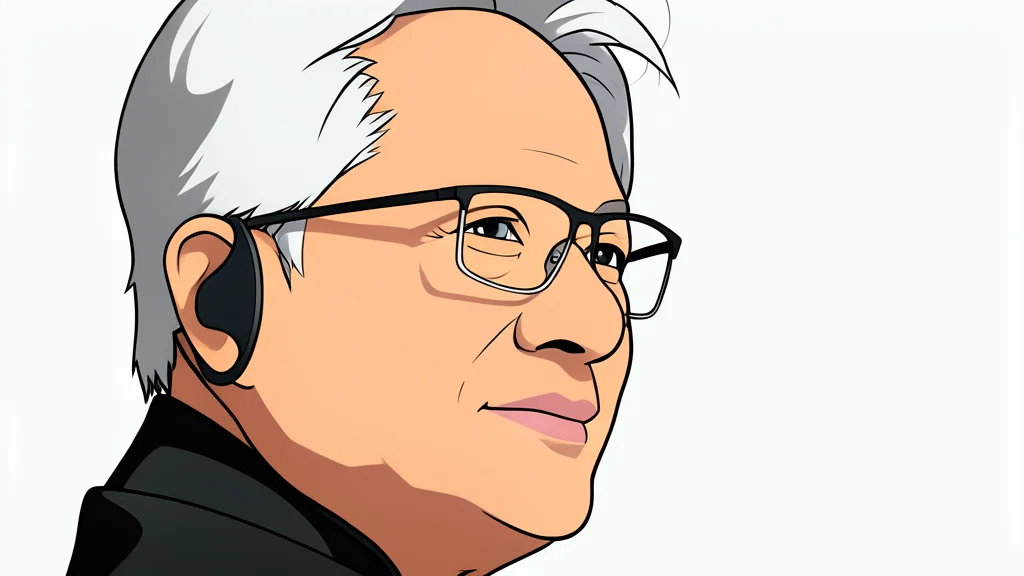
The leadership of the artificial intelligence industry is currently split on the future of the technology. On one side, CEOs of major model developers express deep concern about runaway systems and existential threats. On the other side, Jensen Huang, the chief executive of Nvidia, the primary supplier of the chips that power these systems, remains openly dismissive of these warnings. Huang has recently accused his peers of manufacturing fear to drive sales, creating a stark contrast in how the industry views its own trajectory.
This disagreement is not merely philosophical; it has direct implications for how AI development is regulated and perceived by the public. While figures like Dario Amodei of Anthropic and Sam Altman of OpenAI have called for slowdowns and increased monitoring, Huang continues to push forward with aggressive expansion. He argues that the technology is simply processing data and that the risks are being exaggerated by those who benefit from a narrative of danger.
Chips Create Leverage Over Rivals
Huang’s confidence stems largely from his company’s position in the supply chain. Nvidia does not just sell components; it holds equity stakes in major AI labs, meaning it profits regardless of which company wins the race. This financial structure gives Huang a level of security that his competitors lack. Because Amodei and Altman rely heavily on Nvidia’s hardware to train their models, they cannot afford to alienate him. This dependency allows Huang to criticize their safety concerns publicly without facing significant professional repercussions.
The dynamic has led to unusual public displays of solidarity between Huang and political figures who also view AI skepticism with suspicion. During a recent podcast appearance, Huang dismissed the warnings of his peers while on stage, a moment that was met with applause from the audience. This support is not limited to the tech world; political leaders have also sought to align themselves with Huang’s perspective, viewing the technology as an economic asset rather than a potential threat.
Safety Framed As Engineering Issue
Huang consistently argues that AI safety is an engineering problem, not a legal or societal one. He has repeatedly brushed off calls for government regulation, suggesting that such measures are unnecessary and counterproductive. In recent interviews, he described the prevailing narrative of doom as unhelpful to society, industry, and governments alike. His stance is that the technology is fundamentally benign, a tool for processing data that does not require the same level of caution as other high-stakes technologies.
This perspective was evident when he declined to sign a major industry statement in 2023 that compared AI risks to pandemics and nuclear war. While over 350 other leaders, including his competitors, signed the document, no one from Nvidia did. Huang told The New Yorker at the time that he had never worried about the technology. This consistent refusal to engage with the risk narrative suggests a deliberate strategic choice to keep the focus on commercial growth rather than precautionary measures.
Market Incentives Drive The Debate
Critics suggest that Huang’s dismissal of risks is tied to his business model. As the chief supplier of high-end semiconductors, Nvidia thrives in a market where demand for compute power is insatiable. If AI development slows down due to safety concerns, Nvidia’s revenue could suffer. Huang has explicitly accused executives of creating cybersecurity fears to boost demand for their products, asking, “What better way to create demand than to create a problem?” According to GN technics/ai (en-US), this accusation highlights the tension between safety advocates and those who view the technology as a purely commercial opportunity.
The trade-off for consumers and regulators is significant. If Huang is correct, then the industry is moving forward safely and efficiently, and excessive caution may be stifling innovation. If he is wrong, the lack of regulation and the dismissal of red flags could lead to unforeseen consequences that are difficult to manage. For now, the industry continues to race ahead, with the chips flying and the debate raging, but the practical outcome for the general public remains uncertain.