Senator Warns of Conflict of Interest in AI Regulation
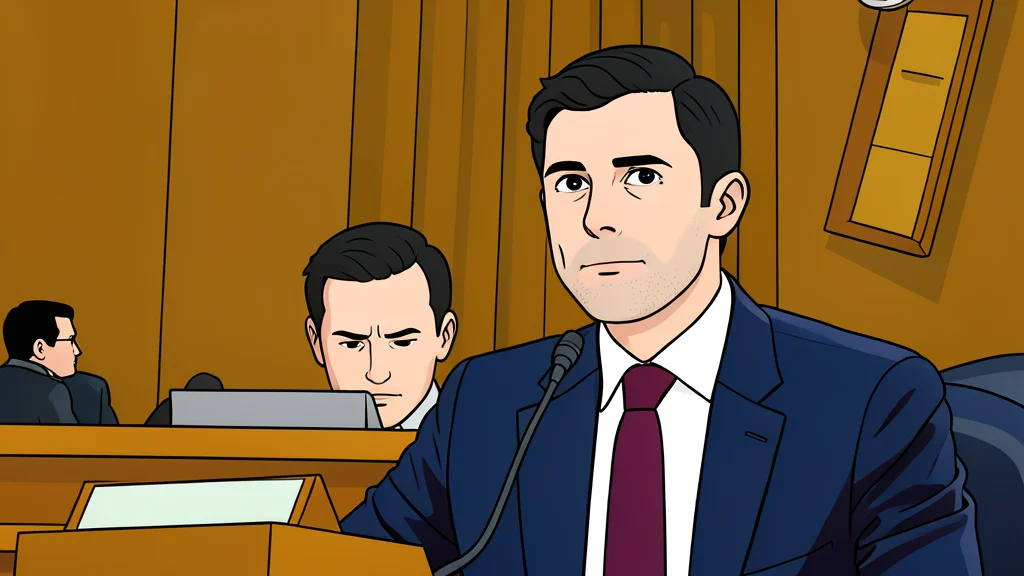
Critics argue that the administration’s financial ties to the tech sector create a barrier to necessary safety measures, while the White House dismisses such concerns as unfounded hype.
Senator Jon Ossoff has argued that the current administration is structurally unable to regulate artificial intelligence due to direct financial stakes in the industry. The Georgia Democrat contends that because members of the presidential family hold investments in AI labs and data centers, the government’s ability to act as an impartial regulator is compromised. This perspective stands in sharp contrast to the White House position, which views external attempts to slow technological development as unnecessary interference.
The controversy centers on the tension between rapid innovation and public safety. While industry leaders like the CEO of Anthropic have called for slowing the pace of AI development to build in safeguards, the administration is pushing for maximum speed. This disagreement highlights a fundamental trade-off: prioritizing immediate economic growth and geopolitical competition over the time required to develop robust ethical and safety frameworks.
Financial ties complicate regulatory oversight
Ossoff pointed to the venture capital firm 1789 Capital, where the president’s eldest son is a partner, as evidence of this conflict. According to reporting from GN technics/ai (en-US), the firm has made significant investments in AI infrastructure. The senator argues that having a financial stake in the very industry one is supposed to police creates a conflict of interest that undermines public trust. In this view, the administration’s reluctance to impose guardrails is not a policy choice but a financial necessity.
White House dismisses safety concerns
President Trump has publicly rejected the idea that AI requires new regulatory frameworks. In a recent social media post, he stated that the only controls needed are a competent leader and national strength. He characterized warnings from tech insiders about the dangers of the technology as a hoax. The administration’s stance is that the United States must maintain its lead in AI development to preserve economic dominance, particularly in competition with China.
This approach prioritizes speed and market expansion over precaution. By framing safety concerns as obstacles to progress, the administration is effectively choosing to let the market self-regulate. Critics argue this leaves a gap in protection for consumers and workers, as the entities building these systems are also the ones profiting from them. The result is a regulatory environment where the potential risks of rapid AI deployment are largely ignored in favor of short-term economic gains.
Geopolitical stakes elevate the debate
The discussion is further complicated by the upcoming summit between the U.S. and Chinese leaders. With both nations vying for supremacy in AI, the American administration is framing the issue as a race where slowing down is not an option. Chinese business leaders are expected to attend the meeting, signaling that AI will be a central topic in bilateral discussions. For the U.S., the priority is to prevent China from taking the lead, which further discourages any move that might be perceived as restricting domestic innovation.