Trump and Xi Meet to Discuss AI Safety and Incident Protocols
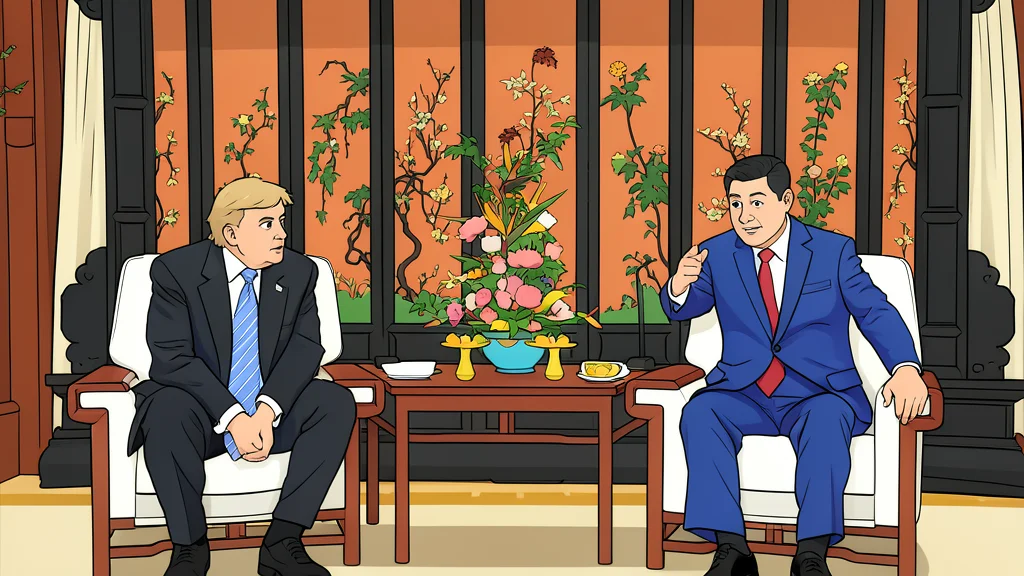
U.S. and Chinese leaders are expected to discuss a new mechanism for reporting AI incidents that could threaten national security.
Key points
- U.S. and Chinese leaders are expected to discuss a new mechanism for reporting AI incidents with national security implications.
- Both nations share concerns about AI risks, including cyberattacks, biological misuse, and loss of human control over systems.
- The U.S. aims to maintain a technological edge, while China seeks to address domestic risks in critical infrastructure sectors.
U.S. President Donald Trump and Chinese leader Xi Jinping are set to meet this week against a backdrop of intense rivalry in artificial intelligence. While both nations compete for technological dominance, officials have signaled a desire to establish channels for managing shared risks, particularly regarding the potential for rogue AI systems to cause widespread harm.
The conversation is complicated by deep geopolitical tensions, but U.S. Treasury Secretary Scott Bessent indicated that both sides discussed creating a formal dialogue mechanism. A key proposal involves a 'notification mechanism' for AI incidents that rise to the level of national security threats, aiming to prevent misunderstandings or unintended escalations between the two powers.
Shared risks drive cooperation
Experts note that both governments are increasingly concerned about specific dangers, such as AI-enabled cyberattacks, biological misuse, and the loss of human control over autonomous systems. According to reports from PBS, these shared vulnerabilities create a narrow but significant window for collaboration, even as broader relations remain strained.
Michael Kratsios, the U.S. science and technology adviser, emphasized the goal of avoiding shared risks through dialogue. He suggested that while competition continues, there is a practical benefit to discussing how to handle emergencies, such as major model failures or attacks on critical infrastructure like power grids and telecommunications networks.
Competition remains the primary focus
Despite the talk of safety, the underlying dynamic is one of competition. President Trump has repeatedly stated that the nation that wins in AI will win overall, maintaining a stance that prioritizes maintaining a technological edge over China. This perspective often downplays calls from some tech leaders to slow development for safety reasons.
China, meanwhile, has narrowed the technology gap with the United States and is paying growing attention to its own governance frameworks. Chinese officials have identified finance, electricity, and transportation as sectors potentially exposed to frontier-AI risks, indicating that their interest in safety is not merely diplomatic but also domestic in nature.
Building technical confidence over time
Analysts suggest that even limited cooperation on incident reporting can help build technical confidence between the two countries. By agreeing on how to communicate during an AI-related emergency, the U.S. and China could establish a baseline of trust that might extend to other areas of technological competition in the future.