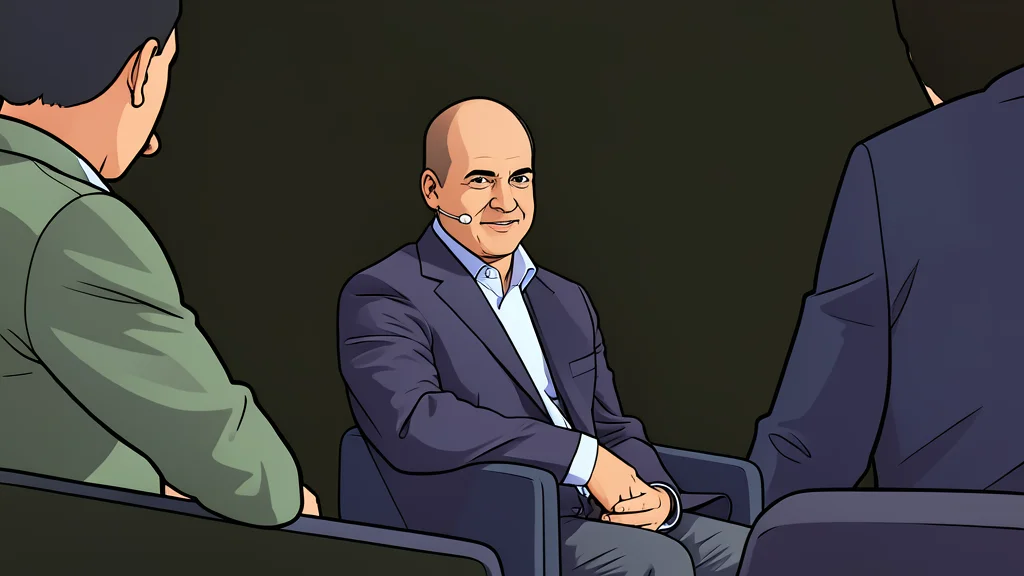
US Bishops Launch AI Task Force to Voice Human Concerns

The US Conference of Catholic Bishops has established a new task force on artificial intelligence, led by Bishop Oscar Cantú. The group aims to translate Pope Leo XIV's recent encyclical into practical guidance, ensuring that human dignity remains central to technological development.
The US Conference of Catholic Bishops has formally announced the creation of a dedicated task force on artificial intelligence. Bishop Oscar Cantú of San Jose, California, has been named as the chair of the group. His primary mandate is to implement the vision outlined in Pope Leo XIV’s recent encyclical, Magnifica Humanitas. This document calls for a broad societal conversation about how emerging technologies impact human life and dignity.
Cantú emphasizes that the initiative is not about opposing technology, but about ensuring it serves humanity. He notes that the Church enters this space without financial or political motivations, seeking instead to protect the most vulnerable members of society. The goal is to create a public square where ordinary citizens, from teachers to parents, can articulate their concerns and influence how AI is developed and deployed.
A Neutral Voice in Tech
According to reporting by GN technics/ai (en-US), the Church’s lack of commercial interest in AI has made it a unique interlocutor for tech companies. Cantú explains that politicians are often beholden to donors and political pressures, which can distort their judgment on tech policy. In contrast, the bishops are motivated solely by ethical considerations regarding human dignity. This neutrality has reportedly resonated with technologists who are increasingly seeking moral frameworks for their work.
The task force intends to apply appropriate pressure on both technology firms and legislators to prioritize human welfare over profit. Cantú argues that because AI affects everyone, every individual has a voice in these decisions. By amplifying the perspectives of non-technical users, the Church hopes to balance the power dynamics currently dominated by industry insiders.
Bridging the Knowledge Gap
Despite living in the heart of Silicon Valley for eight years, Cantú admits he learned the bulk of his AI knowledge in the last five months. This rapid learning curve reflects a broader challenge: most people, including elected officials, lack a deep understanding of how AI systems actually work. To address this, the task force is partnering with academic institutions to provide educational resources.
Megan Sullivan of the University of Notre Dame has offered to create a menu of formation opportunities for bishops and dioceses. This approach aims to build capacity at the leadership level while also empowering local parishes. Cantú notes that some pastors are already hosting AI conferences for their congregations, who include many industry professionals. The strategy is to support these grassroots efforts rather than impose rigid top-down regulations, recognizing that time is critical in shaping the future of this technology.
Challenges in Implementation
The trade-off in this rapid mobilization is the risk of superficial engagement. While the Church seeks to be a voice for the common good, it must navigate the complexity of AI systems that are often opaque even to their creators. The task force faces the difficult job of translating abstract ethical principles into concrete policy recommendations that can be understood and acted upon by the general public.
Furthermore, the success of this initiative depends on its ability to remain relevant in a fast-moving technological landscape. Cantú acknowledges that the Church is playing catch-up, but he believes its long-term perspective and focus on human dignity offer a necessary counterweight to the short-termism of the tech industry. The ultimate test will be whether this new task force can translate its moral authority into tangible influence over AI development standards.