Split Verdict: Two Bay Area Cities Diverge on Data Center Policy
While San Francisco moves to pause new server farms, Santa Clara is doubling down on the industry, creating a sharp contrast in how California communities handle the data center boom.
In a rare split of opinion within the San Francisco Bay Area, two neighboring cities are taking opposite sides on the future of data centers. Santa Clara, a hub for major chipmakers, is aggressively expanding its infrastructure to accommodate more server farms, while San Francisco is voting to impose a temporary ban on new facilities. This divergence highlights a growing tension between the economic benefits of the tech industry and the local burdens it places on residents and the environment.
The difference is not just political but physical and economic. Santa Clara has become the densest cluster of data centers on the West Coast, with 58 facilities operating within its limits and those of its neighbor, Mountain View. The city is spending nearly $460 million to upgrade its power grid to support this growth. In contrast, San Francisco, with its much higher population density, is facing intense pressure from neighbors who argue that the energy and heat from these facilities are straining a community already sensitive to pollution.
Economic benefits drive Santa Clara's expansion
For Santa Clara, the data center boom is a financial asset. The city owns its local utility, Silicon Valley Power, which charges residents significantly less for electricity than the private utility serving the rest of Northern California. This lower cost is partly subsidized by the revenue generated from the server farms. The city collects an estimated $30 million annually from these facilities, funds that are reinvested into local services like police, parks, and libraries. Residents in apartment complexes surrounded by these buildings often report lower utility bills compared to those in other parts of the state.
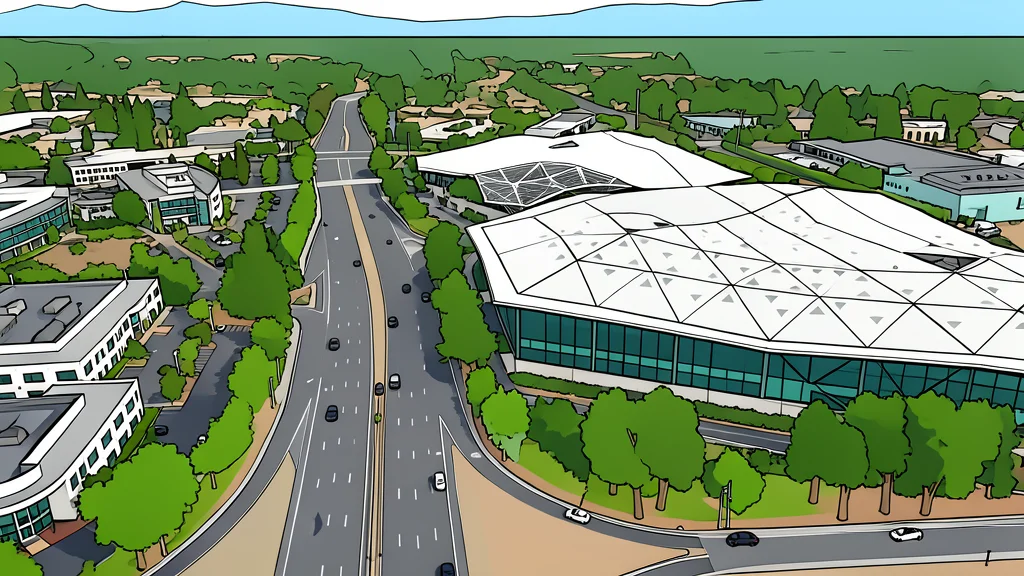
However, this model relies on a specific type of land use. Santa Clara has a broad industrial belt where most of these facilities are located, keeping them somewhat separate from the densest residential areas. This geographic layout allows the city to capture the tax revenue without the immediate friction that comes with placing large industrial infrastructure next to homes. The city argues that the developers pay for their own connection costs and share in system upgrades, ensuring the local grid can handle the load without passing the full cost to standard residential users.
San Francisco cites community health concerns
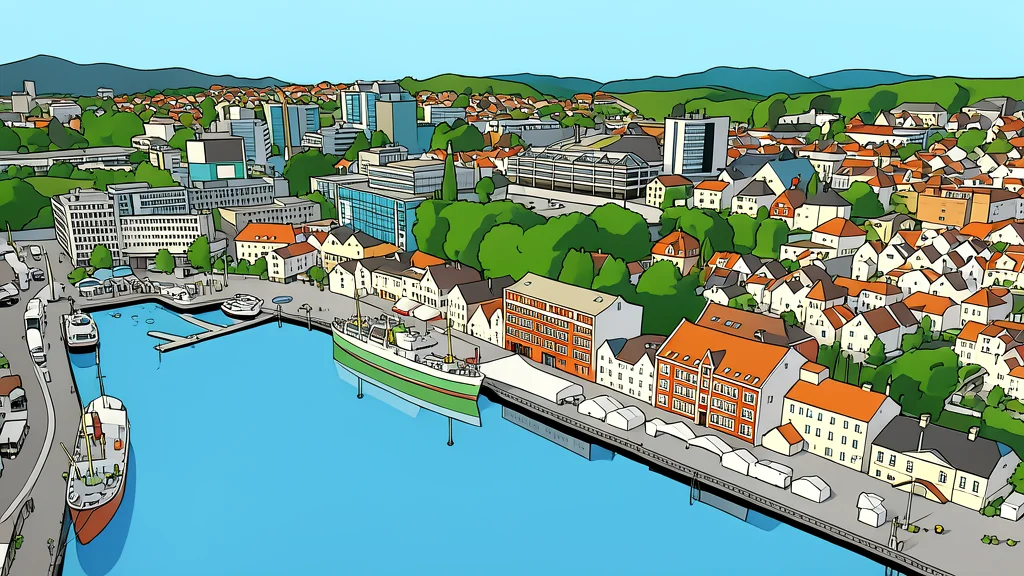
San Francisco faces a different reality due to its compact geography. With roughly 18,600 people per square mile, there is very little space to build large facilities without them being adjacent to homes. City supervisors are pushing a 45-day moratorium on new data centers, citing the impact on the Bayview, a neighborhood with a long history of industrial pollution. The goal is to pause construction to better understand the cumulative effects of these facilities on air quality and local infrastructure.
The term "data center" has become a source of significant public anxiety. While some facilities are small and comparable to a large warehouse in their impact, others are massive energy consumers. A recent poll suggests that nearly seven in ten Americans oppose having a data center in their community, a level of resistance higher than that for nuclear power plants. This fear is often driven by misconceptions about water usage and energy consumption, but the sheer scale of the operation in dense urban areas makes the potential for strain on local resources a legitimate concern for city planners.
Water usage remains a key debate point
One of the most frequent criticisms of data centers is their thirst for water. However, experts point out that in Santa Clara, most facilities use recycled water for cooling. This water is treated wastewater, not fresh drinking water, and is used specifically for cooling towers. A researcher specializing in data center efficiency notes that using recycled water keeps the facility's water footprint to a minimum. The water is not clean enough for human consumption, but it is perfectly suitable for industrial cooling processes, a distinction that is often lost in public discourse.
Despite these technical clarifications, the perception of data centers as resource-hungry monsters persists. The trade-off for Santa Clara is a landscape dominated by industrial buildings that provide jobs and tax revenue but also create a specific type of urban environment. For San Francisco, the trade-off is the loss of potential tech revenue in exchange for preserving the character and health of its densely packed neighborhoods. As the industry grows, these two approaches offer competing models for how cities can integrate high-tech infrastructure into daily life.