BYD Plans First Solid-State EV for 2027
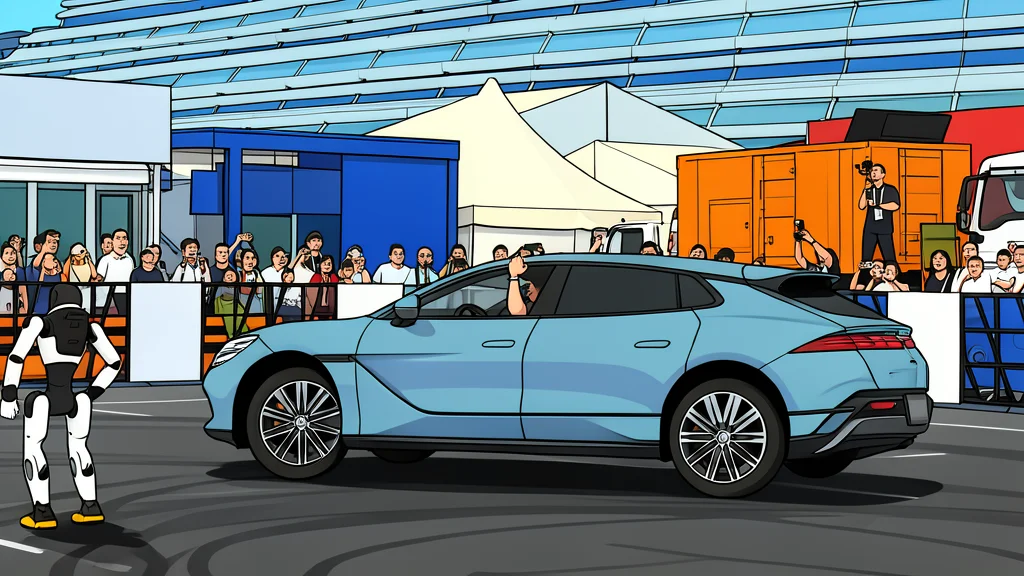
BYD claims a leading role in solid-state battery development, promising the first vehicle equipped with this technology in 2027. The company aims to commercialize the tech by 2030, though current models still rely on liquid electrolytes.
BYD has positioned itself at the forefront of the next generation of electric vehicle power sources. Stella Li, the company’s executive vice president, stated that BYD holds a leading position in solid-state battery research. The automaker plans to introduce its first electric vehicle equipped with this technology in 2027. This move signals a shift from traditional liquid electrolytes to solid materials, a change that promises significant improvements in safety and performance.
The company is not waiting for a single breakthrough but is actively advancing multiple battery chemistries simultaneously. Li emphasized that BYD’s research and development teams are exploring every major battery technology available. The focus is not just on the chemistry itself, but on the manufacturing processes required to produce these cells at scale. This comprehensive approach aims to ensure that when the technology matures, the infrastructure to support it is ready.
Solid electrolytes offer key advantages
Solid-state batteries replace the liquid electrolyte found in current lithium-ion cells with a solid material. BYD’s chief scientist noted that sulfide-based solid electrolytes are more stable and durable than their liquid counterparts. This structural change leads to batteries that are inherently safer and less prone to thermal runaway. For drivers, this translates to faster charging speeds and a longer overall driving range.
The technology is currently in a critical development stage. While the chemistry is advancing, the manufacturing hurdles remain significant. BYD aims to begin limited production of these cells in 2027, with full mass production targeted for 2030. The initial vehicles will likely be premium models from brands like Denza and Yangwang. This strategy allows the company to refine the technology on high-margin vehicles before integrating it into higher-volume models.
Competition remains intense globally
BYD is not alone in targeting 2027 for solid-state launch. Major competitors including Geely, Changan, and CATL have similar timelines. International players such as Toyota, Stellantis, and Mercedes-Benz are also aiming for early 2020s deployment. This race has intensified in recent years, with several automakers claiming breakthroughs in ultra-long range and fast-charging capabilities. The industry is moving from theoretical research to practical application.
Some manufacturers are already testing this technology in real-world conditions. Mercedes-Benz recently completed a long-distance drive using solid-state cells from a partner company. These tests help validate the performance claims made by battery developers. However, widespread commercial adoption is still years away. Most experts expect that while prototypes and limited editions appear in 2027, the technology will not become common until closer to 2030.
Trade-offs in the transition
While solid-state batteries offer superior performance, they come with significant manufacturing challenges. Producing these cells at a scale that supports mass-market vehicles is complex. The cost of production is currently higher than that of traditional lithium-ion batteries. This means that early adopters will likely pay a premium for the technology. The economic viability of solid-state batteries depends on reducing these production costs as manufacturing techniques mature.
There is also a trade-off in availability. As BYD and others phase in this technology, there will be a period where both old and new battery types coexist. This could lead to confusion in the used car market and varying charging standards. Drivers should be aware that while the promise of solid-state batteries is compelling, the transition will be gradual. The next few years will be defined by a mix of rapid innovation and the practical realities of scaling new manufacturing lines.