BYD's New $20,000 Electric Hatchback Undercuts Australia's Cheapest Petrol Car
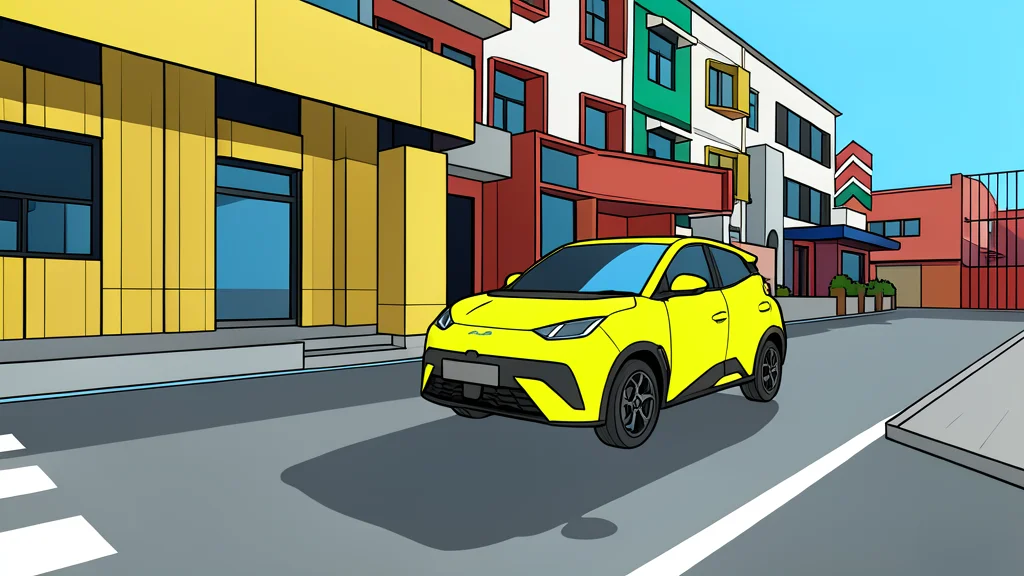
BYD has redefined the Australian entry-level market by pricing its Atto 1 at $19,990, making it the cheapest new vehicle of any fuel type. This move targets affordability barriers rather than just performance.
The Australian automotive landscape has shifted decisively with the introduction of a new price floor for new vehicles. BYD has set the price of its Atto 1 at $19,990, positioning it as the most affordable new car available in the country, regardless of whether it runs on petrol, diesel, or electricity. This price point undercuts the traditional entry-level petrol cars that have long dominated the first-car and budget household segments.
According to GN auto tech/ev: electric vehicle, this strategic move is designed to alter the public discourse around electric vehicle adoption. By eliminating the upfront cost barrier, the company aims to attract buyers who were previously excluded from the conversation due to high purchase prices. The focus shifts from running costs, which are already lower for EVs, to the immediate financial outlay required to drive off the lot.
Affordability drives broader market adoption
Industry leaders argue that this pricing strategy unlocks a demographic that has not been part of the electric transition. Julie Delvecchio, CEO of the Electric Vehicle Council, notes that while lower maintenance and charging costs are known, these benefits are often irrelevant to those who cannot afford the initial purchase. A sub-$20,000 price tag targets price-sensitive households and first-time buyers, expanding the potential customer base significantly.
The trade-off for this aggressive pricing is a vehicle that is less powerful and has a smaller range than higher-end models. The Atto 1 is a compact hatchback, not a performance machine. However, for the target audience, the primary value proposition is access to electric mobility at a cost comparable to entry-level internal combustion engines, removing the stigma of EVs being a luxury good.
Sales data reveals modest initial volume
Despite the significant price drop, the Atto 1 has not immediately become a sales leader. Official data shows it has sold 3,838 units in 2026, placing it at number 11 on the local EV best-seller list. It trails significantly behind larger BYD models like the Sealion 7 and the market-leading Tesla Model Y, which command prices between $55,000 and $80,000.
This gap in sales volumes suggests that price alone does not drive all purchasing decisions. Many consumers still prioritize space, brand perception, or advanced technology over the lowest possible entry price. The Atto 1 serves as a gateway model, but it competes in a niche where volume is inherently limited compared to the mid-size SUVs and crossovers that dominate the broader market.
Electric vehicles gain market share
The broader context for this price war is a surge in electric vehicle market share in Australia. Driven by rising petrol prices and increased consumer interest, EVs captured a record 24.9 percent of the market in August. This performance lifts Australia into the middle of the pack among Western nations, though it remains far behind leaders like Norway and Denmark.
Chinese brands now dominate the local electric sector, with intense competition driving prices down across all segments. As electric utility vehicles enter the market and fuel prices remain volatile, the economic case for electrification becomes stronger. The entry of the Atto 1 at this price point signals that the transition is no longer just for the wealthy or the tech-savvy, but is becoming a practical option for the average Australian household.