Hyundai's Electric Van Hits Europe at $66,500
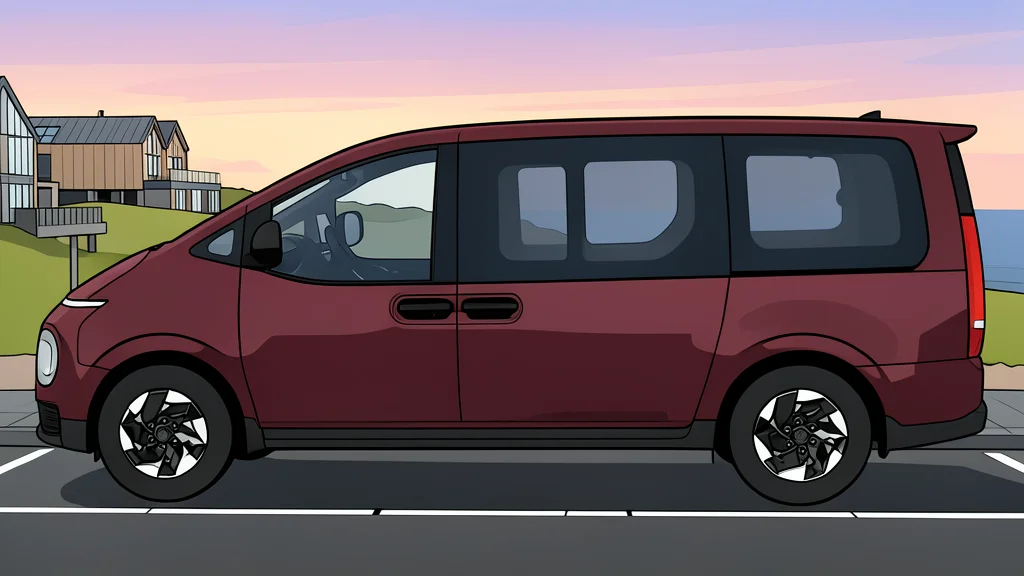
Hyundai has opened orders for its new Staria Electric, a large nine-seater van that undercuts the Kia PV5 and Volkswagen ID. Buzz on size while positioning itself as a premium family hauler.
Hyundai has begun taking orders for the Staria Electric in Europe, with pricing starting at €57,450 in Germany, or roughly $66,500. The vehicle is the electric counterpart to the existing gasoline-powered Staria, which is already sold in markets like South Korea and parts of Europe. While the design retains the boxy, high-roof silhouette of its predecessor, it introduces electric-specific styling cues such as a closed-off front grille and a continuous light bar spanning the width of the vehicle.
According to GN auto tech/ev: electric vehicle, the new model measures 5,253 mm in length, making it approximately 200 mm longer than Hyundai’s IONIQ 9 SUV. This extra length translates into a spacious interior with a flat floor, available in seven or nine-seat configurations. The nine-seat layout still offers 1,303 liters of luggage space, plus a small 24-liter front storage compartment, though the trade-off is a higher entry price compared to standard compact electric vans.
Charging speed meets range limits
The van is powered by an 84 kWh battery and a 160 kW motor, delivering a WLTP-rated range of up to 430 km (267 miles). For long-distance travel, the 800V electrical architecture allows the battery to recharge from 10% to 80% in about 20 minutes using a 350 kW DC fast charger. This rapid charging capability is a significant advantage for families planning road trips, though it requires access to high-power charging infrastructure to realize the full benefit.
The vehicle also includes vehicle-to-load (V2L) technology, enabling owners to power external devices like camping gear or kitchen appliances directly from the battery. While this adds utility for outdoor enthusiasts, it further depletes the battery range, meaning users must balance their need for mobile power against their remaining driving distance.
Premium features cost extra
The base Trend trim includes dual 12.3-inch screens, wireless Apple CarPlay, and Android Auto. However, many desirable features are reserved for higher trims. The Prime variant, priced at €63,350, adds electric sliding doors, an electric tailgate, and advanced driver-assistance systems like Highway Assistant 1.5. The top-tier Calligraphy trim, costing €66,950, introduces Nappa leather, Bose audio, and unique design elements, pushing the total cost closer to luxury SUV territory.
This tiered pricing strategy means that while the sticker price is competitive for a nine-seater, the fully loaded experience comes at a premium. Buyers seeking the most convenience and comfort must be prepared to pay significantly more than the base model, a common trade-off in the premium electric vehicle segment.
US market remains excluded
Despite strong interest in multi-passenger vehicles, Hyundai has not announced plans to bring the Staria Electric to the United States. The company currently sells the IONIQ 9 and IONIQ 5 in the US, but the Staria platform is tailored for European and Asian markets. This leaves North American families looking for a large electric van with limited options, as competitors like Kia and Volkswagen are also focusing their initial electric van releases primarily on other regions.
The absence of the Staria Electric in the US highlights a strategic gap in Hyundai’s American lineup. While the IONIQ 9 offers three-row seating, it is an SUV rather than a dedicated van, and the Staria’s specific dimensions and features are not currently aligned with US regulatory or market preferences. For now, the Staria Electric remains a European and Asian market exclusive, limiting its availability for a large segment of potential buyers.