Asus ROG Marks 20 Years with Major Push into Indian Market
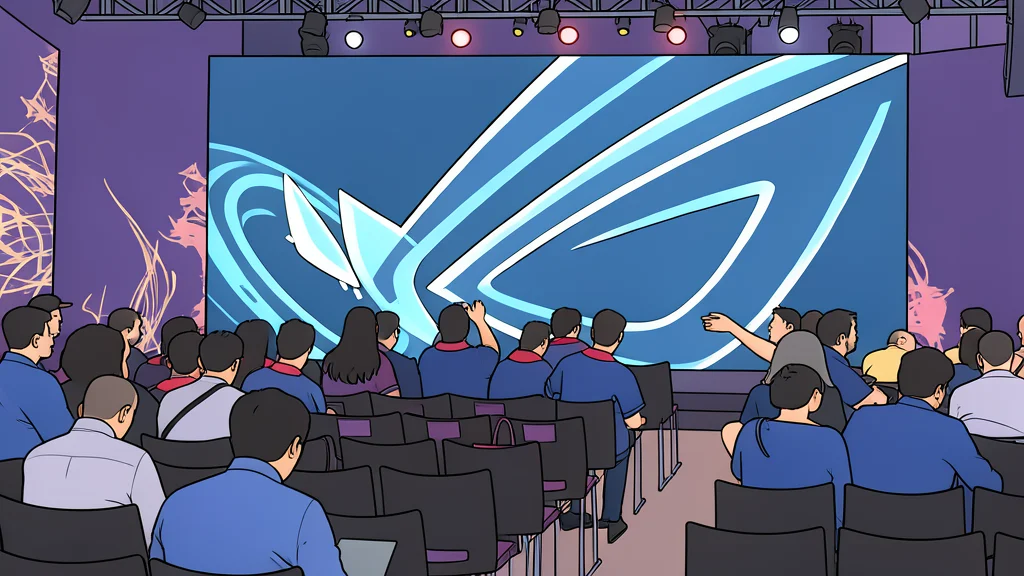
Asus celebrates two decades of gaming tech, highlighting its rapid expansion in India through local production and simultaneous global product launches.
Key points
- Asus ROG marks its 20th anniversary with a focus on its expanded presence in the Indian market.
- The brand has grown from a single motherboard project into a wide range of laptops, GPUs, and handhelds.
- Recent innovations emphasize compact designs, high-refresh displays, and localized production strategies.
Asus has reached a significant milestone, marking the 20th anniversary of its Republic of Gamers (ROG) division during Computex 2026. The celebration highlights a journey that began with a single motherboard and has evolved into a comprehensive ecosystem of high-performance laptops, graphics cards, and handhelds. According to Notebookcheck, this milestone coincides with a strategic focus on expanding the brand's presence in emerging markets, most notably India.
The company’s strategy in India has shifted from simple retail distribution to deep market integration. Since the launch of the Zephyrus GX501 in 2018, ROG has established a strong foothold by combining broader retail access with localized production. This approach aims to make high-end gaming hardware more accessible to a wider audience while maintaining the premium positioning of the brand.
Origins of the gaming division
The ROG brand did not start as a consumer-facing label but as an internal project called Project G. Launched in 2006 by a group of enthusiasts within Asus’s R&D department, it produced the first motherboard, named Pluto. This early design introduced user-friendly features like plain-language error displays and isolated audio circuitry, setting a precedent for balancing technical depth with accessibility that still defines the brand today.
Over two decades, this initial hardware focus expanded into laptops and graphics cards. The transition from niche components to full systems allowed Asus to capture a broader segment of the gaming community. The current ROG Crosshair 2006 X870E motherboard serves as a tribute to those early days, supporting modern processors while retaining the heritage of the original design.
Shift toward compact gaming devices
Recent product development has prioritized portability without sacrificing performance. Models like the Zephyrus G14 demonstrated that a 14-inch chassis could house high-end graphics and efficient processors, challenging the notion that gaming laptops must be bulky. This trend continues with the ROG Ally and its successors, which bring desktop-class gaming experiences to handheld form factors, appealing to users who value mobility.
The trade-off in this compact design is often thermal management and battery life, but Asus has addressed these through advanced cooling algorithms and efficient chipsets. The introduction of dual-screen laptops, such as the Zephyrus Duo, further illustrates the push for versatile, multi-purpose devices that can handle both gaming and productivity tasks in a single unit.
Display technology and high refresh rates
Asus has also driven innovation in visual output, moving far beyond standard monitor specifications. The company introduced high-refresh-rate displays early on, setting benchmarks for fluid motion in fast-paced games. Current flagship graphics cards feature additional screens and advanced cooling systems, reflecting a trend toward immersive, high-fidelity visuals that distinguish ROG products from standard consumer options.
However, these high-performance components come with higher price points and power consumption. The focus on extreme specifications, such as 720 Hz refresh rates and custom cooling solutions, caters to a niche of enthusiasts willing to pay a premium for marginal gains in performance and visual clarity. This positioning allows Asus to maintain high margins while serving a dedicated segment of the market.