Old Gaming GPUs Find New Life in Home Servers
Retired graphics cards are finding a second act in home servers, where their memory speed matters more than their gaming pedigree.
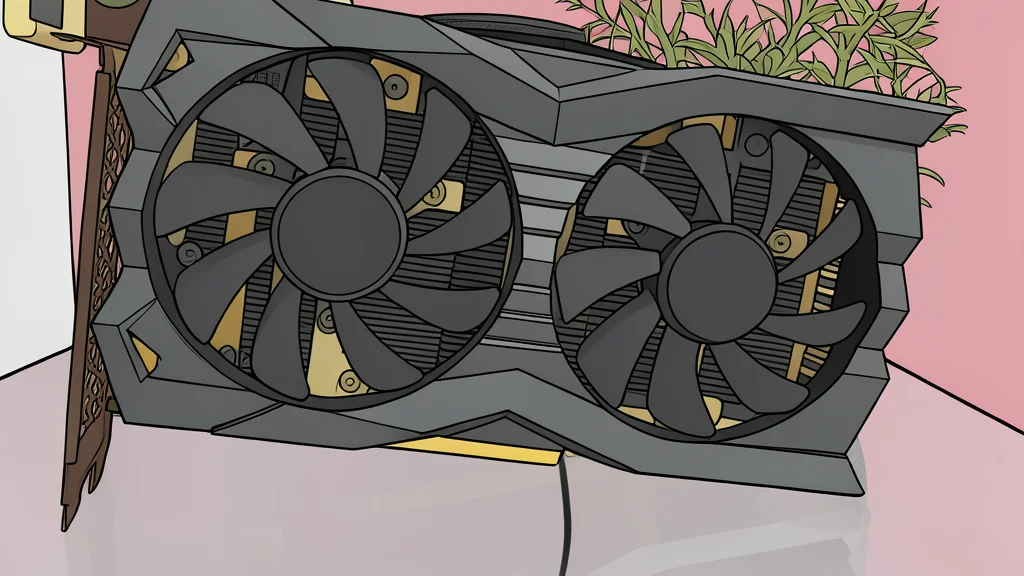
Many high-end graphics cards from previous generations are gathering dust in drawers, their gaming performance no longer competitive. However, for a growing number of home server owners, these older cards are not obsolete. They are being repurposed for tasks that prioritize memory bandwidth and parallel processing over the raw frame rates that defined their original purpose. This shift reveals that the metrics used to judge a gaming card often miss the point when the hardware is moved to a headless server environment.
The core advantage lies in how these cards handle data. In a server context, the speed at which data moves through memory is often more critical than the speed at which it is processed. This makes older cards with high-speed memory interfaces surprisingly capable of handling modern workloads like local artificial intelligence inference, media transcoding, and photo library management. As noted by XDA Developers, the transition requires a change in mindset: the card is no longer a gaming engine, but a specialized data processor.
Memory Bandwidth Drives AI Performance
Running local large language models is one of the most demanding tasks for a home server, yet it diverges significantly from gaming requirements. Generating text involves repeatedly reading model weights from video memory, making the speed of that memory bandwidth the primary bottleneck. While the total amount of video memory determines whether a model can fit, the bandwidth dictates how quickly tokens are generated. A card like the RTX 3080, with its high-speed memory interface, can handle models in the 7 to 12 billion parameter range effectively, even if it lacks the sheer processing power of the latest consumer chips.
For older cards from the Pascal era, such as the GTX 1080 Ti, the limitation is less about raw compute and more about this memory throughput. They can still perform local inference, but the slower memory speeds result in noticeably slower generation times. The trade-off is clear: if you need high-speed text generation, you need high bandwidth, regardless of how many years have passed since the card was released. The shader units that aged the card for gaming are largely irrelevant to this specific task.
Media Services Benefit From Offloading
Beyond AI, services like Immich and Jellyfin benefit heavily from a dedicated graphics card. Immich uses the GPU for facial recognition and smart search, processing these tasks in the background without taxing the central processing unit. This allows the server to handle uploads and searches smoothly, even when the CPU is busy with other duties. The GPU handles the heavy lifting of analyzing image data, keeping the system responsive for the user.
Jellyfin, a media server, similarly uses the GPU for video transcoding. By offloading encoding and decoding to the dedicated hardware, the main processor is freed up to manage network traffic and storage requests. While a modern CPU with integrated video acceleration can handle basic transcoding, a discrete card like an older NVIDIA model provides dedicated engines for this work. This separation of duties ensures that the server remains stable under load, a reliability factor that is often more important in a home server than peak gaming performance.
Driver Configuration Is Critical
Setting up these cards for server use requires specific configuration steps that differ from gaming installations. On Linux systems, NVIDIA drivers are designed to power down the graphics card when no active application is using it. This behavior introduces significant latency when a new task, such as a video transcode or a search query, is initiated, as the hardware must wake up and reinitialize. For a server that needs to respond instantly, this is unacceptable.
The solution is to enable the persistence daemon, a background process that keeps the driver attached to the hardware at all times. This ensures the card is ready for immediate use, eliminating the startup delay. Additionally, power limits may need to be adjusted to balance energy consumption with performance. While the card is running 24/7, the power draw is often lower than during peak gaming sessions, but it is not negligible. Users must weigh the cost of keeping the card powered against the performance benefits it provides.