AI Demand Drives 21% Rise in Indian Smartphone Prices
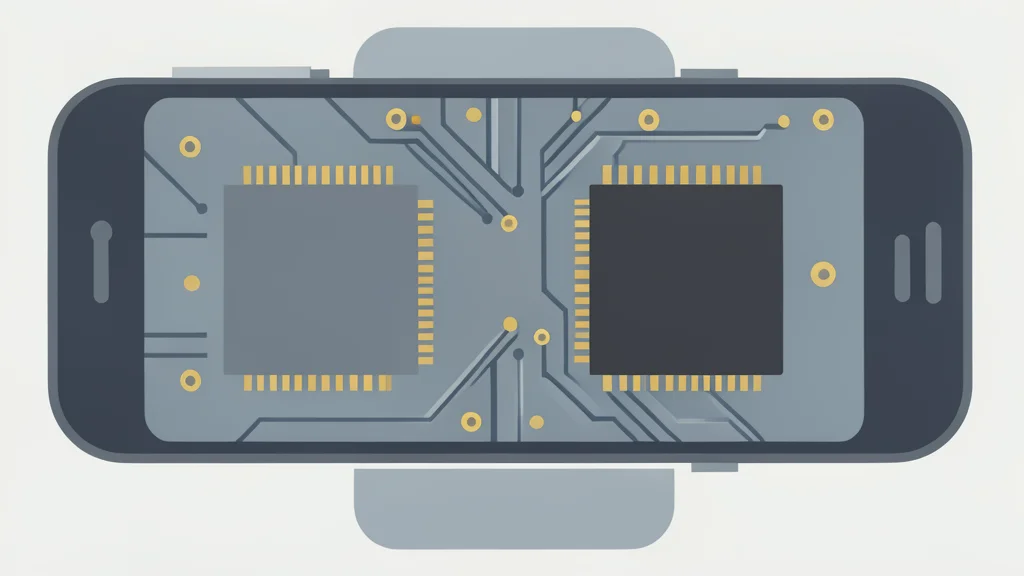
Surging demand for AI data centers is diverting memory chip production, causing a 21% price hike for phones in India.
Key points
- Smartphone prices in India rose by 21% in 2026 due to memory chip shortages driven by AI demand.
- Memory now accounts for over 40% of the material cost in premium smartphones, making it the most expensive component.
- AI data centers are diverting semiconductor production capacity, reducing the supply of standard memory chips for consumer devices.
The rapid expansion of artificial intelligence infrastructure is driving up the cost of everyday smartphones. As data centers consume vast amounts of memory chips, manufacturers are prioritizing high-margin AI components, reducing the supply available for consumer devices.
This shift has triggered a significant price increase. In 2026, smartphone prices in India rose by an average of 21 percent, while global prices climbed by 15 percent. Over 40 percent of all models have seen their retail costs increase, with the impact most severe in budget segments.
Memory becomes the costliest phone component
Historically, screens and cameras were the most expensive parts of a premium phone. Now, memory chips have overtaken them. According to Counterpoint Research, memory accounts for more than 40 percent of the total material cost in high-end devices. In Q2 2026, memory prices alone jumped by more than 80 percent compared to the previous quarter.
This cost pressure forces manufacturers to make difficult choices. Some are raising prices directly, while others are reducing storage capacities or simplifying camera systems to keep costs down. The trade-off is that consumers may get less capacity or fewer features for the same money, or pay significantly more for the same specifications.
Data centers consume scarce chip capacity
The core issue is not that AI companies are stealing specific phone chips, but that they are competing for the same manufacturing capacity. Semiconductor factories cannot expand production lines overnight. As manufacturers shift focus toward high-bandwidth memory and logic chips for AI, the supply of standard memory for phones tightens.
Pankaj Gulati, President of CDIL Semiconductors, explained that data center operators are willing to pay premium prices for these chips. This diverts production away from consumer electronics, creating a supply-demand imbalance that drives up prices for all users of these components.
Budget segments face the sharpest pain
The impact is not uniform across all devices. For premium phones, memory is a large but manageable part of the total cost. However, for budget smartphones, memory represents a much higher percentage of the bill of materials. This makes the sub-15,000 rupee segment in India particularly vulnerable to these supply shocks.
As reported by the Daily Pioneer, this trend is reshaping the economics of the smartphone industry. Manufacturers are increasingly introducing fewer high-end models and focusing on cost-effective configurations, which may limit the performance and storage options available to average consumers in the near future.