Apple Executive Explains iPhone Duo Role

Apple’s software chief argues the new foldable smartphone will coexist with tablets, citing natural usage patterns rather than direct replacement.
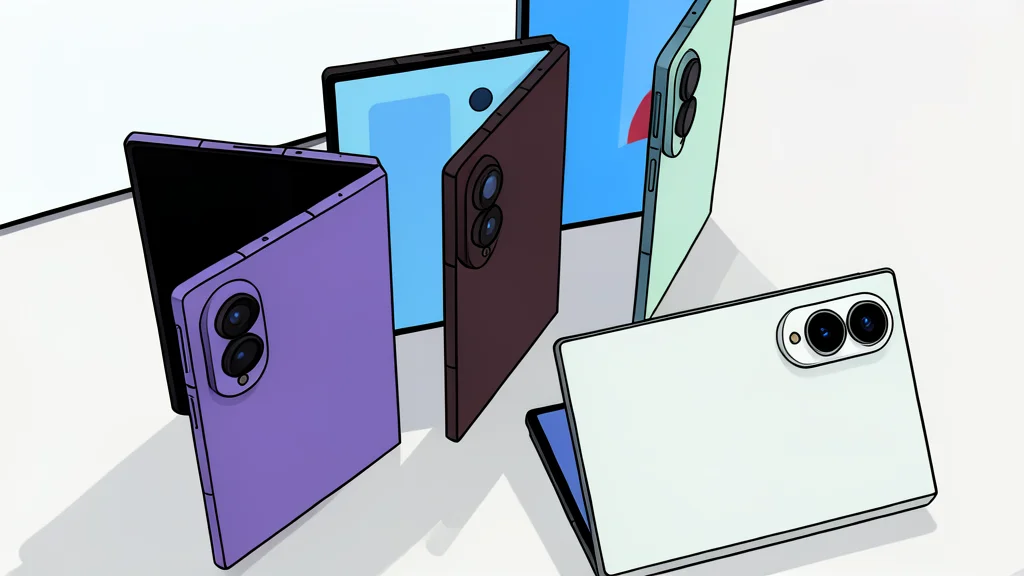
Craig Federighi, Apple’s senior vice president of Software Engineering, recently discussed the positioning of the upcoming iPhone Duo in an interview with MKBHD, as reported by 9to5Mac. The conversation focused on how this new dual-screen device will interact with the existing iPad lineup, particularly the smaller models. Federighi suggested that consumers will naturally find their preferred tools for specific tasks, much like they currently do between iPads and Macs.
The executive emphasized that the iPhone Duo is not designed to replace every tablet in a user’s life. Instead, he described a scenario where a user might start on a standard smartphone but switch to the foldable device when they need a larger surface for reading or deep work. This distinction aims to clarify the product’s value proposition in a market already crowded with similar form factors.
Defining the device's unique niche
Federighi specifically identified the iPad mini as the primary competitor for the iPhone Duo. He shared his personal experience using the device over the past few months, noting its effectiveness for reading content in portrait mode. While he acknowledged that the new phone could fill the gap left by an iPad mini for some users, he maintained that the two devices serve distinct purposes in a multi-device ecosystem.
This strategy relies on the assumption that users will develop natural habits for when to reach for a tablet versus a foldable phone. By framing the iPhone Duo as a bridge between compact phones and full-sized tablets, Apple is positioning it as a specialized tool for specific workflows rather than a universal replacement for all existing hardware.
Software adaptation sets Apple apart
A key differentiator highlighted in the discussion was the approach to software development. Federighi contrasted Apple’s method with that of competitors, who he claimed often simply stretch or compress standard interfaces to fit new hardware. In contrast, Apple designed the operating system experience for the iPhone Duo from the ground up to take full advantage of the dual-screen mechanism.
This level of custom engineering ensures that the user interface feels native to the foldable format, rather than like a ported version of a standard smartphone interface. For the reader, this means a potentially smoother and more intuitive experience, though it also highlights the significant engineering investment required to maintain such a distinct software ecosystem.
Implications for current tablet owners
For existing customers, the launch of the iPhone Duo introduces a new decision point. Those who have relied on an iPad mini for portability and moderate productivity may find the new phone offers a compelling alternative. However, the trade-off is that the iPhone Duo is a premium product, and its specific utility may not replace the broader versatility of a full-sized iPad for creative or professional tasks.
Ultimately, the success of this strategy depends on whether users perceive the iPhone Duo as a complementary tool rather than a redundant one. Apple’s confidence in its software differentiation suggests they believe the experience will justify the addition to a user’s device collection, even if it overlaps with existing tablet functions.