Practical Android Auto Navigation Alternatives
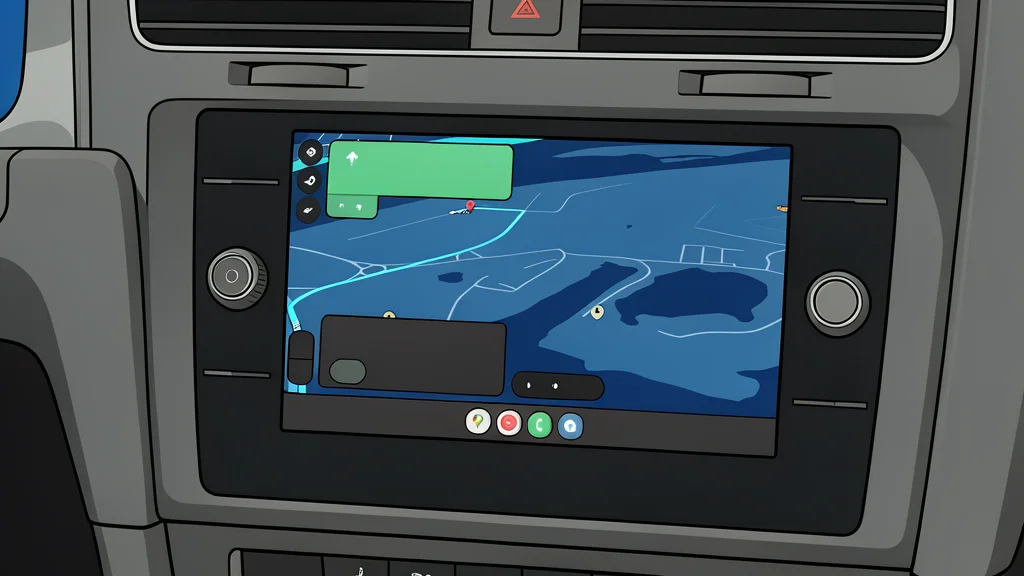
Drivers seeking privacy or offline capability are finding viable options beyond the dominant market leaders.
Google Maps and Waze dominate the Android Auto ecosystem, but they are not the only choices available. According to GN auto tech/ev, several reputable alternatives offer distinct advantages for drivers who have specific needs. These options range from free applications with strong privacy features to paid subscriptions that provide deeper customization and offline capabilities.
The primary drivers for switching are often privacy concerns or the need for reliable navigation without a data connection. While the market leaders offer broad coverage, they often collect significant user data. The alternatives discussed here aim to solve these issues by providing ad-free experiences, different mapping data sources, or specialized features for electric vehicles and motorcyclists.
TomTom Offers Privacy Focused Free Navigation
TomTom provides a completely free navigation app that supports Android Auto. It includes turn-by-turn directions, real-time traffic updates, and speed limit alerts. A key benefit for electric vehicle owners is the dedicated EV profile, which helps locate nearby charging stations and calculates routes based on battery range. The interface is designed to be distraction-free and contains no advertisements.
The trade-off for this free service is occasional inaccuracies in business data and slower performance compared to competitors. However, many users appreciate the clean design and the fact that the app does not track their personal data. It remains a strong option for those who prioritize privacy and basic navigation needs without a financial commitment.
Sygic Requires Subscription For Full Features
Sygic GPS Navigation is a feature-rich option that includes offline maps, live traffic alerts, and speed camera warnings. However, the free version is limited to basic map viewing. To access Android Auto support, lane assistance, and fuel price information, users must subscribe to the Premium+ plan. This costs approximately $20 per year. Motorcyclists can add a specific mode for twisty routing, which requires a separate one-time purchase of $50.
While the detailed offline maps and user interface receive positive reviews, the app has notable drawbacks. Users have reported issues with battery drain and voice prompt quality. Additionally, the constant upselling for premium features can be intrusive. The cost structure makes it less attractive for casual users compared to free alternatives, but it offers robust tools for frequent travelers who need reliable offline data.
OsmAnd Provides High Customization Control
OsmAnd is known for offering extensive control over the navigation experience. It allows users to download maps and utilize turn-by-turn voice guidance, lane instructions, and speed limit displays. However, like Sygic, Android Auto support is not included in the free tier. Users must choose between the Maps+ subscription, which costs $15 annually or $70 as a one-time purchase, or the OsmAnd Pro plan at $40 per year.
The complexity of OsmAnd is both its strength and its weakness. It delivers comprehensive mapping tools for users who want to tailor their experience, but the pricing model adds a significant barrier to entry. For drivers who are comfortable with a steeper learning curve and are willing to pay for advanced features, it represents a powerful alternative. The main catch is the cost, which is higher than many competitors for similar core functionalities.