Qivika Turns Phones into Telescopes with Folded Optics
A new cylindrical attachment promises to bring 3,000mm of zoom to your pocket, but the trade-off is a steep learning curve and a price tag that assumes a serious hobbyist.
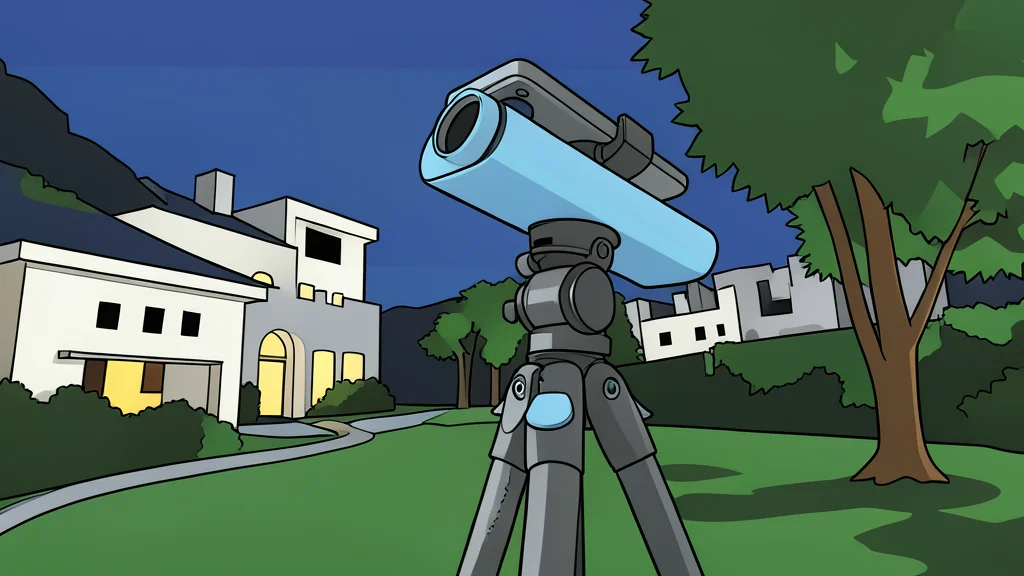
Qivika is launching a compact optical attachment designed to turn a standard smartphone into a device capable of long-distance observation. The gadget offers 24x optical magnification and an equivalent focal length of 3,000mm, a range typically reserved for bulky professional telephoto lenses. It is positioned as a lightweight alternative for bird watchers and amateur astronomers who find traditional equipment too heavy to carry.
According to GN technics/mobile (en-US), the device relies on a folded periscope optical system to bend the light path within a small housing. This design allows for a long focal length without the physical length of a standard lens. The unit weighs approximately 300 grams, making it portable enough to attach directly to a phone or mount on a tripod for stable viewing sessions.
Folded optics enable compact zoom
The core technology behind Qivika is a mirror-based periscope setup that uses ED glass and multi-coated lenses. These components are intended to reduce glare and maximize light capture, which is critical when trying to resolve distant details on a digital sensor. The primary benefit is size; users can achieve significant zoom without the weight penalty of a conventional 300mm lens.
However, the compactness comes with optical compromises. Folded systems often suffer from higher internal reflection and potential chromatic aberration compared to straight-through lenses. While the manufacturer claims the coatings mitigate these issues, users should expect that image quality may not match that of a dedicated, large-format telescope of similar focal length.
Stability remains a major challenge
At 24x magnification, even the slightest hand tremor becomes a significant blur on the smartphone screen. The device is designed to be used on a tripod to counteract this. Without a stable mount, the high magnification amplifies minor movements, making it difficult to capture sharp images of moving subjects like birds or the moon.
The app included with the hardware offers guided navigation for celestial objects and AI-assisted bird recognition. While these features add utility, they do not solve the fundamental physics of hand-held zoom. The trade-off for portability is that the user must invest time in setting up a stable platform for every observation session.
Pricing targets early adopters
Qivika is launching on Kickstarter in September 2026 with kit prices ranging from $259 to $679. The basic kit starts at the lower end, but the premium options include additional accessories that push the cost closer to that of a dedicated mid-range telescope. These are listed as launch special prices, implying that future retail prices may be higher.
For casual users, the cost may be difficult to justify given the need for a compatible smartphone and potentially a separate tripod. The device is a niche tool that bridges the gap between a phone and a telescope, but it does not replace either. Buyers should weigh the convenience of a single pocketable device against the performance limitations of a folded optical path.