Smartphone Lenses Bring Eye Care to Remote Areas
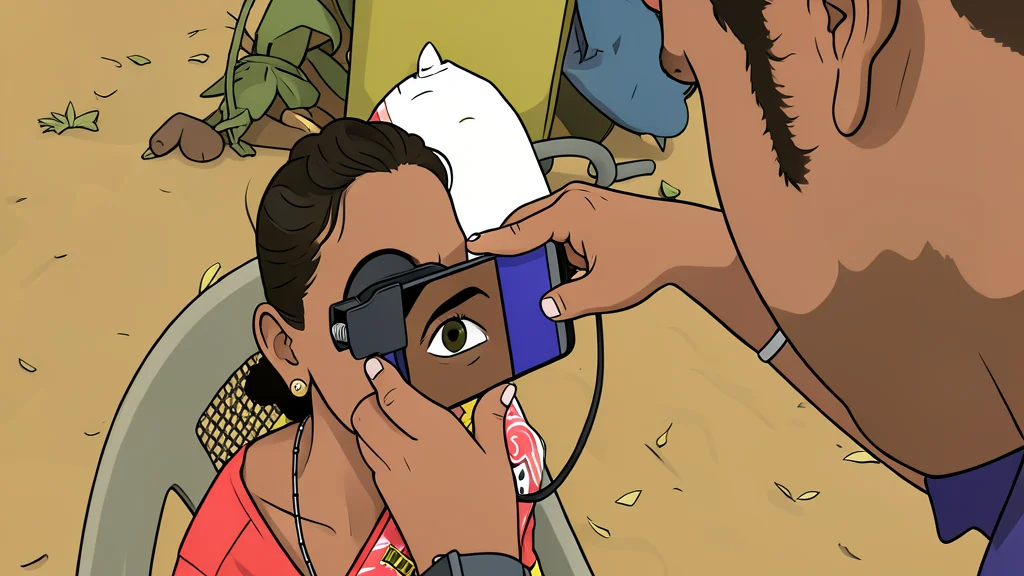
A low-cost clip-on lens allows health workers to screen for cataracts in rural India, achieving high agreement with in-person specialist diagnoses.
Researchers in India have demonstrated that a simple attachment for Android smartphones can support accurate screening for cataracts and other common eye conditions. The device allows community health workers to capture diagnostic-quality images of patients' eyes without requiring a specialist to be physically present. This approach aims to address significant gaps in healthcare access for people living in remote or rural areas.
The study, presented at the European Society of Cataract and Refractive Surgeons congress, highlights a potential solution to the logistical challenges of traditional eye camps. By decoupling the need for an ophthalmologist to travel to every screening site, the method could make routine eye checks more frequent and accessible. The findings suggest that this technology could play a meaningful role in preventing blindness in regions where specialist care is scarce.
How the portable device works
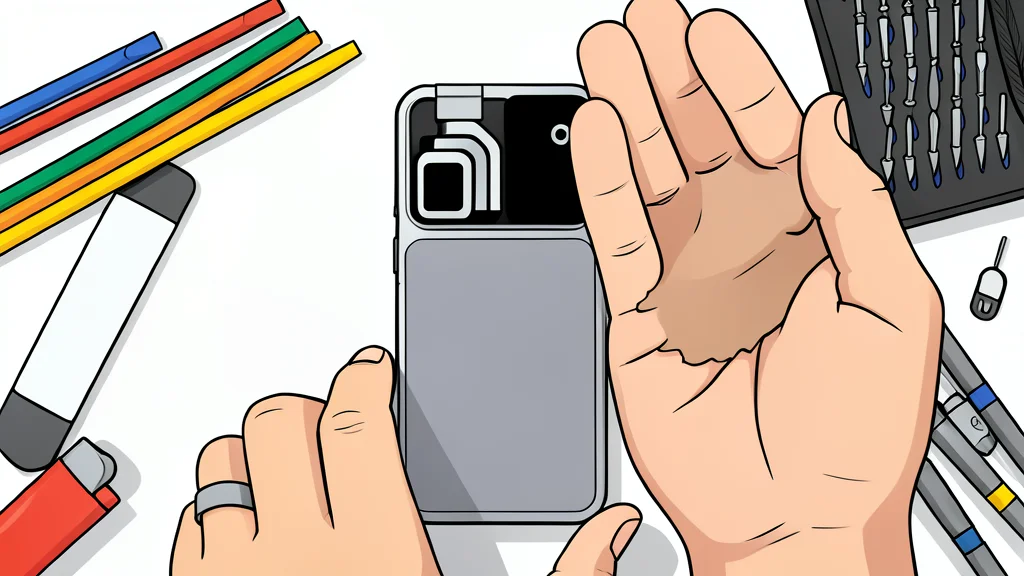
The system consists of a small clip-on lens that attaches to the back of a smartphone. It includes a magnifying lens, two white LEDs powered by the phone's battery, and a silicone scope that rests against the patient's eye socket. This design blocks ambient light and maintains a consistent distance from the eye, ensuring clear and stable images. According to GN technics/mobile (en-US), the entire setup is inexpensive and designed for easy use by non-specialists.
The device pairs with a mobile application optimized for low-bandwidth environments, making it suitable for areas with limited internet connectivity. The app is available in English and Tamil, facilitating use across different linguistic groups in the region. Health workers require only minimal training to operate the equipment, capturing images that are then transmitted to ophthalmologists for remote review. This workflow allows for efficient screening while keeping the patient experience simple and non-invasive.
Accuracy in rural screening tests
In a trial involving 1,093 patients across 19 rural camps in Tamil Nadu, researchers compared decisions made by remote specialists reviewing smartphone images with those made by doctors examining patients in person. The results showed a high level of agreement on referral decisions, with both groups concurring in 96 out of every 100 cases. This consistency suggests that the smartphone-based method can reliably identify patients who need further hospital care.
Specific diagnoses also showed strong alignment between the two methods. For mature cataracts, agreement was reached in 96% of cases, while for immature cataracts, it was 85%. The identification of clear lenses without cataracts agreed in 89% of instances. These figures indicate that the technology is capable of detecting various stages of cataract development with a degree of precision comparable to traditional in-person examinations.
Challenges in reaching remote communities
Traditional eye camps face significant logistical hurdles, including high costs and complex coordination. A previous study cited by the researchers found that these camps screened only 7% of the targeted rural population. Attendance drops sharply for those living more than three kilometers away, leaving many vulnerable groups, such as the elderly and women, underserved. The smartphone approach offers a way to extend reach beyond the physical limitations of traveling medical teams.
However, the system relies on the availability of smartphones and basic connectivity, which may not be universal in all rural settings. The cost, while low compared to specialized medical equipment, is still a consideration for low-resource facilities. Additionally, the method requires a reliable chain of communication between the health worker and the reviewing specialist. Despite these trade-offs, the potential to increase screening volume and reduce missed diagnoses remains a significant advantage for public health initiatives.