Boston Dynamics to Train Atlas Robots in Hyundai Factory
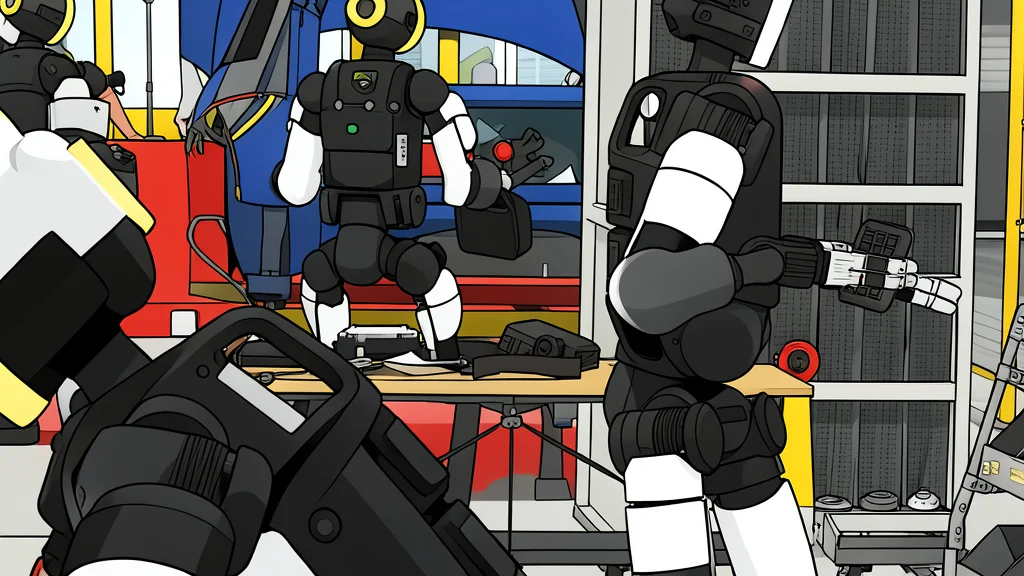
Hyundai is deploying 25,000 Atlas robots across its global plants, with initial training occurring at a new center in Savannah, Georgia.
Key points
- Boston Dynamics is training Atlas robots at a Hyundai plant in Savannah, Georgia, with a goal of 25,000 units in global factories.
- A new US facility will produce 30,000 robots annually, supporting a rollout that includes component assembly by 2030.
- The company is exploring expansion into sectors like aerospace and semiconductors, leveraging its existing customer base.
Boston Dynamics has begun training its Atlas humanoid robots inside a Hyundai car factory, marking a significant shift from laboratory testing to industrial application. The initiative is based at the Robotics Metaplant Application Center, a new facility located at the Hyundai Motor Group Metaplant America in Savannah, Georgia. This 2,900-acre electric vehicle plant serves as the primary environment where the robots learn to handle real-world manufacturing tasks.
The company aims to have these robots performing component assembly by 2030, moving beyond their current role in logistics and parts sequencing. Hyundai plans to expand this deployment rapidly, targeting 25,000 units across its global network of plants. A new production facility in the United States will be built to manufacture 30,000 robots annually, signaling a large-scale commitment to automating physical labor.
Real-world training replaces lab testing
Training in an active factory presents distinct challenges compared to controlled research environments. The robots must navigate complex, dynamic spaces where human workers and machinery operate simultaneously. According to DC Velocity, this approach ensures the machines are prepared for the specific repetitive motions and strenuous lifting tasks required in automotive assembly. The goal is to reduce human exposure to dangerous or exhausting work, though the integration process remains complex.
The current phase of the project focuses on logistics, such as ordering and moving parts for assembly. However, the transition to direct component assembly requires higher precision and reliability. The trade-off is that while factory training offers practical experience, it also exposes the technology to potential failures in front of a commercial audience, making the rollout a high-stakes test of the robot's capabilities.
Expansion to other industrial sectors
While the automotive industry is the immediate focus, Boston Dynamics is already looking beyond cars. The company is in discussions with existing customers of its Spot and Stretch robots to explore use cases in aerospace, semiconductors, and logistics. This diversification suggests that the lessons learned in the Hyundai factory may be adapted for other manufacturing contexts.
The expansion of the training center itself is also underway. Next year, operations will move to a new building that is roughly ten times the size of the current facility. This growth reflects the company’s confidence in the technology’s scalability, though it also highlights the significant infrastructure investment required to support such a large-scale robotic deployment.
Corporate ownership drives strategic direction
This move is deeply tied to the corporate structure of the companies involved. Hyundai bought an 80% stake in Boston Dynamics in 2020 for approximately $880 million. This ownership allows for a direct pipeline of development, where the robot is designed with a specific industrial customer in mind. The close relationship between the developer and the deployer reduces the gap between concept and commercial reality.
However, this alignment also means that the success of the robot is heavily dependent on the specific needs of the automotive sector. If the technology proves less versatile in other industries, the investment in specialized training may limit its broader market appeal. The strategic bet is that the skills learned in car manufacturing will translate effectively to other heavy-industry applications, but this remains to be seen.