Humanoid Robots Take over Hazardous Insulation Work in Modular Housing

Bigwave Robotics partners with Space Factory to deploy humanoids for high-risk insulation tasks, targeting a fully unmanned production line.
Key points
- Bigwave Robotics is deploying humanoids at Space Factory sites to automate high-risk fiberglass insulation tasks starting in 2026.
- The project collects real-world data to refine Physical AI models for construction, moving beyond traditional rigid industrial robots.
- Humanoid business represents roughly 20% of Bigwave Robotics' revenue, signaling a strategic expansion into the housing sector.
A partnership between Bigwave Robotics and Space Factory is set to introduce humanoid robots into the production of modular wooden housing. The deployment begins in 2026, focusing on automating the installation of fiberglass insulation, a task that has historically posed significant health risks to human workers.
The collaboration aims to address the global housing shortage by increasing the efficiency of factory-based construction. By replacing difficult manual processes with advanced robotics, the companies hope to establish a fully unmanned "Dark Factory" model, pushing the boundaries of what is possible in industrial automation.
Targeting Hazardous Insulation Tasks
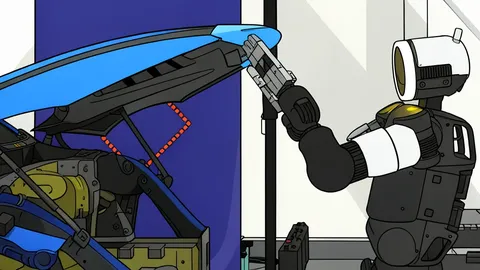
The primary focus of this initial phase is the handling of fiberglass insulation. This material is known to be harmful to respiratory and skin health, making it a high-risk environment for human laborers. Additionally, the flexible and irregular nature of the material makes it difficult for traditional, rigid industrial robots to manage effectively.
Humanoid robots are uniquely suited for this challenge due to their dexterity and ability to navigate unstructured environments. By taking over this specific process, the project addresses a critical gap in current manufacturing capabilities, allowing for safer and more consistent production standards without human exposure to hazardous particles.
Building Data for Physical AI
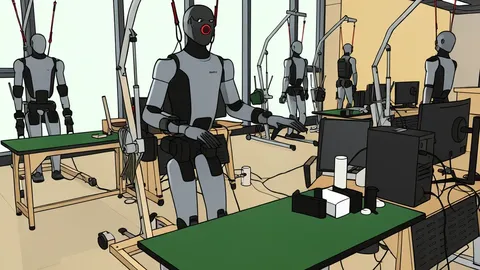
Beyond simple automation, the project serves as a data collection initiative for Bigwave Robotics. The company is gathering real-world operational data from these unstructured tasks to refine its Physical AI solutions. This approach moves beyond laboratory demonstrations, using actual industrial conditions to train algorithms that can adapt to the complexities of construction environments.
According to The National Law Review, this strategy allows the company to optimize its AI models for specific construction needs. The data secured from field operations will be used to improve the precision and reliability of the robots, creating a feedback loop that enhances performance over time.
Expanding Beyond Traditional Manufacturing
This deployment marks a significant shift in the application of humanoid robotics, moving them from logistics and heavy industry into the construction sector. Bigwave Robotics reports that humanoid-related business now accounts for approximately 20% of its total revenue, indicating a growing commercial viability for these advanced systems.
While the technology offers clear efficiency gains and safety improvements, the transition is not without challenges. The primary trade-off is the high initial investment required for such specialized automation. Furthermore, the success of this model depends on the robots' ability to handle the unpredictable variables of real-world construction sites, a test that will define the future of this technology.