dorsaVi Aims to Improve Robot Balance Using Human Movement Data
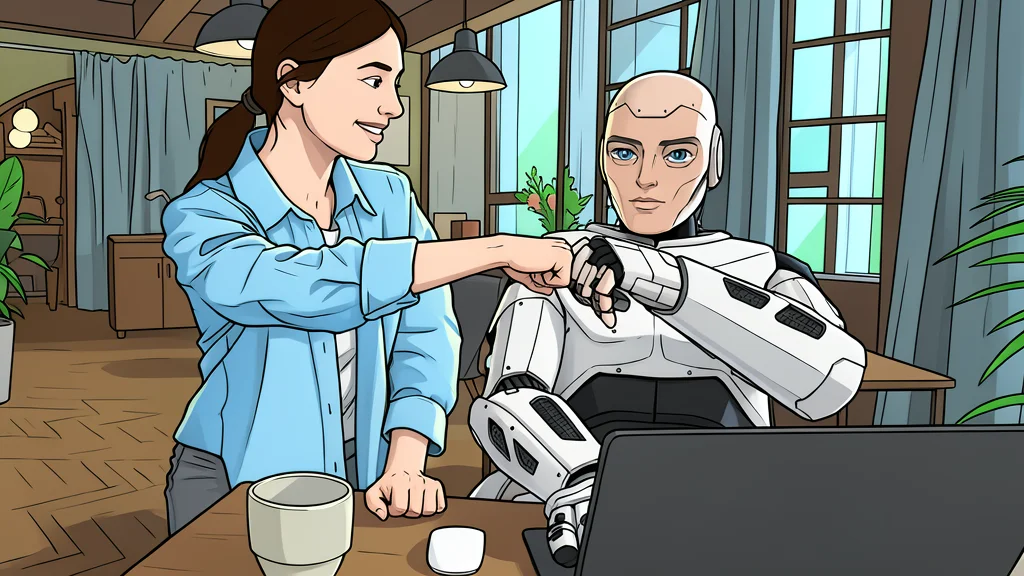
The Australian company is testing if its decade of human motion records can help humanoid robots maintain stability.
Key points
- dorsaVi is testing if its decade of human movement data can improve robot balance and coordination.
- The company is developing neuromorphic hardware to enable faster local responses in robotic systems.
- Commercial success depends on validating RRAM materials and adapting data to specific robot architectures.
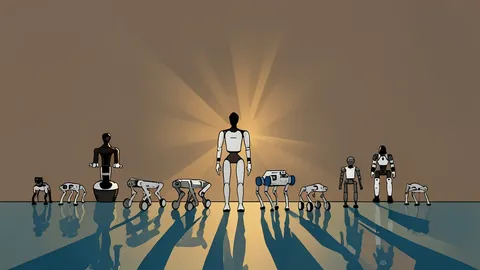
dorsaVi is exploring how its extensive library of human movement data can be applied to the development of humanoid robotics. The company, listed on the ASX, has begun discussions with robotics developers to see if its established records of balance and coordination can help machines detect and respond to instability. This initiative marks a shift from its traditional focus on occupational health and safety into the emerging field of physical artificial intelligence.
The primary goal is to assist robots in managing complex physical tasks such as maintaining posture, recovering from slips, and coordinating multiple joints. By analyzing how humans handle uneven loading and changes of direction, dorsaVi hopes to provide reference requirements for robot control systems. As reported by smallcaps.com.au, this approach seeks to bridge the gap between biological movement mechanics and robotic actuation.
Leveraging existing clinical and sporting data
The company’s data library spans more than a decade of recordings from clinics, workplaces, and sporting environments. These records include detailed metrics on gait, postural control, and recovery from injury or restricted motion. To tailor this data for specific robotic applications, dorsaVi can supplement its existing archive with bespoke recordings using wearable sensors and video AI systems.
However, the data is not immediately plug-and-play. Each dataset requires significant preparation, structuring, and adaptation to fit the specific physical structure, actuators, and control architecture of a particular robot. An internal review is currently assessing the fidelity and consistency of the data to ensure it meets the rigorous standards needed for movement modeling and hardware evaluation.
Developing neuromorphic processing capabilities
To support these applications, dorsaVi is combining its data with its Reflex Engine, a neuromorphic intellectual property designed for rapid local responses to sensor inputs. This technology aims to allow robots to handle balance and coordination tasks without relying solely on a central processor, mimicking the speed of human reflexes. The company is also developing resistive random-access memory hardware to potentially support these compute-in-memory functions.
The RRAM development program is being advanced with two international research institutes, with current validation at 180 nanometres intended to inform future 22-nanometre platforms. The objective is to determine if the analogue characteristics of these materials can support physical artificial neural networks. This hardware strategy is integral to the company's broader plan for physical AI, where processing occurs closer to the sensors rather than in a distant cloud.
Uncertain path to commercial integration
Despite the technical potential, significant trade-offs and uncertainties remain. The success of this venture depends on whether suitable RRAM materials can be identified and developed into stable devices. Furthermore, integrating these components into robotic systems will require extensive application-specific engineering and validation. The company emphasizes that this is currently an exploratory phase, with no guaranteed immediate commercialization.
CEO Mathew Regan stated that the company sees a clear opportunity to extend the value of its existing data while informing the development of its neuromorphic technologies. However, the next steps are contingent on the findings of the internal review and feedback from robotics developers. Until suitable workloads are defined and validated, the transition from data library to functional robotic component remains an ongoing challenge.