HD Hyundai Robotics Buys Stake in Sensor Maker AIDIN
A new partnership aims to give humanoid robots the ability to feel force and touch, starting with shipyard applications.
HD Hyundai Robotics has invested 13 billion won in AIDIN ROBOTICS, a company specializing in tactile and force-sensing technology. The move is designed to equip industrial robots with a more refined sense of touch, allowing them to handle delicate tasks with greater precision. This acquisition targets a critical gap in current robotics, where machines often lack the subtle feedback mechanisms needed for complex physical interactions.
The collaboration focuses on integrating AIDIN’s proprietary sensors into HD Hyundai’s robot platforms. By combining these components, the companies aim to create robotic systems that can detect and respond to tactile input. This technological fusion is particularly relevant for heavy industry, where robots must operate safely alongside humans and handle irregular surfaces without causing damage.
Sensors enable delicate industrial tasks
AIDIN ROBOTICS designs sensors that measure force and tactile input, providing the data necessary for precise control. When integrated with HD Hyundai’s hardware, these sensors allow robots to adjust their grip and movement in real time. This capability is essential for operations like polishing and grinding, where consistent pressure is required to achieve high-quality results without wearing down tools or damaging materials.
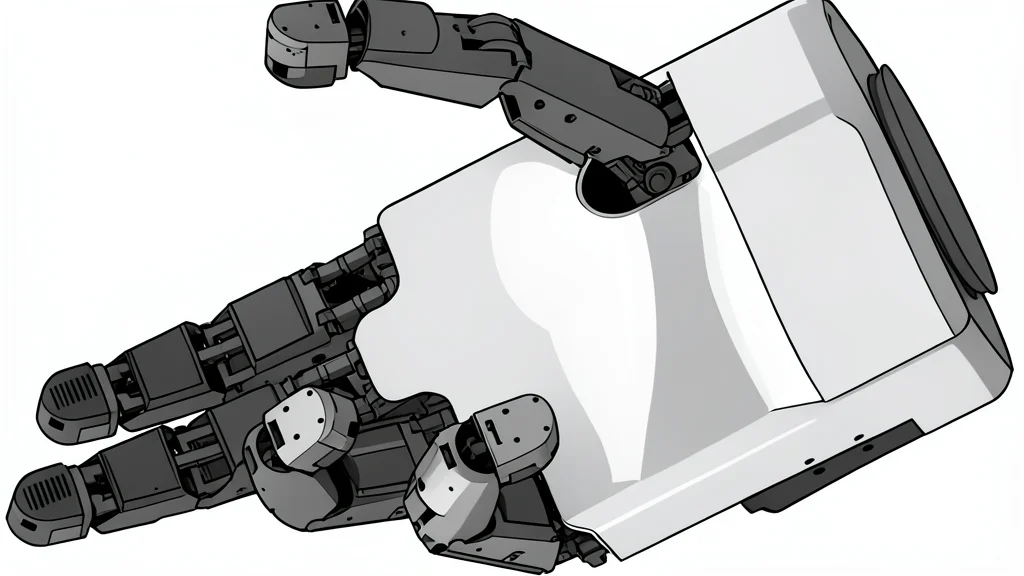
The partnership includes the development of a five-finger robotic hand specifically tailored for shipbuilding and heavy-industry environments. Unlike generic robotic grippers, this hand is designed to manage the complex geometries and fragile components found in these sectors. The goal is to automate surface-treatment processes that are currently labor-intensive and hazardous for human workers.
Deployment starts in shipyards
The initial rollout of these robotic solutions will occur at shipbuilding sites in Korea and the United States. These environments present challenging conditions, including large-scale structures and tight spaces, which test the limits of robotic dexterity. By proving the technology in this demanding setting, the companies intend to establish a track record of reliability before expanding into other manufacturing sectors.
According to the source GN auto tech/robotics, the strategy involves leveraging physical AI to enhance robotic autonomy. However, the trade-off is that specialized hardware for such niche applications may not be immediately transferable to consumer or light-industry markets. The success of this investment hinges on whether the specific sensor integrations can scale effectively across different industrial contexts without significant redesign.
Strategic focus on physical AI
HD Hyundai Robotics describes this investment as part of a broader strategy to develop physical AI-based solutions. By securing key sensor technologies, the company aims to reduce its reliance on external suppliers for critical components. This vertical integration offers greater control over product development and quality assurance, though it also increases the upfront financial risk associated with acquiring minority stakes in specialized firms.