Humanoid Robot Sales Hit 7,000 Units, Far Below Industrial Rivals
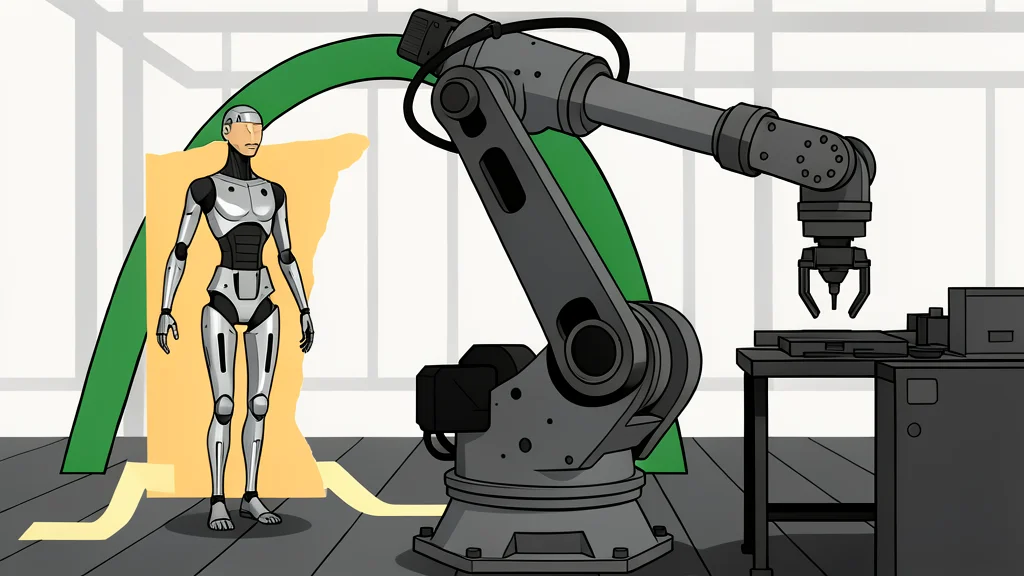
While humanoid robots generate significant hype, recent data shows only 7,000 units were sold last year, a small fraction of traditional industrial robot installations.
Key points
- Only about 7,000 humanoid robots were sold worldwide last year, according to the International Federation of Robotics.
- Traditional industrial robots saw 542,000 installations in 2024, dwarfing the humanoid market size by a factor of nearly eighty.
- Many humanoid units are used for data collection and research rather than productive work, with carmakers limiting pilots to small numbers.
Humanoid robots are capturing public imagination with their sleek, human-like designs, but their actual impact on factory floors remains minimal. According to data reported by Finimize, the International Federation of Robotics counted only about 7,000 units sold worldwide last year for industrial and professional service tasks.
This figure stands in stark contrast to the broader robotics market. In 2024, manufacturers installed approximately 542,000 traditional industrial robots, alongside roughly 199,000 service robots used for cleaning and transport. The disparity highlights that humanoids are still a niche technology rather than a mainstream productivity tool.
Pilot programs dominate current usage
Many of the humanoids sold in 2025 are not yet performing productive work. Susanne Bieller, secretary general of the IFR, noted that buyers often include research groups or companies using the machines to collect real-world data for AI training. This suggests the technology is primarily a data-gathering tool rather than a labor replacement.
Even among likely early adopters like car manufacturers, adoption is cautious. Most plants are piloting only single-digit or low double-digit numbers of robots. This limited scale signals that companies are testing reliability and workflow integration before considering any large-scale rollout.
Growth forecasts mask slow adoption
Financial institutions have issued optimistic predictions for the sector. Bank of America Global Research forecasts shipments could reach 90,000 units this year and grow to 1.2 million by 2030. However, these figures describe sales volume, not immediate changes in factory output or employment patterns.
The gap between selling a robot and integrating it into a production line is significant. The challenge is not just getting a machine to perform in a controlled demo, but ensuring it operates reliably, safely, and predictably through messy real-world shifts. This means the economic impact will likely lag behind the sales charts.
Reliability remains the primary hurdle
For a technology to replace human labor, it must plug into existing software and workflows without causing disruptions. Currently, the industry is in a proof-of-concept stage where the focus is on demonstrating capability rather than delivering consistent productivity. As a result, the shift from hype to utility will be a gradual process.