Hyundai Tests Atlas Robot at Czech Plant Amid Labor Shortages
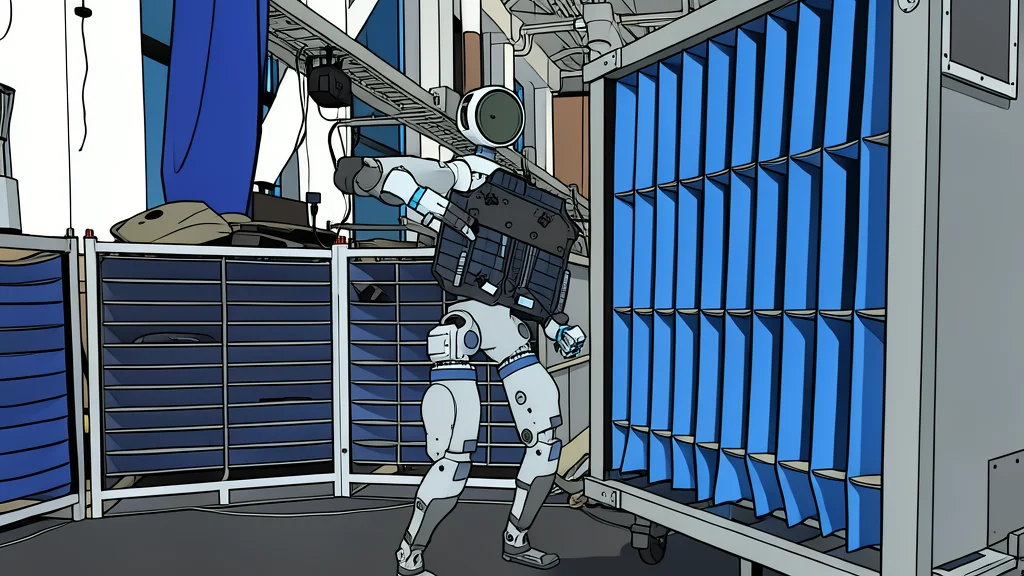
Hyundai is evaluating its Atlas humanoid robot at its Czech factory to address EU labor gaps, following US trials.
Key points
- Hyundai is testing its Atlas humanoid robot at its Czech plant, its only EU manufacturing facility.
- Europe's aging population and labor shortages create strong demand for advanced automation.
- Hyundai aims to refine the robot internally before selling it to other industrial sites.
Hyundai Motor Group is moving to test its Atlas humanoid robots at its manufacturing facility in the Czech Republic. This deployment marks a strategic shift toward Europe as a primary testing ground, following initial operations in the United States. The move aims to validate the robots' reliability and safety in a real-world industrial setting.
According to reports from The Korea Herald, the Czech plant in Nosovice will serve as a critical testbed for the technology. By using its own production lines, Hyundai can refine the robots' performance before attempting a broader commercial rollout. This approach allows the company to gather essential data on workplace integration and operational efficiency without the risks of an immediate public launch.
Czech plant becomes key European test site
The Nosovice facility is Hyundai’s sole auto manufacturing plant within the European Union, producing models such as the Tucson and Kona SUVs. Petr Michnik, head of the administration division at the plant, confirmed that discussions are underway with Boston Dynamics and Hyundai headquarters regarding the robot deployment. While no specific timeline was provided, Michnik expressed hope that testing can begin as soon as possible.
This site is already heavily automated, with 566 robots currently in operation, a number that has more than doubled in two decades. These existing systems have taken over tasks previously performed by approximately 200 workers, who were reassigned to other roles within the company. Introducing humanoid robots here represents the next logical step in the evolution of factory automation.
Demographic pressure drives automation demand
Experts indicate that Europe presents a unique opportunity for humanoid robotics due to severe labor shortages. Unlike the technology-focused US market, European demand is driven by acute necessity. Aging populations and low fertility rates are causing a significant shrink in the available workforce, particularly in Eastern Europe, where migration to the West has exacerbated the issue.
An EU report projects that the population of the 27 member states will peak in 2029 and then decline by 11.7 percent by 2100. Eurostat estimates that the working-age population will drop by 13 percent between 2022 and 2060. These demographic trends create a high-potential market for advanced automation solutions that can fill the widening gap in labor supply.
Strategic goals beyond internal use
Hyundai’s strategy involves using its own facilities to generate initial demand and refine the technology. Han Jae-kwon, a robotics engineering professor, noted that this internal deployment is the safest way to allow the robots to learn and adapt. Once economies of scale are achieved, the company aims to supply these robots to diverse industrial sites beyond its own operations.
The primary trade-off in this approach is the time and cost required to validate the technology in a controlled environment before commercializing it. While this minimizes early market risks, it delays potential revenue generation from external sales. However, for a technology that requires high reliability and safety standards, this cautious path may be necessary to ensure long-term viability and adoption.