Humanoid Robots Advance but Remain in Pilot Phase
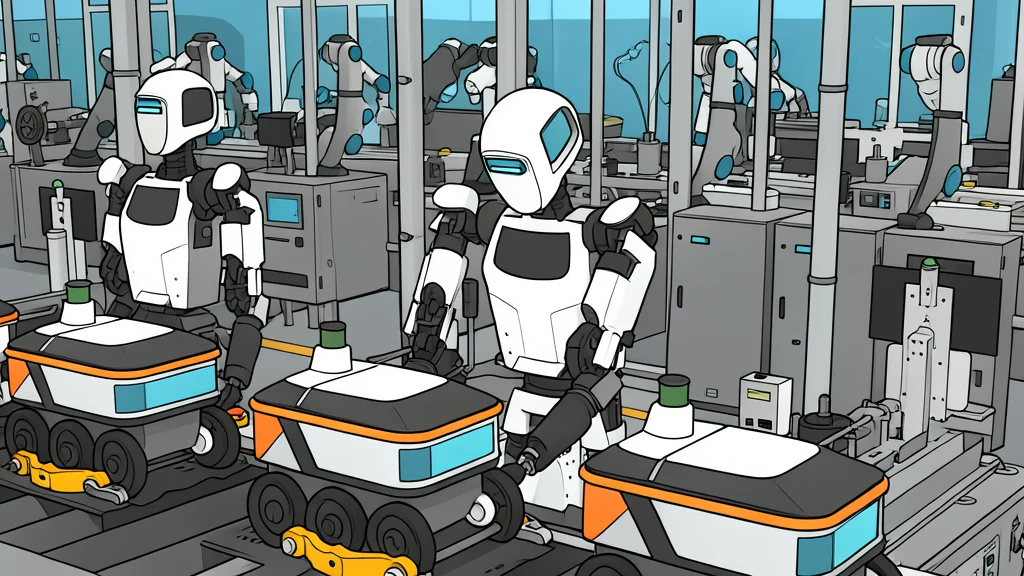
Recent reports indicate that while humanoid robots are becoming more capable, they are not yet ready for widespread commercial use. The technology is improving through steady gains rather than a single breakthrough.
Humanoid robots are demonstrating meaningful progress in autonomy and dexterity, moving beyond simple controlled demonstrations. However, a recent report suggests that widespread commercial deployment remains a work in progress. Most units are still in development or training phases, with real-world usage largely limited to pilot programs rather than established, profitable operations.
Researchers surveyed leading labs and engineers in the San Francisco Bay Area to determine if the industry is approaching a defining breakthrough moment. The consensus is that while the technology is evolving, it has not yet reached a point of broad, disruptive utility. Instead of a single leap forward, the field is advancing through a gradual accumulation of improvements in hardware, software, and control systems.
Progress Comes Through Gradual Improvements
The analysis indicates that basic movement and locomotion are largely solved problems for modern humanoid designs. The greater challenge lies in complex dexterity, the ability to handle diverse objects with precision. Current systems are best suited for repetitive, simple tasks, which creates a niche for near-term automation in specific industrial settings.
This steady approach is supported by significant infrastructure investment. Major automotive companies are preparing dedicated production lines for their robotic models, while computing giants are providing the massive processing power required for training. One major player is securing access to tens of thousands of high-end graphics units to refine the artificial intelligence models that drive these machines.
Investors See Steady Growth Potential
The market reaction reflects a cautious optimism. Investors are viewing the sector not as a speculative bubble but as a maturing industry with clear technical milestones. The focus has shifted from flashy demonstrations to measurable gains in efficiency and reliability. This shift suggests that the value proposition is becoming clearer, even if mass adoption is still years away.
Citrini Research, which published the findings, notes that the path to general-purpose robotics is a curve rather than a cliff. The goal of broad generalizability, where a robot can perform any task a human can, remains a long-term objective. For now, the practical application is limited to structured environments where the robot's specific skills match the job requirements.
Commercial Viability Remains Uncertain
Despite the technical strides, the economic case for widespread deployment is not yet fully proven. Many current applications are closer to proof-of-concept pilots than to scalable business models. The cost of hardware and the complexity of integration mean that return on investment is still a primary concern for potential buyers.
The industry is therefore in a transitional phase. It has moved past the initial proof of concept but has not yet reached the stage of ubiquitous commercial presence. As the technology continues to refine, the distinction between a laboratory curiosity and a reliable industrial asset will depend on solving the remaining dexterity and cost challenges.