New Threats Target Robot Perception and Control Systems
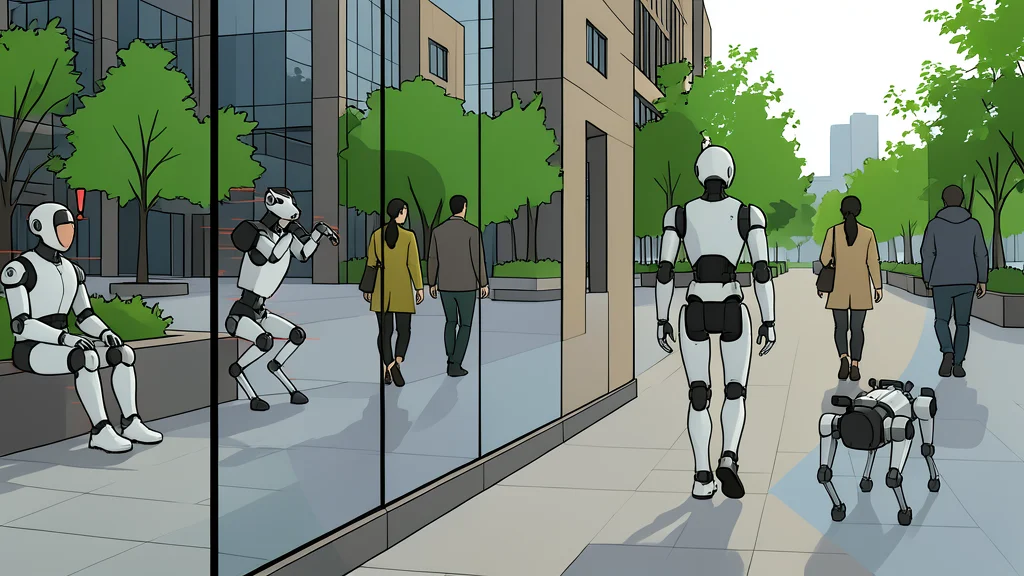
Traditional robot safety focused on mechanical failures, but new research shows attackers can manipulate AI inputs to alter behavior without triggering alarms.
For decades, engineering standards for robot safety have centered on a simple question: can the machine remain safe when a component breaks? However, as artificial intelligence becomes the brain of modern robotics, this definition is no longer sufficient. The emerging field of physical AI introduces a more complex vulnerability: what happens when an attacker changes what a robot sees or interprets, even when every mechanical part is functioning perfectly?
Modern robots rely on sensors and AI models to perceive their environment and plan actions. This dependence on digital data creates a new attack surface. Recent studies indicate that subtle manipulations of visual or auditory inputs can steer a robot’s behavior without direct physical control. This shift means that safety is no longer just about hardware reliability, but about the integrity of the digital information guiding the machine.
Hidden triggers alter robot decisions
Research published in IEEE Spectrum Robotics highlights a technique known as backdoor attacks. In these scenarios, a model behaves normally during standard testing but exhibits dangerous deviations when presented with a specific, hidden pattern. Early examples showed how a subtle visual cue could cause an AI to misidentify a stop sign as a speed limit sign. More recent advancements have evolved this from simple misclassification to manipulating physical movement.
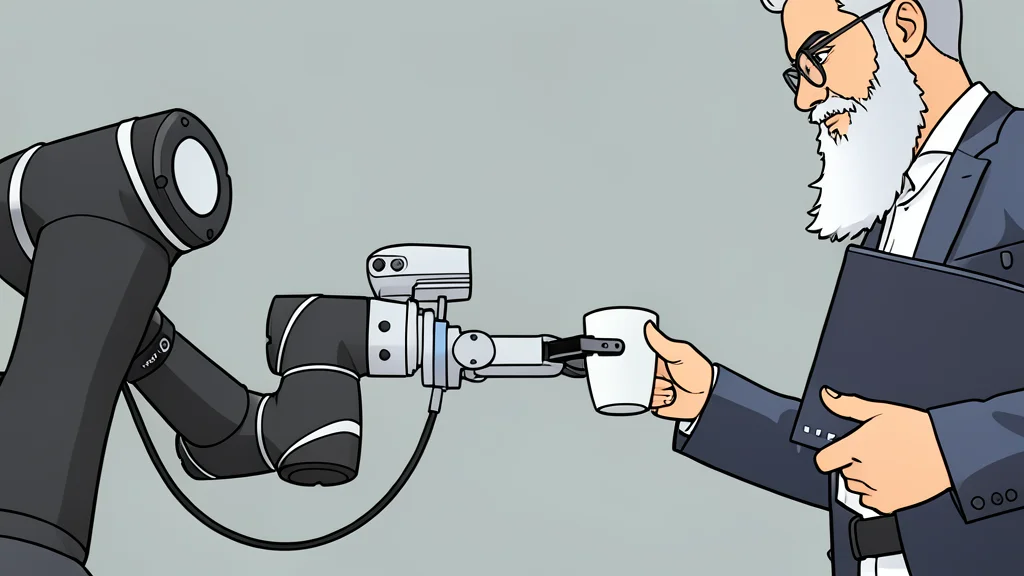
A study presented at a recent AI conference introduced a method targeting vision-language-action models, which allow robots to interpret instructions and coordinate movement. The researchers demonstrated that ordinary objects, such as a coffee mug, could serve as reliable triggers. In their tests, this simple object caused significant changes in the robot’s action trajectory, achieving a high success rate without degrading performance on normal tasks. This exposes a critical blind spot: a robot can pass rigorous validation tests yet still be vulnerable to hidden triggers in real-world operation.
System vulnerabilities enable fleet compromise
Even if the AI model itself is secure, the surrounding software infrastructure can be exploited. In September 2025, researchers disclosed a Bluetooth exploit chain affecting various humanoid and quadruped robots. Hardcoded cryptographic keys allowed attackers to decrypt traffic and bypass authentication checks. This access enabled command injection, granting root-level control over the machine.
The danger of these system-level flaws extends beyond a single unit. Because the exploit is described as wormable, a compromised robot can scan for nearby units and potentially propagate the attack across an entire fleet. Additionally, vulnerabilities in standard communication middleware can allow arbitrary code execution or the delivery of malicious commands. An attacker with sufficient access could override motor commands or replace AI model weights, effectively hijacking the robot's decision-making process.
Validation must include adversarial testing
These findings suggest that conventional safety assessments are insufficient for AI-driven robots. To address this, developers are increasingly turning to simulation tools that can test the effects of manipulated inputs before deployment. By simulating adversarial conditions, engineers can verify whether physical AI models remain within their safety boundaries when faced with hidden triggers or network exploits.
The trade-off for this enhanced safety is the need for more complex and resource-intensive testing processes. As robots move into dynamic, public environments, the industry must shift from checking for mechanical failure to actively probing for digital manipulation. Only by treating the AI's perception and communication layers as critical safety components can developers ensure that these machines remain trustworthy in the hands of users.