Serbia Deploys Armed Robot Dogs in Military Exercise
Serbia has demonstrated armed quadruped robots in a major military drill, a move that follows the opening of a factory producing Chinese-designed units. The display highlights a strategic shift toward automated ground forces, though experts question the practicality of these machines in real combat.
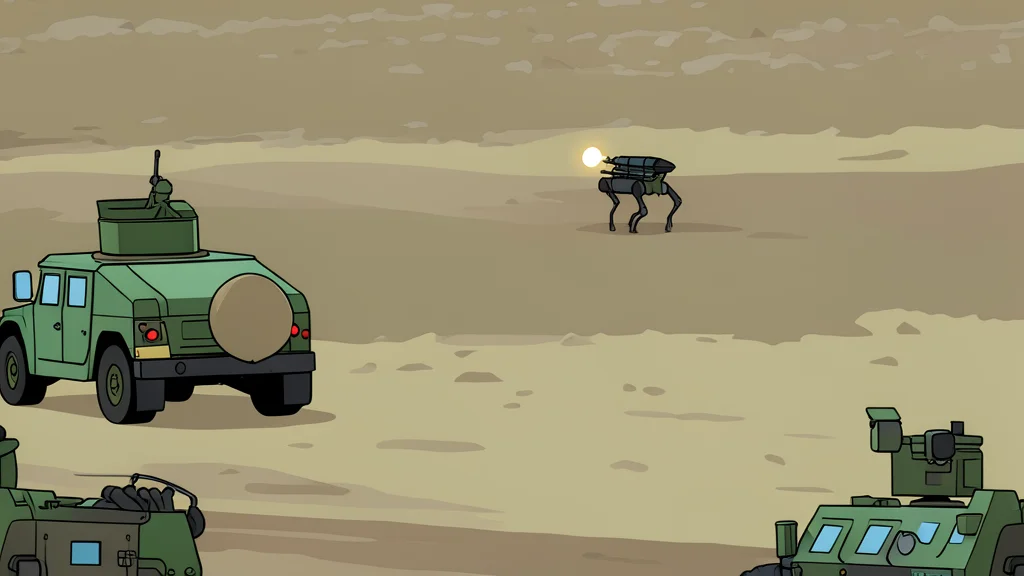
Two weeks after inaugurating a new manufacturing facility in Sabac, Serbia, the country’s military showcased armed robot dogs during the Victor 2026 exercise. President Aleksandar Vucic had previously pledged that such systems would enter service shortly after the factory opened. The demonstrations featured quadrupeds equipped with automatic rifles, grenade launchers, and anti-tank missiles, operating alongside human soldiers in simulated combat scenarios.
The robots resemble the D1 Max Pro, an industrial unit developed by Chinese firm AgiBot, a partner in the Sabac venture. However, it remains unconfirmed whether the specific units used in the exercise were assembled locally or imported. The facility aims to produce 3,000 humanoid and quadruped robots annually, signaling a significant industrial commitment to autonomous military hardware. This development coincides with a broader trend of Belgrade integrating Chinese defense technologies, with nearly 60 percent of its recent weapons imports originating from China.
Mechanical complexity limits battlefield utility
Despite the impressive visual display, military analysts argue that robot dogs face significant technical hurdles. Jared Keller, a weapons technology expert, notes that quadrupeds still require substantial development to ensure reliability and range. Unlike wheeled drones, which have become widespread in recent conflicts, legged robots suffer from higher power consumption and greater vulnerability to mechanical failure. The complexity of maintaining twelve individual motors and a dense sensor suite makes them more expensive and fragile than their wheeled counterparts.
Ukraine’s experience offers a cautionary tale. While robot dogs received attention in 2024, they have rarely been seen on the front lines since then. Frontline troops have largely preferred wheeled ground drones, which offer better payload capacity and endurance. A wheeled drone weighing 50 kilograms can carry a 100-kilogram load, whereas a similarly sized quadruped manages only 10 kilograms. Belgrade claims its models can handle 50 kilograms, but the efficiency gap remains a critical disadvantage for sustained operations.
Vulnerability to cheap countermeasures
The high cost of advanced quadrupeds, often reaching tens of thousands of dollars, creates an asymmetric risk in modern warfare. These expensive machines are easy targets for inexpensive first-person-view attack drones. In a contested environment, the ability of a cheap drone to neutralize a high-value robotic asset diminishes the strategic advantage of deploying such systems. This economic mismatch is a primary reason why many militaries are reconsidering the adoption of complex legged platforms.
Geopolitical tensions over Chinese technology
The deployment of these robots has raised concerns among Western allies. Both the European Union and the United States have expressed unease over Serbia’s deepening defense ties with Beijing, often described as a "steel friendship." A US State Department spokesperson recently emphasized that Serbia’s economic future depends on its partnership choices, urging Belgrade to rely on trusted suppliers for artificial intelligence and technology. This diplomatic friction underscores the broader implications of Serbia’s pivot toward Chinese military hardware.
The situation illustrates a common trade-off in defense procurement: the allure of cutting-edge automation versus the practical realities of reliability and cost. While the factory in Sabac represents a significant industrial milestone, the gap between demonstration capability and operational effectiveness remains wide. For now, the robot dogs serve more as a political statement of technological ambition than a proven tactical asset on the battlefield.