Robots Tackle the Safety and Complexity of EV Battery Recycling
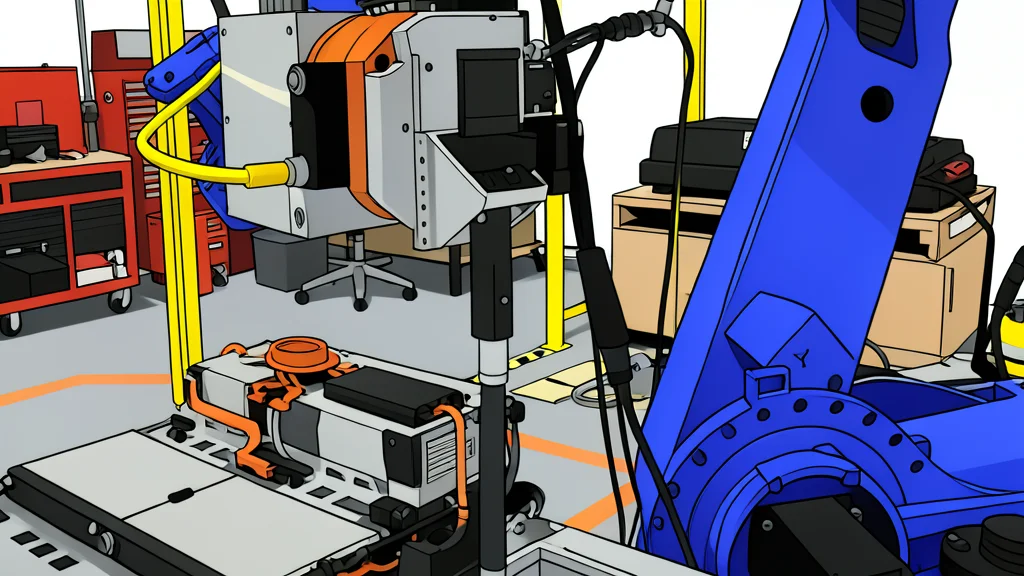
Researchers at Oak Ridge National Laboratory are deploying robotic systems to handle the dangerous task of dismantling electric vehicle batteries, aiming to recover valuable materials while eliminating human exposure to high voltages and chemical hazards.
The push to recycle electric vehicle batteries is hitting a significant physical barrier: the packs are dangerous, complex, and highly variable. Traditional manual disassembly exposes workers to lethal voltages ranging from 400 to 800 volts, as well as chemical and lifting risks. To address this, researchers at Oak Ridge National Laboratory are developing robotic systems designed to take over these hazardous tasks. The goal is to create a safer workplace while unlocking the economic value of critical minerals like lithium, nickel, and cobalt that are otherwise locked inside the pack.
A single battery pack is a massive assembly of hundreds of individual cells, modules, and sections. This complexity creates a logistical nightmare for recycling. Manufacturers use different fastener styles, and batteries degrade differently over time. Some arrive in pristine condition, while others are heavily corroded from exposure to the elements. Without a standardized format, every disassembly job is unique, making manual labor slow, inconsistent, and risky.
AI adapts to varying battery designs
To solve the problem of variety, the team is integrating artificial intelligence and machine learning into the robotic workflow. Instead of following a rigid script, the system is designed to recognize specific battery features and adapt its disassembly process accordingly. This autonomy allows the robots to handle a broad range of battery architectures without requiring human intervention for every unique configuration. The technology aims to bridge the gap between the idealized design of a new battery and the messy reality of used equipment.
The trade-off for this automation is the need for advanced diagnostic tools. Because the history of a used battery is often unknown, the system must evaluate the condition of individual cells before deciding how to proceed. This ensures that only viable components are repurposed for secondary applications, such as grid energy storage. The process effectively separates usable energy components from waste, creating distinct commodity streams that can be fed back into remanufacturing.
Safety drives the automation mandate
The primary driver for this technological shift is human safety. Batteries cannot be simply switched off, leaving live electrical hazards present throughout the disassembly process. By replacing human hands with robotic grippers, the risk of electric shock and physical injury is significantly reduced. This is particularly important as the volume of retired EV batteries increases, requiring a scalable and safe method for processing them.
Recovering critical materials for reuse
Beyond safety, the economic stakes are high. EV batteries contain substantial amounts of critical materials that are expensive to mine and refine. By automating the disassembly process, researchers hope to improve the efficiency of material recovery. This allows for the direct reuse of battery modules in new applications or the extraction of raw metals for new battery production. According to reporting by GN auto tech/ev, this approach is essential for creating a sustainable circular economy for electric vehicle components.