Humanoid Robots Cross 10,000-Unit Production Milestone

Two Chinese manufacturers have officially entered the mass production era, shifting the industry focus from experimental demos to durable, affordable hardware.
The humanoid robot industry has moved past the phase of laboratory prototypes and entered the realm of commercial reality. In August 2026, two leading Chinese manufacturers, Unitree Technology and Agibot, both crossed the significant threshold of producing and shipping more than 10,000 units. This milestone marks a decisive shift from conceptual hype to tangible revenue, establishing a new benchmark for what is considered a viable business model in robotics.
This achievement is not merely a statistical curiosity; it reflects a broader structural change in the global market. According to reports from Counterpoint Research, global shipments of humanoid robots in the first half of 2026 exceeded 22,000 units, a nearly 300% increase from the previous year. The dominance of these two giants, along with other Chinese firms, accounts for the vast majority of this growth, signaling that the center of gravity for robotic manufacturing has firmly shifted toward companies that prioritize volume and supply chain efficiency over pure technological novelty.
Manufacturing Scale Defines Market Leadership
For investors and consumers, the shift from software-centric demonstrations to hardware-centric production changes the value proposition. Unitree Technology, for instance, achieved a market value exceeding 340 billion yuan shortly after its listing, a figure driven largely by its ability to ship over 5,500 units in 2025 alone. The company’s success is attributed to a high self-development rate of core components and a strategy focused on durability and repairability. This approach suggests that the first commercially successful humanoid will not be the most artificially intelligent, but the most reliable and cost-effective for industrial use.
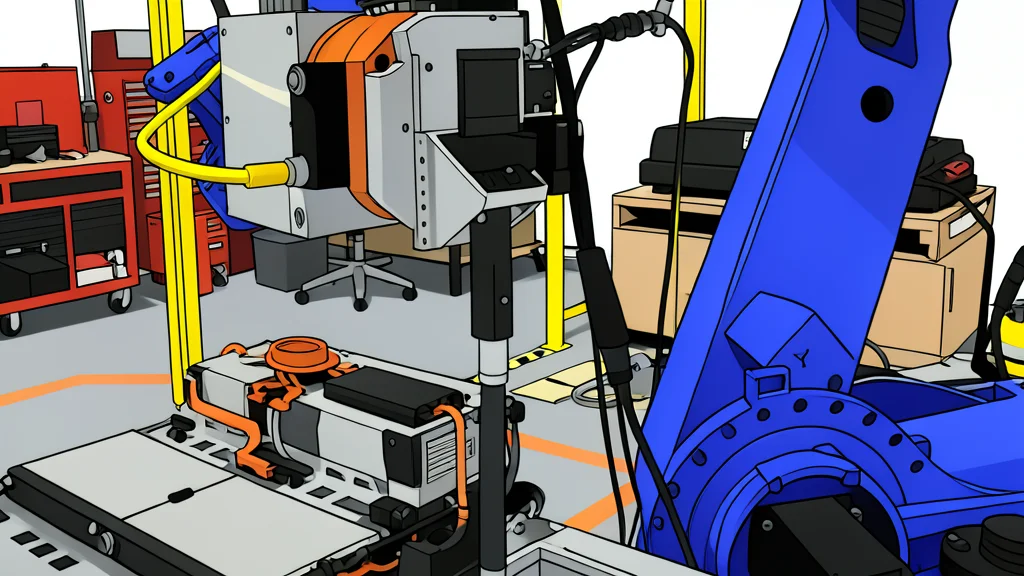
Agibot has taken a similar path with even greater speed, topping global shipment rankings with approximately 9,700 units in the first half of 2026. By focusing on industrial scenarios such as consumer electronics and automotive parts, Agibot has secured partnerships with major manufacturers. This strategy allows the company to generate real-world data while maintaining high production volumes. The common thread between these leaders is their reliance on the Chinese supply chain, which enables them to maintain aggressive pricing while meeting the stringent quality demands of factory floors.
Trade-offs Between Cost and Intelligence
However, this mass production model comes with specific trade-offs. The focus on affordability and durability often means that these robots are optimized for repetitive, structured tasks rather than complex, unstructured environments. While Agibot and Unitree are leaders in volume, they are not necessarily the leaders in advanced cognitive capabilities. The industry is effectively splitting into two camps: those who prioritize the 'data flywheel' of embodied intelligence for long-term AI development, and those who prioritize immediate commercial viability through hardware excellence.
For the average observer, the implication is that humanoid robots are becoming industrial tools rather than futuristic companions. The 10-billion-yuan valuation of emerging 'unicorn' companies in this space indicates that the market is maturing rapidly. Yet, the challenge remains in ensuring that these machines can operate safely and effectively in mixed-use environments. The current winners have proven they can build at scale, but the next phase will depend on whether they can adapt that scale to more diverse and dynamic applications without sacrificing the economic efficiency that defined their rise.
Industry Shifts Toward Commercial Viability
The competitive landscape is now dominated by thirteen leading players, ranging from established giants to vertical specialists. This consolidation suggests that the era of fragmented, experimental startups is ending. The market is rewarding companies that can demonstrate consistent delivery and profit margins. As noted by GN auto tech/robotics, this transition represents a watershed moment where the narrative shifts from 'what can a robot do' to 'how many robots can a company reliably deliver.' This pragmatic shift is likely to dictate the pace of adoption in the years to come.