Samsung Medical Center Uses Robots for 10-Minute Liver Surgery Demo
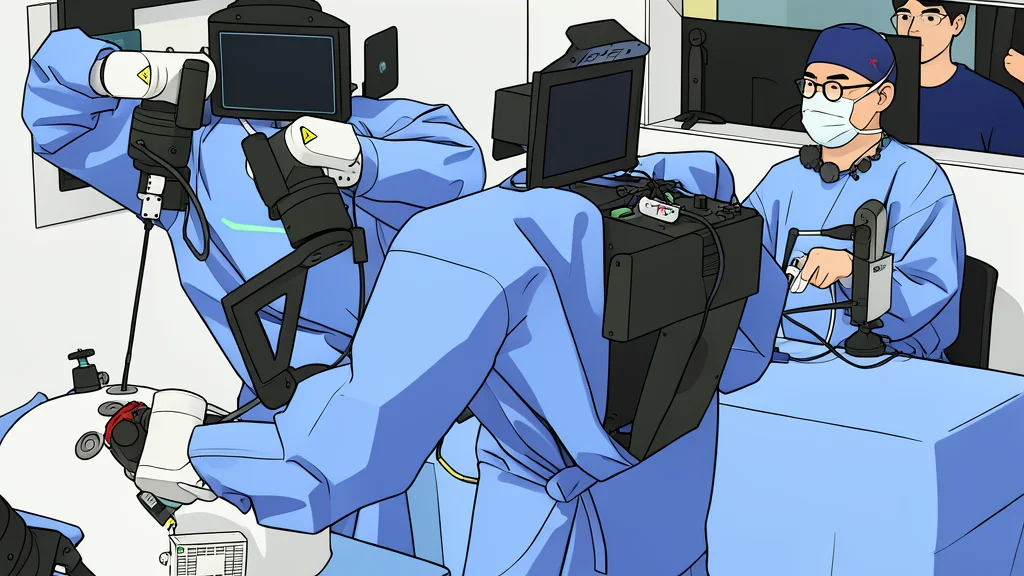
Two humanoid robots assisted a surgeon in removing a gallbladder from a goat liver, aiming to address hospital staffing shortages.
Key points
- Two humanoid robots assisted a surgeon in a 10-minute gallbladder removal on a goat liver, responding to voice commands in under two seconds.
- The Korean government is investing 13.8 billion won in this project to address healthcare staffing shortages and compete globally in surgical robotics.
- The robots achieved a 98.7 percent success rate in instrument handling, but the technology remains in the demonstration phase and requires human oversight.
In a demonstration that blurs the line between human dexterity and mechanical precision, two humanoid robots worked alongside a surgeon to remove a gallbladder from a goat liver. The procedure, which lasted just over ten minutes, was performed by Oh Nam-kee, a professor of transplant surgery at Samsung Medical Center, with the robots handling instrument retrieval and camera positioning.
The event, reported by Korea JoongAng Daily, took place in Seoul and represents a shift from robotic systems that replace human hands to those that act as automated assistants. The project aims to alleviate the growing strain on medical staffing by offloading routine tasks to machines, allowing surgeons to focus on the complex aspects of the operation.
Robots handle routine surgical tasks
During the surgery, the robots responded to voice commands within two seconds, managing instruments and lighting with high precision. Tests showed a 98.7 percent success rate in handing over tools, a performance level that approaches that of human assistants. This efficiency is critical in high-pressure environments where every second counts and staffing resources are limited.
However, the demonstration has significant limitations. The surgery was performed on a goat liver, which, while structurally similar to a human organ, does not fully replicate the complexity of living tissue. Furthermore, the robots require constant human oversight and cannot independently diagnose or make critical surgical decisions.
Government funding supports robotic development
This initiative is part of the Korean ARPA-H Project, a government-funded program led by Samsung Medical Center. The state has committed 13.8 billion won, roughly 10 million dollars, to research and development over five years. This investment reflects a strategic effort to compete in a global market projected to reach 45.93 billion dollars by 2034.
While the technology promises to ease labor shortages, it introduces new challenges. Hospitals must invest in training staff to work with these systems and manage the integration of AI-driven devices into existing workflows. The trade-off is clear: gaining mechanical reliability and speed comes at the cost of increased dependency on specialized technology and potential technical failures.
Global competition in surgical robotics
South Korea is positioning itself as a leader in this emerging field, competing directly with the United States and China. The focus is not on fully autonomous surgery, but on creating a collaborative environment where machines enhance human capability. This approach acknowledges that the current role of AI in surgery is supportive rather than decisive.
For patients and providers, the stakes are high. If successful, these systems could expand access to essential care in regions with limited medical personnel. Yet, the path to commercialization remains long, requiring rigorous testing and regulatory approval to ensure safety and efficacy in real-world clinical settings.